
When you walk into a pharmacy in Canada or the United States, you might expect the same generic versions of your medications-same active ingredients, same dosages, same packaging. But the price? The availability? The way they’re managed? Those are completely different worlds.
Price Control: Centralized vs. Free Market
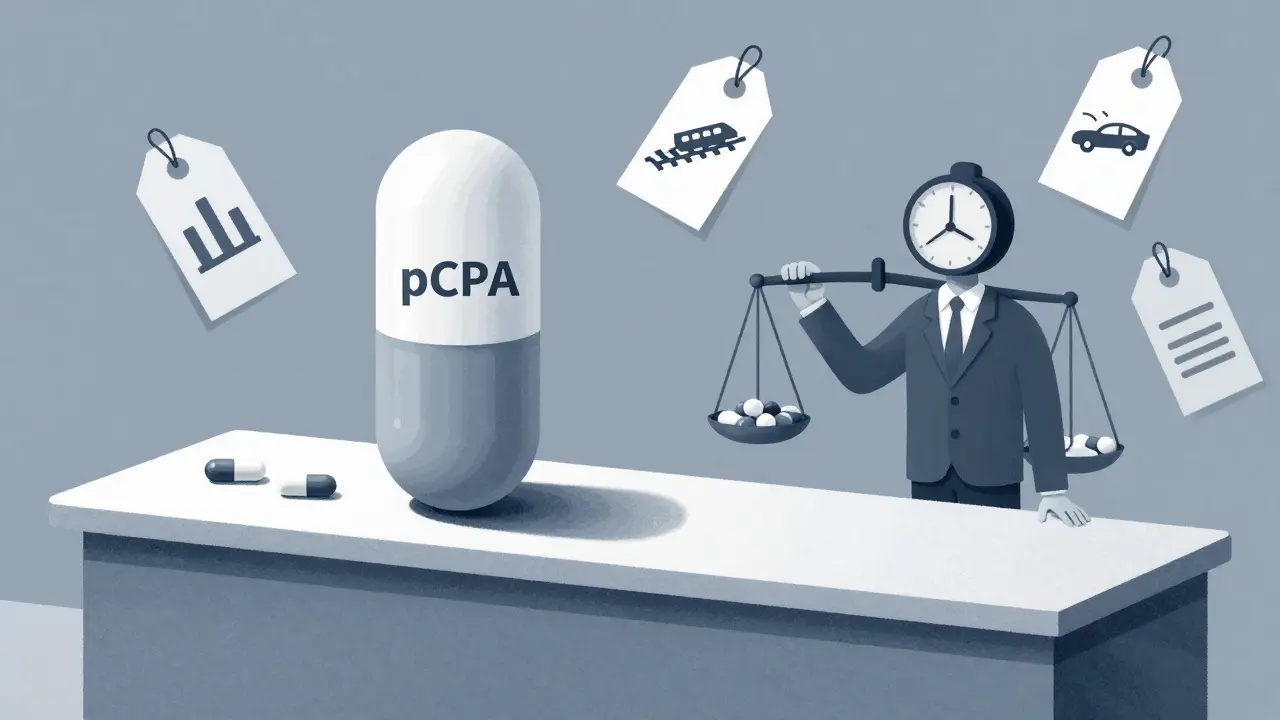
In Canada, the government doesn’t just watch the generic drug market-it runs it. The pan-Canadian Pharmaceutical Alliance (pCPA) is a coalition of all provincial and territorial drug plans that negotiates prices as one big buyer. Since 2023, they’ve been using a Tiered Pricing Framework that sets prices based on how many manufacturers are selling the same generic drug. If there are five companies making lisinopril, the price drops. If there’s only one, the price stays higher-but still capped.In the U.S., there’s no federal price control. Prices are set by competition, insurance contracts, pharmacy benefit managers, and retail chains. A single pill of generic atorvastatin might cost $12 at a U.S. discount pharmacy, $45 at a Canadian pharmacy, and $78 at a U.S. pharmacy without insurance. The U.S. system is chaotic but competitive. Canada’s system is orderly but slower.
Here’s the twist: Canada’s system controls brand-name drug prices through the Patented Medicine Prices Review Board (PMPRB), but it has no power over generics. That means drug companies have an incentive to push non-patented drugs harder, since they can charge more without oversight. Meanwhile, the U.S. has no such ceiling on branded drugs, which is why brand-name prices are often sky-high-but generics? They’re cheap because there are dozens of manufacturers fighting for market share.
Competition: Fewer Players, Higher Prices in Canada
Canada’s population is about one-tenth the size of the U.S.’s. That means fewer customers for generic drugmakers. So, while the U.S. has over 70 companies making generic versions of popular drugs, Canada has around 18. On average, a generic drug in the U.S. has 7.3 manufacturers competing. In Canada, it’s 3.8.More manufacturers = lower prices. That’s basic economics. A 2023 PharmacyChecker study found that 88% of the top 34 prescribed generic drugs were cheaper in the U.S. Prices averaged 68% lower. For example, a 90-day supply of metformin cost $15 in the U.S. and $42 in Canada. But here’s the catch: Canadian prices are still lower than in most other high-income countries-just not the U.S.
Canada’s system isn’t broken. It’s designed differently. It’s not about the lowest possible price. It’s about predictable, stable prices across provinces. That’s why pharmacists in Canada spend 5-7 hours a week managing pricing rules. U.S. pharmacists spend less time on pricing but more time juggling different insurance formularies.
Drug Shortages: Canada Wins on Reliability
Generic drugs make up over 90% of all drug shortages in both countries. But when a shortage hits, Canada handles it better.Health Canada actively monitors supply chains. When a manufacturer can’t keep up, Health Canada steps in. It can fast-track approvals for new suppliers, allow private-label versions, or even temporarily allow imports from other countries to fill gaps. In 2022, during the albuterol inhaler shortage, hospitals in Calgary got priority allocations. Meanwhile, hospitals in Seattle went weeks without supply.
In the U.S., the FDA reacts after shortages happen. It doesn’t have the same tools to prevent them. A 2023 JAMA Network study found that sole-source drugs (those made by only one company) had more than double the risk of shortage in the U.S. compared to Canada.
Canadians may pay more for generics, but they’re less likely to show up at the pharmacy and find their medication gone. That stability matters. A 2023 survey by the Canadian Pharmacists Association found 68% of patients reported no access issues with essential generics. In the U.S., that number was 49%.

Speed to Market: Who Gets New Generics First?
When a brand-name drug loses its patent, the U.S. moves fast. The first generic company to file gets 180 days of exclusivity. Then, within six months, prices drop 80-90%. The market floods with cheap options.Canada? It’s slower. The pCPA takes 18 to 24 months to negotiate prices after patent expiry. That means Canadians often wait longer to get the generic version. In 2022, Health Canada reported that new drugs arrived in Canada an average of 8.2 months after they were available in the U.S.
That delay isn’t about bureaucracy alone. It’s intentional. Canada waits to see how the U.S. market responds. If prices crash, Canada can negotiate even lower. But if a drug is in high demand or has supply risks, Canada may delay approval to avoid shortages. It’s a cautious strategy.
Who Pays? Public vs. Private Coverage
In both countries, about half of prescriptions are paid for by public plans (like provincial drug programs or Medicare), and half by private insurance or out-of-pocket.But here’s the difference: In Canada, the public system is the main driver of generic pricing. Because it buys in bulk, it sets the tone. Private insurers in Canada usually follow the pCPA’s negotiated prices. In the U.S., private insurers and PBMs (pharmacy benefit managers) control pricing. Medicare Part D can’t negotiate prices directly, so it pays whatever the market charges.
That’s why a senior in Ontario might pay $5 for a generic with their provincial plan, while a senior in Florida pays $15 under Medicare-because their plan doesn’t have the same leverage.
What About Importing Drugs from Canada?
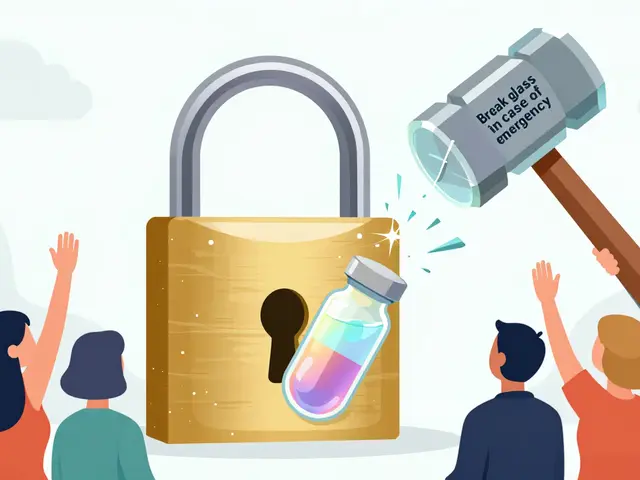
Some U.S. states-like Vermont, Colorado, and soon Florida-have passed laws to import cheaper drugs from Canada. But the U.S. federal government has never approved it. The FDA says it can’t guarantee safety, and the Department of Health and Human Services hasn’t given the green light.Canada responded in 2023 by creating the Supply Chain Resilience Framework to stop Canadian supplies from being drained by U.S. demand. If too many Canadians suddenly start seeing their prescriptions shipped south, Health Canada can restrict exports to protect domestic access.
Who Wins? It Depends on What You Value
If your priority is the lowest possible price, the U.S. wins. For most generics, you’ll pay far less there.If your priority is reliability-knowing your medication won’t vanish from the shelf-Canada wins. Their system is built to prevent shortages, even if it means higher prices.
Canada spends $814 per person on prescription drugs each year. The U.S. spends $1,432. That’s a 43% difference. But Canada gets fewer generics dispensed (83% vs. 90%) and takes longer to get them. So you’re paying less overall, but you’re paying more for the ones you do get.
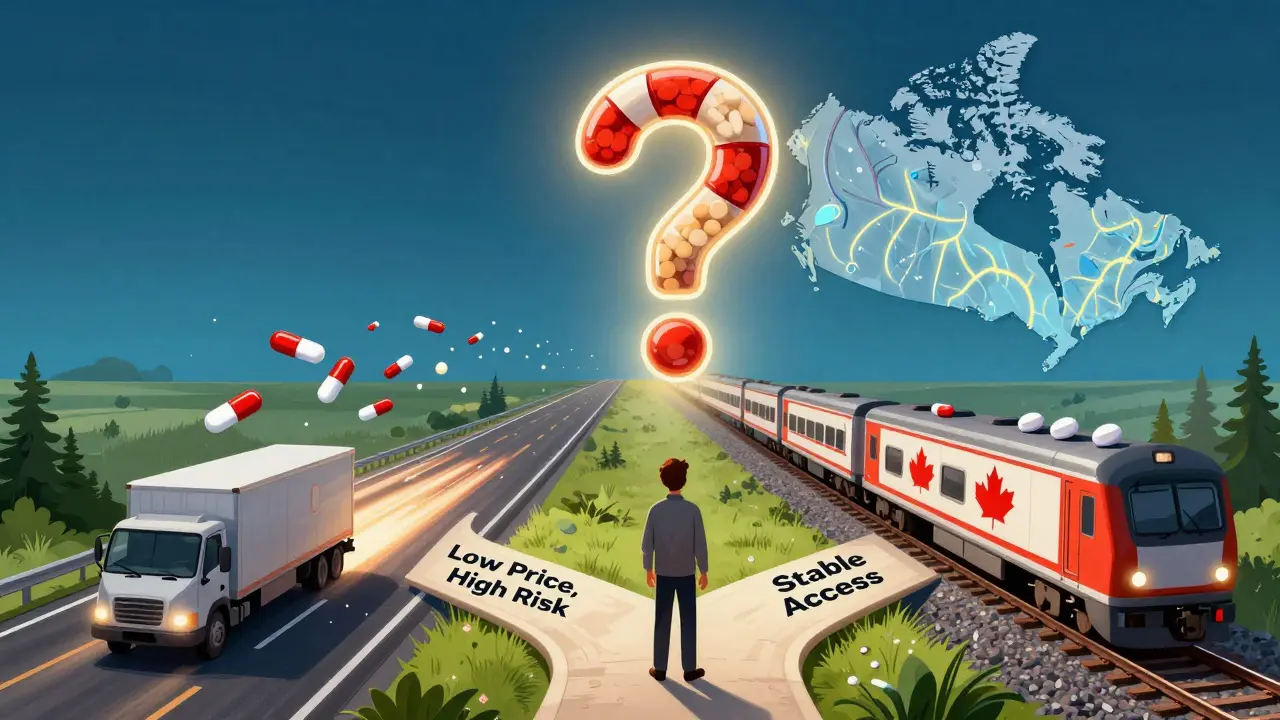
Canada’s system is like a well-maintained train: it doesn’t go fast, but it rarely derails. The U.S. system is like a race car: it’s blisteringly fast and cheap, but one breakdown and everything stops.
What’s Next?
Canada’s generic prices are projected to rise 15-20% by 2025 due to inflation and supply chain strain. The U.S. expects prices to keep falling, by 5-8% a year through 2026.But the real question isn’t which system is better. It’s which one suits your needs. If you’re a patient who needs steady access to meds, Canada’s model offers peace of mind. If you’re someone who shops around and wants the cheapest deal, the U.S. delivers.
Neither system is perfect. But both show how different values-price vs. stability, competition vs. coordination-shape the medicines you get.
Why are generic drugs more expensive in Canada than in the U.S.?
Canada doesn’t allow as many manufacturers to sell the same generic drug, so competition is lower. The pCPA sets prices, but it doesn’t force them as low as the U.S. market does. With only 3-4 companies making most generics in Canada versus 7+ in the U.S., prices stay higher. Also, Canada’s system prioritizes stability over the lowest possible price.
Does Canada have generic drug shortages?
Yes, but less frequently than the U.S. Canada’s Health Canada actively monitors supply chains and steps in when shortages are predicted. They can fast-track approvals, allow private-label versions, or temporarily import drugs. In 2022, Canada had fewer shortage reports than the U.S., especially for critical medications like insulin and albuterol.
Can Americans legally buy drugs from Canadian pharmacies?
Technically, no. U.S. federal law bans importing prescription drugs from other countries, including Canada. Some states have passed laws to allow it, but the federal government hasn’t approved any programs yet. Many Americans still order from Canadian pharmacies online, but it’s done at their own risk-there’s no guarantee the drugs are safe or legal.
How long does it take for a generic drug to become available in Canada after patent expiry?
It typically takes 18 to 24 months. That’s because the pan-Canadian Pharmaceutical Alliance (pCPA) must negotiate prices with manufacturers before the drug can be listed on provincial formularies. In the U.S., generics can appear within 6 months after patent expiry, thanks to faster market entry and competition.
Which country has better access to generic drugs overall?
The U.S. has higher generic dispensing rates (90% vs. 83%) and lower prices. But Canada has better access during shortages. If you need a generic drug that’s in short supply, you’re more likely to get it in Canada. So it depends: if you want the cheapest option, the U.S. wins. If you want to avoid being left without your medication, Canada does better.
Both systems are shaped by history, population size, and political values. Canada chose coordination over chaos. The U.S. chose competition over control. Neither is right or wrong-just different. And for patients, that difference can mean everything.


12 Comments
Canada’s system is like a slow but reliable bus - it doesn’t zip past you, but you never have to sprint to catch it. 🚍 I’ve had meds vanish in the US mid-prescription. Not fun. Canada’s got my vote for peace of mind, even if I pay a few bucks more. 💯
/p>Stop pretending Canada’s system is ‘stable.’ It’s just inefficient. You’re paying 3x more for the same pills because bureaucrats are scared of competition. This isn’t healthcare - it’s socialist theater. If you want cheap meds, go to India. At least they don’t pretend to be ‘ethical’ while charging you extra.
/p>US generics cheaper? Sure. But try getting insulin when your pharmacy runs out. Good luck.
/p>It’s fascinating how two systems reflect two worldviews: one optimized for cost, the other for continuity. The U.S. treats medicine like a commodity. Canada treats it like a social contract. Neither is inherently superior - just expressions of different values. The real tragedy is that we’re forced to choose between them at all.
/p>Canada's model is a disaster waiting to happen. You can't afford to be slow when lives are on the line. If your drug is unavailable you die. No amount of ‘stability’ changes that. The U.S. system works because it moves. Fast. Efficient. Ruthless. That's what medicine needs.
/p>Canada’s pCPA is basically a cartel of provincial buyers playing monopolistic chess with generic manufacturers. The U.S. is a free-for-all bloodsport - but hey, at least the blood’s not yours. The real kicker? Canada’s ‘stability’ is just delayed chaos. They’re outsourcing the risk to patients who wait 2 years for a generic while Americans get it in 6 months. That’s not wisdom - it’s slow-motion exploitation.
/p>Hey, I get it - price matters. But have you ever sat in a hospital waiting room because your insulin didn’t arrive? I have. Canada’s system isn’t perfect, but it doesn’t leave you hanging. I’m from India - we know what it’s like when systems collapse. Stability isn’t sexy. But it’s sacred.
/p>Let’s be honest - Canada’s ‘predictable pricing’ is just a euphemism for price-fixing disguised as public good. The U.S. may be a mess, but at least it’s honest about its chaos. Canada pretends it’s running a healthcare system, when really it’s running a bureaucratic theater where the actors are pharmacists and the audience is patients paying extra for the privilege of waiting.
/p>You know what’s funny? I lived in Canada for five years. I used to get my blood pressure meds for $12 CAD. Then I moved to the UK and paid £1.50. Then I went to Thailand and got it for $3 USD. So now I’m sitting here reading this whole thing about Canada vs. the U.S., and I’m thinking - why are we even having this conversation? The real story isn’t Canada or the U.S. - it’s how every high-income country is failing patients by letting drug companies write the rules. The real villain isn’t bureaucracy or competition - it’s profit.
/p>Oh wow Canada’s system is ‘stable’? That’s cute. Like how a library is ‘stable’ when they only have 3 copies of every book and you’re the 4th person in line. Meanwhile in the U.S. you can get 17 brands of metformin and still have change left for coffee. Maybe if Canada stopped pretending it’s a healthcare system and started acting like a market, people wouldn’t need to fly to Mexico for their pills.
/p>Canada’s system is a scam. You pay more and wait longer and still get shortages. The only difference is that Canadians are brainwashed into thinking it’s ‘fair.’ Meanwhile Americans are just trying to survive. If you’re okay with paying $42 for metformin because ‘it’s stable,’ then you’re not a patient - you’re a hostage.
/p>Canada's model is not superior. It is inferior. The United States has the most advanced pharmaceutical infrastructure in the world. Any attempt to mimic Canadian price controls would be a direct violation of free market principles and constitutional rights. The fact that anyone would advocate for centralized price setting in a free society is alarming. This is not healthcare policy - it is authoritarianism wrapped in a prescription bottle.
/p>