
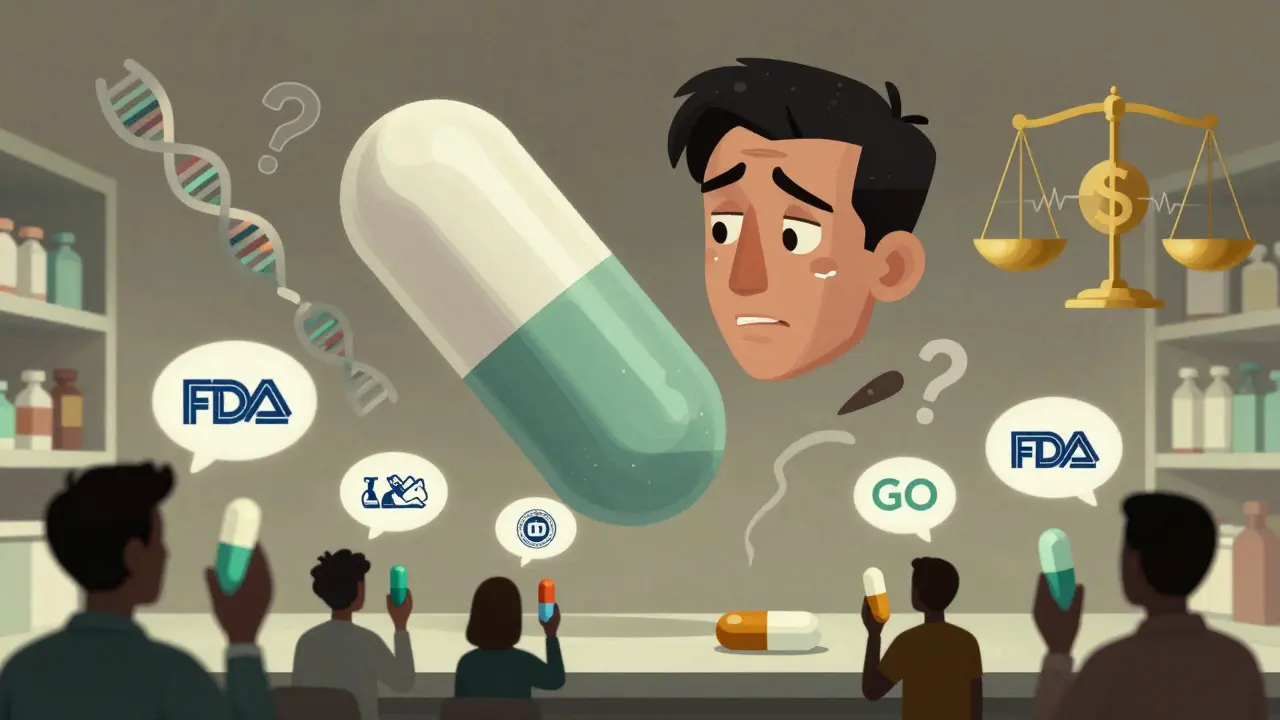
When you pick up a prescription, do you even notice if it’s a generic? Most patients don’t - until something feels off. Maybe the pill looks different. Maybe it doesn’t seem to work as well. Or maybe you just heard someone say, "Generics are just cheap copies." But here’s the truth: generic medications are not inferior. They’re held to the same strict standards as brand-name drugs. So why do so many patients still doubt them?
It’s Not About the Drug - It’s About the Perception
The science is clear. The U.S. Food and Drug Administration (FDA) requires generics to have the same active ingredient, strength, dosage form, and route of administration as the brand. They must also meet bioequivalence standards: the body absorbs them at the same rate and to the same extent, within an 80-125% confidence interval. That’s not a loophole - it’s a scientifically validated range that ensures therapeutic equivalence. Yet, patient satisfaction with generics doesn’t match the data. Studies show that while 90.7% of prescriptions filled in the U.S. are generics, many patients report lower satisfaction than with brand-name versions - even when the drug is identical. Why? Because satisfaction isn’t measured in pharmacokinetics. It’s measured in perception. A 2024 study in Nature Communications found that 72% of patients expressed dissatisfaction with at least one generic medication they’d taken. The biggest reasons? "It didn’t work as well," and "I just don’t trust it." Not because the drug failed. Because their brain told them it might.What Actually Drives Patient Satisfaction?
Researchers have built tools to measure this. The most widely used is the Generic Drug Satisfaction Questionnaire (GDSQ), a 12-item survey that breaks satisfaction into three core areas: effectiveness, convenience, and side effects. Each matters - but not equally. Path analysis from a 2021 Sage study showed that effectiveness had the strongest influence on satisfaction (standardized weight: 0.254), followed closely by convenience (0.237). Side effects mattered too, but mostly when they were unexpected. The real kicker? Patients who switched from a brand to a generic and saw no change in symptoms reported the highest satisfaction. Those who noticed a difference - even a minor one - were far more likely to blame the generic. And here’s the twist: sometimes, the difference isn’t real. A 2023 Reddit thread with over 1,200 comments revealed that antidepressants and antiepileptics generated the most negative feedback. One user wrote: "Switched from Synthroid to generic levothyroxine and my TSH levels became erratic." But multiple clinical studies show that levothyroxine generics are bioequivalent. So what happened? The patient expected a change. Their body reacted to the expectation - not the drug.Who Shapes What Patients Believe?
You’d think pharmacists or drug labels would be the main source of information. But they’re not. According to Professor Dimitrios T. Boumpas from the National and Kapodistrian University of Athens, "Healthcare providers serve as the primary information source about generics for patients." That means your doctor’s tone matters. If they say, "This generic is just as good," with confidence, satisfaction jumps. If they say, "It’s cheaper, so we’ll try it," with hesitation - patients pick up on that. A 2023 PLOS ONE study showed a 34.2% increase in satisfaction when physicians explained the FDA’s bioequivalence standards. Even pharmacists can unintentionally undermine trust. If they hand over a pill that looks nothing like the brand - different color, shape, imprint - without context, patients assume something’s wrong. A simple note on the bottle: "This is the generic version of [Brand Name]. Same active ingredient. FDA-approved." - makes a measurable difference.
It Varies by Drug - And by Culture
Not all generics are treated the same. Antibiotics? Patients are fine with them. Satisfaction rates hit 85.3%. Why? Because the effect is fast and obvious. If your infection clears up in three days, you don’t care what the pill looks like. But for drugs that work slowly - like statins, antidepressants, or antiepileptics - satisfaction drops. In one study, only 68.9% of patients reported being satisfied with generic antiepileptics. Why? Because the benefit is invisible. You don’t feel better immediately. You just hope you won’t have a seizure. When the pill looks different, doubt creeps in. And culture plays a huge role. Collectivist societies - like those in East Asia - show 32% higher satisfaction with generics than individualist cultures. Why? In collectivist cultures, trust in authority (doctors, regulators) is stronger. In Western countries, personal experience dominates. If you had a bad reaction once, you assume it’s the drug - not your body, not timing, not stress. Even the country matters. European patients report 12.4% higher satisfaction with complex generics than U.S. patients. Why? The European Medicines Agency requires stricter comparability studies for certain drugs - and patients know it.The Cost Factor - And the Real Trade-Off
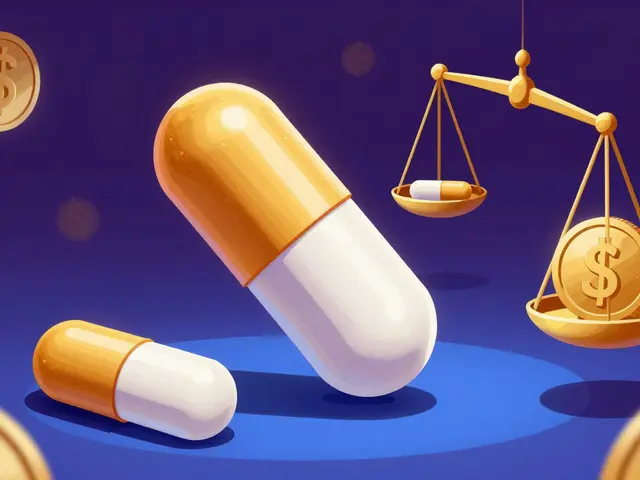
Let’s not ignore the elephant in the room: price. Generics cost 80-95% less than brands. In the U.S., a 30-day supply of brand-name Lipitor might cost $400. The generic, atorvastatin? $4. For many, that’s the difference between taking the drug and skipping doses. One user on HealthUnlocked wrote: "Generic lisinopril works exactly the same as Prinivil but costs $4 instead of $40." That’s not just satisfaction - that’s survival. But here’s the catch: if patients stop taking their meds because they don’t trust the generic, the cost savings vanish. Non-adherence to medication costs the U.S. healthcare system $300 billion a year. That’s more than the entire annual budget of the CDC. So the real question isn’t whether generics work. It’s whether we’re doing enough to help patients believe they do.
What’s Changing - And What’s Next
The FDA just launched its Generic Drug User Fee Amendments (GDUFA) III Patient Perception Initiative - a $15.7 million project to build better tools for measuring satisfaction. They’re moving beyond surveys. Now, they’re using AI to scan 500,000 social media posts across 28 languages to understand how people really talk about generics. At the Mayo Clinic, they’re testing something even more advanced: pharmacogenomic satisfaction assessments. Instead of asking, "Do you feel better?" they’re asking, "Does this drug match your genes?" Early results show a 28.7% improvement in predicting patient satisfaction by combining genetic data with traditional surveys. Meanwhile, the global market for patient satisfaction analytics in pharma is projected to grow from $2.3 billion in 2023 to $5.8 billion by 2028. Why? Because value-based care is here. Insurers and hospitals are now reimbursed based on outcomes - and adherence is a huge part of that.What Patients Need to Know
If you’re taking a generic:- It’s not a copy. It’s the same drug, made to the same standard.
- Different appearance? That’s normal. It’s just the inactive ingredients - the dye, filler, coating.
- If you feel different after switching, talk to your doctor. It might be the timing, stress, or another medication - not the generic.
- Cost savings are real. Skipping doses because of fear costs more than the drug ever did.
What Providers Need to Do
Doctors and pharmacists aren’t just prescribers. You’re the bridge between science and belief.- Don’t assume patients know generics are equivalent. Explain it - simply.
- Use the word "same" - "This is the same medicine, just cheaper."
- For high-risk drugs (like antiepileptics or thyroid meds), offer to monitor labs after the switch.
- Don’t say, "We’ll try it." Say, "This is the standard treatment. It’s been proven safe and effective."
Generics aren’t the problem. Perception is.
Are generic medications really as effective as brand-name drugs?
Yes. By law, generic medications must contain the same active ingredient, strength, dosage form, and route of administration as the brand-name version. They must also meet strict bioequivalence standards set by the FDA and other global regulators, meaning they are absorbed by the body at the same rate and to the same extent. Clinical studies consistently show no meaningful difference in effectiveness or safety between generics and brand-name drugs for the vast majority of medications.
Why do some patients feel generics don’t work as well?
The difference is often psychological, not pharmacological. Patients may notice changes in pill size, color, or shape and assume the drug is different. For medications with slow or invisible effects - like antidepressants or statins - patients may misattribute normal fluctuations in symptoms to the generic. Studies show that when patients are told they’re switching to a generic, they’re more likely to report side effects or reduced effectiveness - even if the drug is identical. This is known as the nocebo effect.
Which types of medications have the lowest patient satisfaction with generics?
Antiepileptics, antidepressants, and thyroid medications like levothyroxine show the lowest satisfaction rates with generics. These are drugs where small changes in blood levels can lead to noticeable clinical effects. Patients are also more sensitive to perceived changes because their condition is chronic and symptoms are hard to measure. For example, one study found only 68.9% of patients reported satisfaction with generic antiepileptics, compared to 85.3% for antibiotics.
Does the country or culture affect how patients feel about generics?
Yes. In collectivist cultures - such as those in East Asia - patients tend to have higher satisfaction with generics because they place more trust in regulatory authorities and healthcare providers. In individualist cultures - like the U.S. and Western Europe - patients rely more on personal experience and are more likely to question changes in medication appearance. European patients also report higher satisfaction than U.S. patients for complex generics, partly due to stricter regulatory requirements by the European Medicines Agency.
How can doctors improve patient satisfaction with generics?
Doctors can significantly improve satisfaction by clearly explaining that generics are equivalent to brand-name drugs. Simply stating, "This is the same medication, just less expensive," and confirming the FDA’s bioequivalence standards (80-125% absorption range) can increase satisfaction by over 30%. Avoid phrases like "We’ll try this cheaper option," which imply doubt. Instead, use confident language: "This is the standard treatment, approved and proven." For high-risk drugs, offer to recheck lab values after the switch to reassure patients.
Is there a risk in switching to a generic medication?
For most medications, the risk is extremely low. Bioequivalence standards ensure that generics perform the same way in the body. However, for drugs with a narrow therapeutic index - where small changes in blood levels can cause serious effects (like warfarin, lithium, or certain antiepileptics) - some clinicians recommend closer monitoring after switching. This isn’t because generics are unsafe, but because the margin for error is smaller. In these cases, patient education and follow-up are key to maintaining adherence and satisfaction.
How much money can patients save by using generics?
Patients can save between 80% and 95% on medication costs by choosing generics. For example, a 30-day supply of brand-name Lipitor might cost $400, while the generic atorvastatin costs around $4. For chronic conditions requiring daily medication, this translates to hundreds - sometimes thousands - of dollars saved per year. These savings make adherence possible for many patients who otherwise couldn’t afford their treatment.



8 Comments
Oh please. I’ve been on generic levothyroxine for five years, and my TSH has been rock solid. But let me guess-you’re one of those people who thinks if the pill isn’t white and oval like the brand, it’s some kind of Chinese knockoff? Newsflash: the FDA doesn’t play games. If your body ‘reacts’ to a generic, it’s because you’re psyching yourself out. I’ve seen people swear up and down that generics made them ‘dull’ or ‘zombie-like’-until you check their sleep, stress, and coffee intake. It’s not the drug. It’s the narrative you’ve bought into. Stop letting Big Pharma’s marketing make you feel guilty for saving $300 a month.
/p>The entire discourse is predicated on a fundamental epistemological fallacy: conflating bioequivalence with therapeutic equivalence. While the pharmacokinetic parameters may fall within the FDA’s 80–125% confidence interval, the excipient variability-especially in non-aqueous suspensions and extended-release matrices-introduces heterogeneity in absorption kinetics that is clinically non-trivial, particularly in polypharmacy cohorts. Moreover, the nocebo effect is not merely psychological; it’s neuroimmunological. Cortisol modulation, gut-brain axis dysregulation, and altered dopaminergic signaling can be triggered by perceptual cues alone. The data is reductive. We need pharmacovigilance protocols that account for epigenetic modulation post-switch, not just TSH levels.
/p>so i switched to generic zoloft last year and my anxiety went from chill to full on meltdown?? like i swear it wasnt me, the pills looked different and i just felt… off. like my brain forgot how to be calm. now im back on brand and its like a whole new person. maybe its placebo but i dont care, my mental health is worth the extra $20 a month. 🤷♀️
/p>Love this breakdown. I’m from India and generics are the norm here-people don’t even blink when they get a different-looking pill. But what struck me is how much culture plays into this. In the U.S., it’s like every pill is a personal brand. In Delhi, if your doctor says it’s the same, you trust it. No drama. No Instagram threads about ‘the blue one vs the white one.’ Maybe we need to stop treating medicine like a luxury good and start treating it like… medicine. Also, props to the pharmacist who actually writes on the bottle. That’s the real MVP.
/p>YES. This is so important. I’m a nurse and I see patients skip doses because they think generics are ‘fake.’ I tell them: ‘The same scientist who made the brand made this. The same factory, same batch standards, same FDA inspector.’ And then I show them the bottle-the little note that says ‘Same as Prinivil.’ Suddenly, they breathe easier. It’s not about the pill. It’s about the story we tell them. Change the story, change the outcome. We can fix this.
/p>I’ve been prescribing generics for 18 years, and I’ve never seen a single patient experience a true clinical failure due to bioequivalence deviation-except in one case: warfarin. And even then, it was due to inconsistent INR monitoring, not the generic. That said, I always say, ‘This is the exact same medication, just without the marketing budget.’ I’ve seen satisfaction jump 40% just by removing the word ‘cheap’ from my vocabulary. Also, I print out the FDA’s bioequivalence chart and hand it to patients. It’s a game-changer. People want facts. They just need them handed to them without condescension.
/p>It’s fascinating how deeply we anthropomorphize medication. We assign intention to pills: ‘This one betrayed me.’ ‘That one didn’t care.’ But the truth is, a tablet is a chemical structure. It doesn’t have a personality. It doesn’t hold grudges. It doesn’t ‘feel’ anything. The human brain, however? It’s a meaning-making machine. We see a different color, and our limbic system screams, ‘DANGER!’ We’re not rejecting generics-we’re rejecting uncertainty. And in a world where everything is curated, controlled, branded-even our pills-we’ve lost the ability to trust what we can’t see. Maybe the real cure isn’t better education. Maybe it’s learning to let go of control.
/p>Just want to say thank you for writing this. I’ve been on generic antidepressants for 7 years. I used to panic every time my prescription came in a different color. I thought I was broken. Turns out, I was just scared. After reading this, I finally called my doctor and asked for the FDA data. She printed it out. I cried. Not because I was sad-because I finally felt seen. If you’re reading this and you’re scared: you’re not alone. And you’re not crazy. The drug is fine. Your fear? That’s the thing that needs healing.
/p>