Kidney Disease: Medication Safety, Nephrotoxins, and What You Need to Know
When your kidney disease, a condition where the kidneys lose their ability to filter waste and balance fluids. Also known as chronic kidney disease (CKD), it changes how your body handles every pill you take. It’s not just about taking fewer drugs—it’s about taking the right ones at the right dose. Many common medications, from painkillers to blood pressure pills, can build up in your system if your kidneys aren’t working well. That’s not a small risk—it can lead to hospitalization, nerve damage, or even sudden heart problems.
One of the biggest dangers is nephrotoxic drugs, medications that directly damage kidney tissue. Think NSAIDs like ibuprofen, certain antibiotics like gentamicin, or contrast dyes used in scans. These aren’t always obvious culprits. A person with mild kidney disease might take an OTC painkiller for a headache and not realize they’re stressing their kidneys. And here’s the catch: your doctor might not know your kidney function unless you’ve had an eGFR test. That’s why knowing your numbers matters. If your eGFR is below 60, most meds need adjustment. Some need to be avoided entirely.
Renal dosing guidelines, standard rules for adjusting drug doses based on kidney function exist for a reason. But they’re often ignored or misunderstood. A pill labeled "take one daily" might be safe for someone with healthy kidneys but dangerous for someone with CKD. The same goes for over-the-counter supplements—many herbal products, like those containing aristolochic acid or high-dose vitamin C, can harm kidneys too. Even something as simple as a potassium supplement can become risky if your kidneys can’t flush it out.
What you need isn’t a list of banned drugs—it’s a way to think about your meds differently. Ask: "Is this necessary?" "Can it be replaced?" "Do I know my eGFR?" Simple questions, huge impact. The goal isn’t to stop all treatment—it’s to make every dose count without hurting your kidneys. People with kidney disease often end up on multiple meds for other conditions like high blood pressure or diabetes. That’s why the right choices matter more than ever. A blood pressure pill that’s safe for most might be dangerous here. A diabetes drug that causes weight gain might not be the best fit.
You’re not alone in this. Millions live with kidney disease and manage their meds safely every day. The key is awareness, not fear. You don’t need to memorize every drug name. You need to know your numbers, ask the right questions, and work with your provider to find kidney-friendly options. The posts below give you real examples—what to avoid, what to switch to, how to read labels, and how to spot hidden risks in common treatments. No fluff. Just what works.
Anticoagulation in Kidney and Liver Disease: What Doctors Really Do
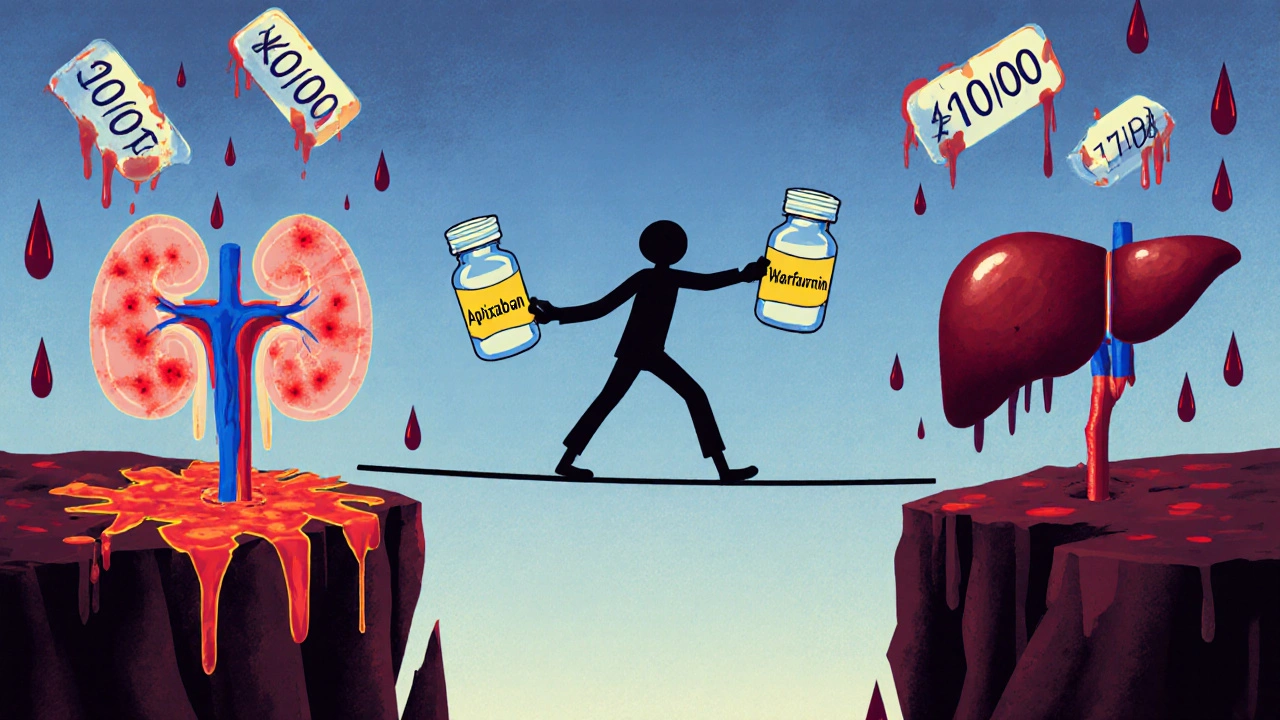
Managing blood thinners in kidney and liver disease is complex. Apixaban is often safest in moderate kidney disease, while warfarin remains common in severe cases. DOACs are risky in advanced liver failure. Real-world decisions rely on individual risk, not just guidelines.