Anticoagulants: What They Are, How They Work, and Who Needs Them
When your blood clots too easily, it can lead to strokes, heart attacks, or pulmonary embolisms. That’s where anticoagulants, medications that slow down the blood’s ability to form clots. Also known as blood thinners, they don’t actually thin your blood—they interrupt the clotting process at key points. These drugs aren’t for everyone, but for people with atrial fibrillation, deep vein thrombosis, or artificial heart valves, they’re life-saving.
Not all anticoagulants are the same. Warfarin, an older drug that’s been used for decades. Also known as Coumadin, it requires regular blood tests and careful diet management. Newer options, called DOACs, direct oral anticoagulants that target specific clotting factors. Also known as novel oral anticoagulants, they include apixaban, rivaroxaban, and dabigatran—drugs that work faster, need less monitoring, and have fewer food interactions. But here’s the catch: if you have kidney or liver problems, some of these drugs become risky. Apixaban is often preferred in moderate kidney disease, while warfarin still holds ground in severe cases. In advanced liver failure, even DOACs can be dangerous because your body can’t process them properly.
Anticoagulants don’t come with a manual you can ignore. A fall, an injury, or even an over-the-counter painkiller like ibuprofen can turn a safe dose into a medical emergency. That’s why the people who take them need to know their limits, understand warning signs like unusual bruising or dark stools, and communicate clearly with their doctors and pharmacists. The posts below cover real-world decisions: how doctors adjust doses for kidney disease, why some patients switch from warfarin to DOACs, and what happens when these drugs interact with other conditions like liver failure or pregnancy. You’ll find practical advice on managing side effects, avoiding dangerous combinations, and making sense of conflicting guidelines. This isn’t theory—it’s what actually happens in clinics and hospitals every day.
Garlic Supplements and Anticoagulants: What You Need to Know About Bleeding Risk
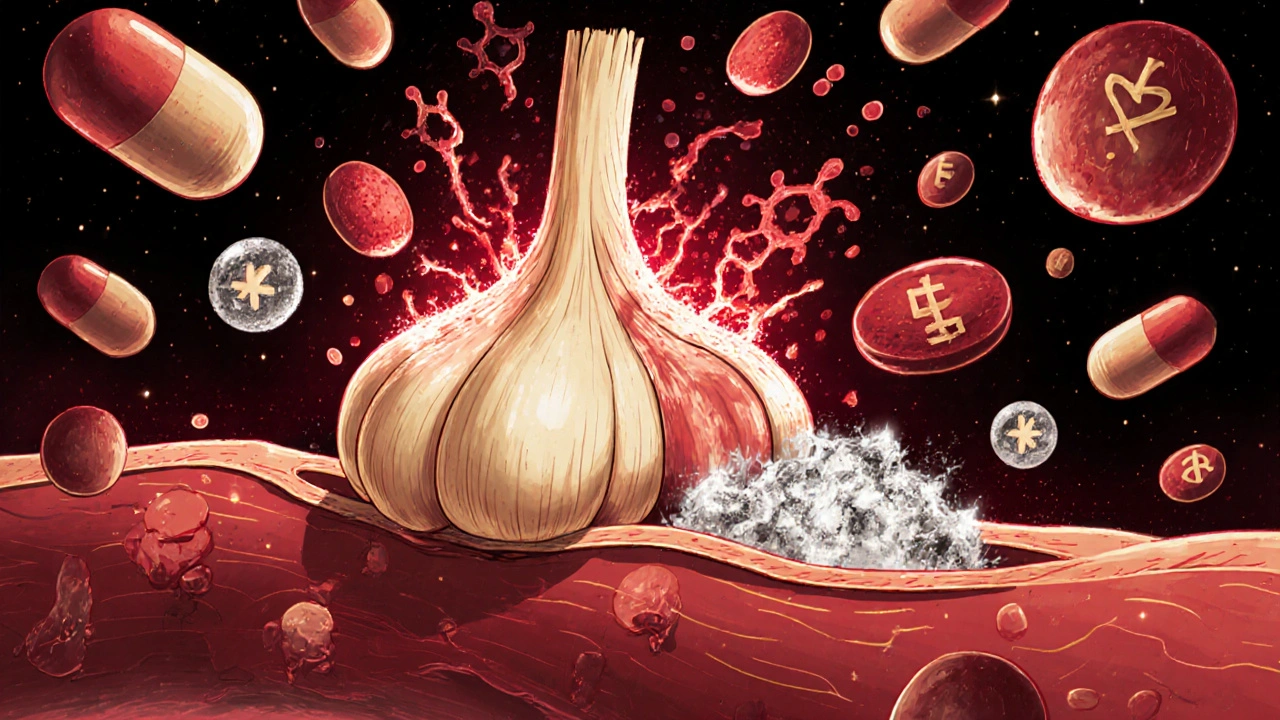
Garlic supplements can dangerously increase bleeding risk when taken with blood thinners like warfarin or apixaban. Learn the safe limits, when to stop before surgery, and which supplements are most risky.