Blood Thinners: What They Are, How They Work, and What You Need to Know
When your blood clots too easily, it can lead to strokes, heart attacks, or dangerous blockages in your lungs. That’s where blood thinners, medications that reduce your blood’s ability to form clots. Also known as anticoagulants, they don’t actually make your blood thinner—they just slow down the clotting process to keep things flowing safely. These drugs are life-saving for people with atrial fibrillation, deep vein thrombosis, or after heart valve replacements. But they’re not simple pills you take and forget. Getting them right means understanding your body, your other meds, and your health conditions.
Not all blood thinners are the same. warfarin, an older anticoagulant that’s been used for decades. Also known as Coumadin, it works by blocking vitamin K, which your body needs to make clotting factors. It’s cheap and effective, but it needs regular blood tests to make sure your dose is just right. Too much and you risk bleeding; too little and clots can still form. Then there are the newer options—DOACs, direct oral anticoagulants like apixaban, rivaroxaban, and dabigatran. Also known as novel oral anticoagulants, they don’t need constant monitoring and interact less with food. But they’re not safe for everyone. If you have advanced kidney disease, some DOACs can build up in your system and become dangerous. In liver failure, they might not break down properly. That’s why doctors often switch back to warfarin in severe cases—even though it’s older, it’s more predictable when organs aren’t working right.
What you might not realize is that your other medications can mess with blood thinners. Antibiotics, painkillers, even some herbal supplements can boost or weaken their effect. And if you’re over 65, fall risk goes up—because if you hit your head, bleeding inside your skull can be deadly. That’s why doctors don’t just pick a drug and call it a day. They look at your kidneys, your liver, your age, your other conditions, and your lifestyle. The right blood thinner isn’t about what’s newest or most expensive—it’s about what fits your body.
Below, you’ll find real-world advice from people who’ve been there: how to manage blood thinners with kidney disease, why some patients switch from DOACs to warfarin, what to ask your pharmacist, and how to avoid dangerous interactions. These aren’t textbook theories—they’re the decisions doctors make every day when the guidelines don’t give a clear answer.
Garlic Supplements and Anticoagulants: What You Need to Know About Bleeding Risk
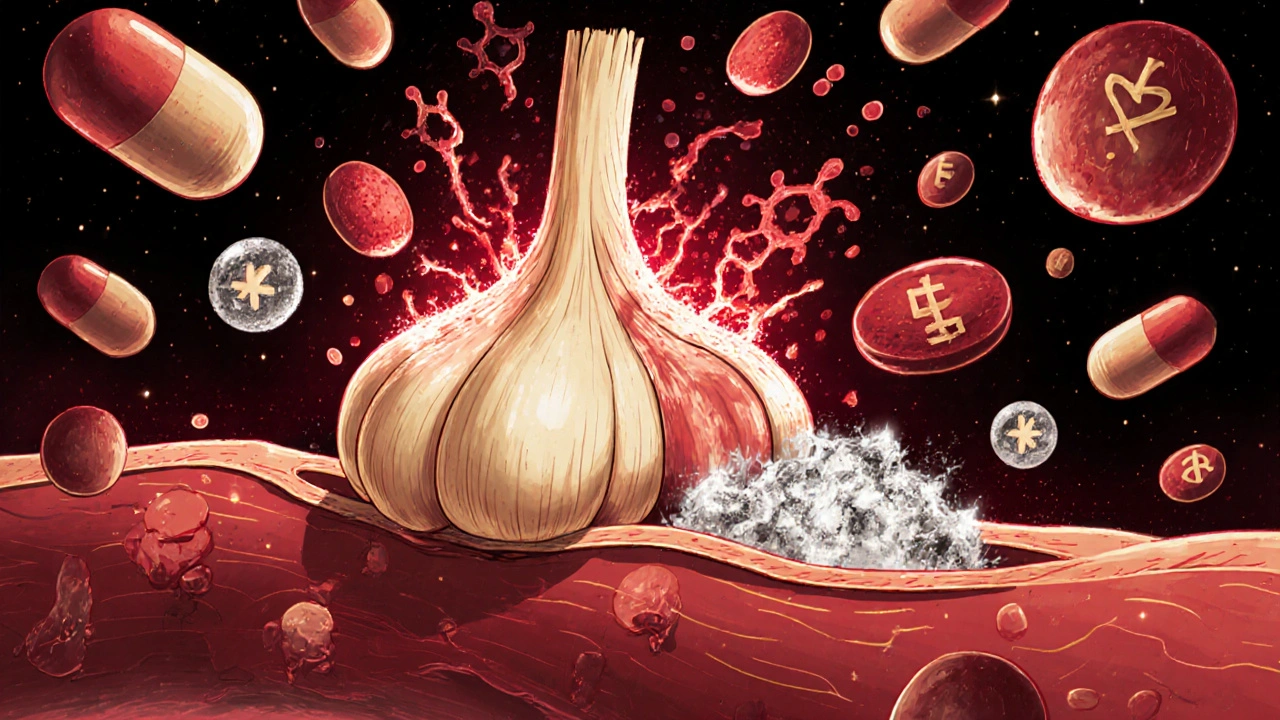
Garlic supplements can dangerously increase bleeding risk when taken with blood thinners like warfarin or apixaban. Learn the safe limits, when to stop before surgery, and which supplements are most risky.