
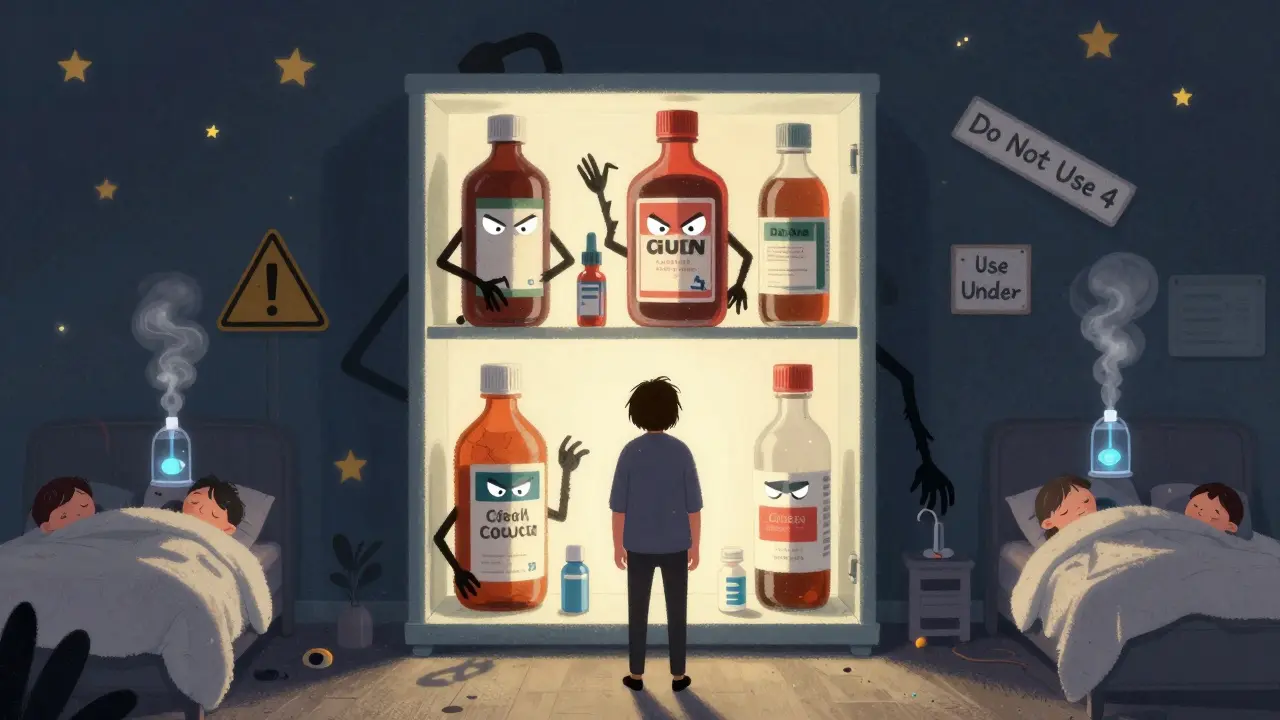
Every winter, parents face the same exhausting cycle: a runny nose, a wet cough, sleepless nights - and the urge to reach for that bottle of children’s cough and cold medicine sitting in the cupboard. But here’s the hard truth: OTC cold medicine for kids isn’t just ineffective for young children - it can be dangerous.
Why OTC Cold Medicines Don’t Work for Young Kids
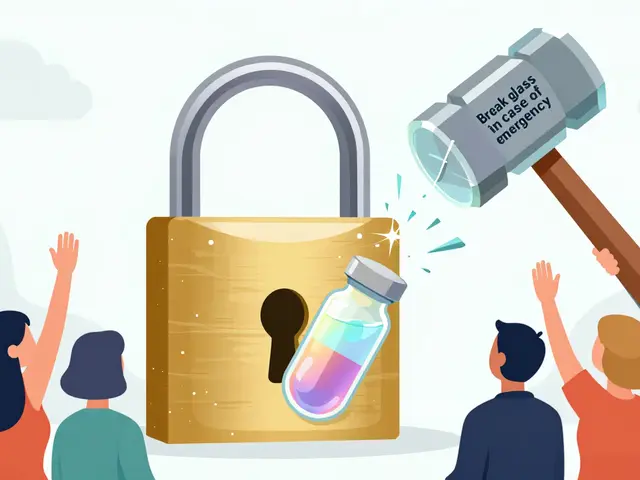
If you’ve ever given your 3-year-old a dose of Children’s Robitussin or Dimetapp hoping to stop the coughing, you’re not alone. But the science is clear: these medicines don’t actually work for kids under 6. Not because they’re poorly made - because they were never proven to help in the first place. The U.S. Food and Drug Administration (FDA) reviewed hundreds of studies back in 2007 and found zero solid evidence that cough suppressants like dextromethorphan or decongestants like pseudoephedrine relieve symptoms in children under 12. The same goes for antihistamines like diphenhydramine. These ingredients were approved decades ago based on adult data - not real testing in kids. And now, we know better. A 2019 study in Pediatrics looked at over 1,500 cases of kids under 12 who were given these medicines. Only 1 in 5 showed any noticeable improvement. Meanwhile, 72% of those cases ended in hospital visits because of side effects - not because the cold got worse, but because the medicine did.The Real Danger: Overdose and Accidental Poisoning
The biggest risk isn’t that the medicine doesn’t work - it’s that it can kill. Between 2004 and 2005, about 5.2% of all reported drug overdoses in children came from OTC cold and cough products. That’s not a small number. It’s over 1,000 kids a year, just in the U.S., who ended up in the emergency room because they swallowed too much - or because someone gave them the wrong dose. Why does this happen so often? Because most of these products contain multiple active ingredients. A single bottle might have a cough suppressant, a decongestant, an antihistamine, and an expectorant - all in one. Parents think they’re helping by giving one medicine for multiple symptoms. But they’re accidentally doubling up. If your child already took acetaminophen for fever, and then you give them a cold medicine that also has acetaminophen? That’s liver damage waiting to happen. And it’s not just dosing errors. Kids are curious. They see a colorful bottle with a sweet taste. They open it. They drink it. Between 2019 and 2022, poison control centers got over 12,000 calls about children under 4 accidentally ingesting cold medicine. Over 40% of those cases involved toddlers aged 1 to 2. Most didn’t need treatment. But nearly a third ended up hospitalized.Age Limits: Why Under 4 Is the Rule - and Why Some Say Under 6
In 2008, the FDA and major drug makers agreed: don’t use OTC cold medicines in children under 4. That’s the official rule. Every label now says it clearly: “Do not use in children under 4 years of age.” But here’s where things get messy. Some products still say “for ages 2 and up.” Others have warnings for under 6. Why the confusion? Because manufacturers are slowly updating labels, and some older bottles are still on shelves. The American Academy of Pediatrics (AAP) has been pushing for a stricter limit - under 6 - since 2014. And in 2022, they formally recommended it. The European Medicines Agency banned these medicines for kids under 6 back in 2009. Switzerland went even further in 2022 and banned all cough medicines with dextromethorphan for kids under 12. So the U.S. rule isn’t just arbitrary - it’s backed by global evidence. And here’s something most parents don’t know: age-based dosing is flawed. A 2-year-old can weigh anywhere from 22 to 32 pounds. Giving the same dose to both based on age? That’s how you get underdosing or overdosing. Weight-based dosing works for acetaminophen and ibuprofen - why not for cold meds? Experts say it’s time to make that change.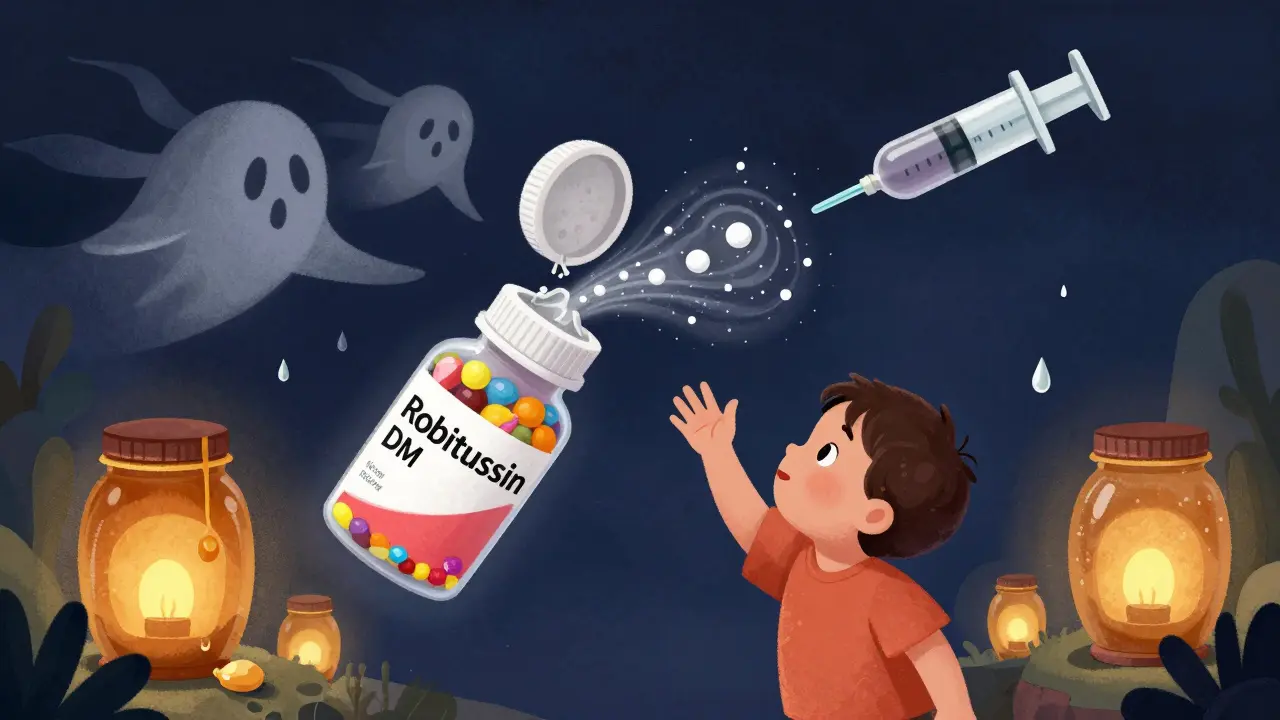
What Parents Are Still Doing (And Why)
Despite all the warnings, a 2021 AAP survey found that 38% of parents still give OTC cold medicine to kids under 4. Why? Most say they’re following advice - but only 17% actually asked a doctor. The rest got tips from friends, online forums, or even pharmacists who didn’t know the latest guidelines. On Reddit, parents write things like: “My 2-year-old couldn’t sleep, so I gave him Robitussin DM - just half a teaspoon. It helped.” That’s heartbreaking. And dangerous. One teaspoon of Robitussin DM contains 5mg of dextromethorphan. For a 25-pound toddler, that’s close to the toxic threshold. One study found that just 10mg of dextromethorphan in a child under 2 could cause seizures. You don’t need much to cross that line. And the emotional pressure is real. When your child is coughing all night, you want to fix it. But giving medicine that doesn’t work and might hurt them? That’s not helping. That’s risking everything.What Actually Works for Kids With Colds
So if you can’t use cold medicine, what can you do? For nasal congestion: Use saline nasal drops (0.9% sodium chloride) - two drops in each nostril, up to four times a day. Then gently suction with a bulb syringe or nasal aspirator. This is the #1 recommendation from the AAP and CDC. It’s safe, cheap, and works. For cough: For kids over 1 year old, give 2.5 mL (half a teaspoon) of honey before bed. A 2018 Cochrane review showed honey reduced cough frequency and severity better than placebo - and better than some OTC cough syrups. Honey is natural, soothing, and doesn’t carry the risk of overdose. For fever or discomfort: Use acetaminophen (10-15 mg/kg every 4-6 hours) or ibuprofen (5-10 mg/kg every 6-8 hours). These are proven safe and effective for kids over 6 months. But never combine them with cold medicines - many cold products already contain acetaminophen. For hydration and comfort: Keep your child drinking fluids. Offer water, breast milk, or electrolyte solutions. Use a cool-mist humidifier in the room. Keep the air at 40-60% humidity. This loosens mucus and makes breathing easier. For sleep: Elevate the head of the crib slightly. You can roll up a towel and put it under the mattress. It helps reduce post-nasal drip and coughing at night.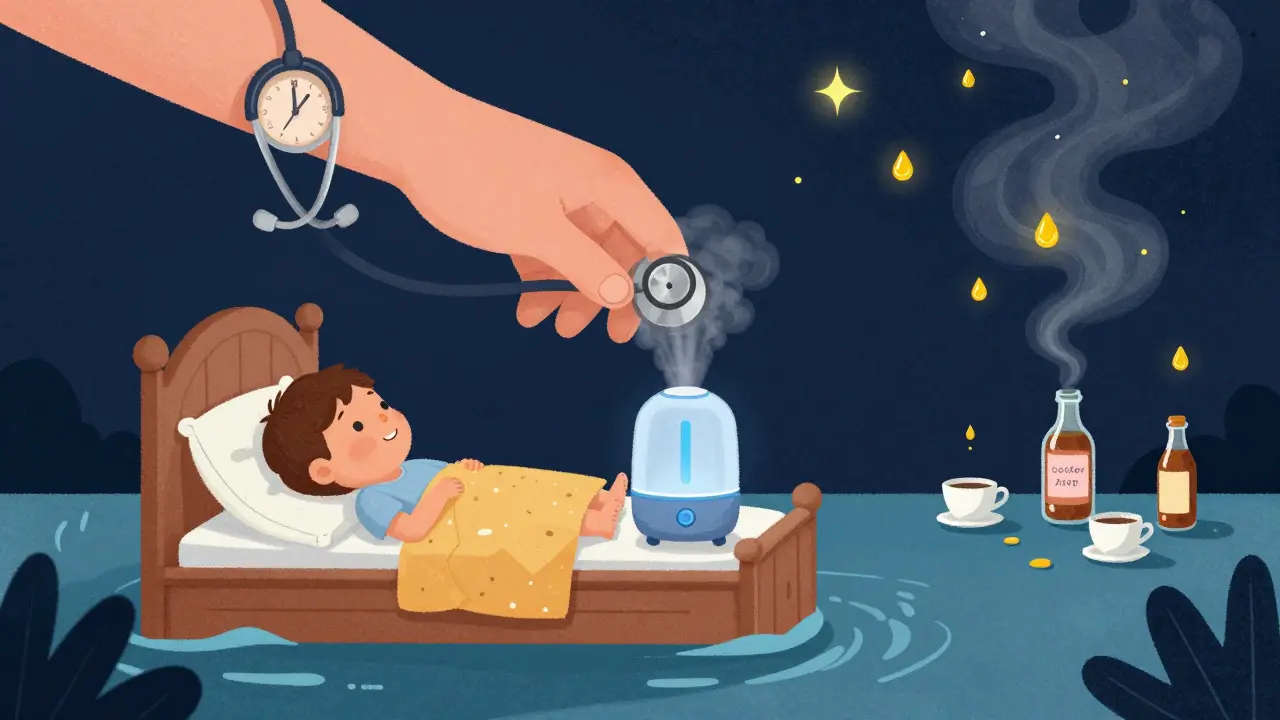
What to Avoid at All Costs
Here’s a quick list of what you should never give your child for a cold:- Any OTC cough or cold medicine for children under 4
- Multi-symptom products (they’re the most dangerous)
- Adult cold medicines - even half a dose
- Codeine or hydrocodone cough syrups (banned for under 18)
- Herbal or “natural” cough remedies without FDA approval
- Using kitchen spoons to measure doses - always use the dosing cup or syringe that comes with the medicine
The Future: What’s Changing
The good news? Things are moving in the right direction. The FDA is drafting new rules expected by mid-2025 that will require manufacturers to prove safety and effectiveness in children before selling any OTC pediatric medicine. That’s huge. It means no more guessing. Some companies are already testing lower-dose formulas for kids 2-4 years old. Early results show that cutting the dose in half may reduce side effects while still helping symptoms. But until those are approved, stick to the current guidelines. Meanwhile, sales of pediatric cold medicines have dropped 30% since 2007. Parents are slowly learning. Saline sprays and humidifiers are now bigger markets than cough syrups.Final Takeaway: Less Medicine, More Care
Colds are uncomfortable. They’re exhausting. But they’re almost never dangerous for healthy kids. Your child’s immune system is built to handle them. What they need isn’t a chemical fix - it’s rest, fluids, and your presence. You don’t need to medicate to care. Sometimes, the most powerful thing you can do is sit with them, read a book, and hold their hand while they cough through the night. The next time you reach for that bottle, ask yourself: Am I trying to help my child - or just ease my own anxiety? Because if you’re doing it for them, you’ll choose the safer path. And that’s the best medicine of all.Can I give my 3-year-old children’s cough medicine if I cut the dose in half?
No. Even half a dose of OTC cough or cold medicine can be dangerous for a child under 4. These medicines aren’t just stronger than they seem - they can cause seizures, rapid heart rate, or breathing problems at very low amounts. The risk isn’t about how much you give - it’s that the medicine itself isn’t safe for young children, no matter the dose.
Is honey really safe for toddlers with coughs?
Yes - but only for children over 1 year old. Honey can cause infant botulism in babies under 12 months, which is rare but life-threatening. For kids 1 and older, 2.5 mL (half a teaspoon) of honey before bed has been shown in multiple studies to reduce coughing better than many OTC syrups. It’s a natural, effective option with no risk of overdose.
What should I do if my child accidentally swallows cold medicine?
Call Poison Control immediately at 1-800-222-1222 (U.S.) or your local poison center. Do not wait for symptoms to appear. Even if your child seems fine, ingredients like dextromethorphan or pseudoephedrine can cause delayed reactions. Keep the medicine bottle handy - the poison control team will need to know exactly what was ingested.
Are natural or herbal cold remedies safe for kids?
Not necessarily. Products labeled “natural” or “herbal” aren’t regulated like medicines. Some contain unlisted ingredients, including stimulants or sedatives. Others have been found to contain heavy metals or pesticides. Stick to evidence-based options like saline drops, honey (for kids over 1), and humidifiers - not unproven supplements.
Why do some labels say “for ages 2 and up” if the rule is under 4?
Some older products still have outdated labels, and manufacturers are still updating packaging. The FDA and CHPA guidelines say “do not use under 4,” and that’s the official standard. If a label says “2 and up,” it’s either outdated or misleading. Always follow the most recent safety guidelines - not the bottle. When in doubt, don’t use it.

8 Comments
This is the most terrifying thing I've read all year. I mean, I had no idea that a single teaspoon of Robitussin could send my kid to the ER-let alone cause SEIZURES. I gave my 3-year-old that stuff last winter because her cough sounded like a dying raccoon. I thought I was being a good mom. Turns out I was basically playing Russian roulette with her brainstem. I'm deleting every OTC bottle in my house right now. #ParentingFail #NeverAgain
/p>While I appreciate the intent of this article, the underlying assumption-that parents are uniformly irrational actors who blindly follow internet advice-is both patronizing and empirically unsound. Many of us have consulted pediatricians, reviewed FDA advisories, and weighed risk-benefit ratios before making decisions. The real issue is not parental negligence, but the pharmaceutical industry’s historical failure to conduct rigorous pediatric trials. Blaming caregivers ignores systemic failure.
/p>Wow. So you’re telling me the only thing that works for a kid’s cough is honey and a towel under the mattress? And the medicine that’s been on shelves for 50 years is now the villain? I’m not mad, I’m just… impressed. Also, I gave my niece honey last week and she stopped coughing before the second spoonful. I’m calling it: nature won. Again.
/p>Let me ask you this: who really benefits from this ‘safe alternative’ narrative? The honey industry? The humidifier manufacturers? The pediatricians who now get paid to sit around watching kids cough? And what about the fact that the FDA banned these drugs in 2007… but didn’t recall them? Why are they still on shelves? Why do pharmacies still sell them? Why does the label say ‘2 and up’ if the FDA says ‘4 and under’? Someone’s making money off this confusion-and it’s not you. It’s not the parents. It’s the corporations that never tested these drugs on children in the first place… and now they’re letting YOU feel guilty for trying to help. Wake up. This isn’t about safety. It’s about control.
/p>OMG I just realized I gave my 2-year-old a whole dropper of Dimetapp last month 😭 I thought it was ‘just a little’… now I’m crying in the shower. Also, I’ve been using a kitchen spoon because the dosing cup ‘got lost.’ I’m so stupid. I’m going to buy 10 new syringes. And honey. And a humidifier. And maybe therapy. 🥲
/p>There is a profound philosophical dissonance here: we are told to trust science, yet we are simultaneously denied access to the very tools science once sanctioned-without adequate, accessible alternatives being universally implemented. The moral burden is placed on the parent, while the infrastructure-the regulatory clarity, the standardized dosing systems, the affordable, evidence-based pediatric formulations-remains fragmented and underdeveloped. To demand parental perfection in the absence of systemic support is not prudence; it is moral hypocrisy.
/p>In my village in Nigeria, when a child coughs, we boil ginger with honey and a pinch of black pepper. We don’t have fancy bottles, but we have wisdom passed through generations. This article reminds me: science and tradition can walk hand in hand. The real tragedy isn’t the medicine-it’s the disconnect. We’ve forgotten that care isn’t measured in milligrams, but in presence. A warm hand on a fevered brow, a quiet song at midnight-those are the remedies no label can contain.
/p>As a pediatric nurse with 18 years of experience, I can confirm: the data is unequivocal. OTC cough and cold medications in children under 6 carry no proven benefit and significant, documented risk. The most common cause of accidental pediatric poisoning in our ER? Cough syrup. The most effective intervention? Saline drops and suction. The most underutilized tool? Parental patience. I’ve seen children recover from 7-day colds without a single drop of medicine-just fluids, rest, and love. You don’t need to fix it. You just need to be there.
/p>