

Many older adults reach for over-the-counter antihistamines like Benadryl to help with allergies, colds, or trouble sleeping. But what if that nightly pill could be quietly increasing the risk of memory problems down the road? The answer isn’t simple - and it’s changing fast. While some studies say there’s a clear link between long-term use of certain antihistamines and dementia, others say the evidence is weak or misleading. What’s not up for debate: first-generation antihistamines like diphenhydramine and doxylamine carry real anticholinergic effects that can interfere with brain function - especially in people over 65.
Why Some Antihistamines Are Riskier Than Others
Not all antihistamines are created equal. There are two main types: first-generation and second-generation. The difference isn’t just about how well they work for sneezing - it’s about what they do inside your brain.First-generation antihistamines - including diphenhydramine (Benadryl), doxylamine (Unisom), and chlorpheniramine (Chlor-Trimeton) - cross the blood-brain barrier easily. Once there, they block acetylcholine, a key chemical messenger involved in memory, attention, and learning. This is why they make you drowsy. But that same effect, over years of nightly use, may contribute to cognitive decline. Preclinical studies show these drugs bind tightly to muscarinic receptors in the brain, with affinity values as low as 10-100 nM - meaning they’re potent inhibitors.
Second-generation antihistamines - like loratadine (Claritin), cetirizine (Zyrtec), and fexofenadine (Allegra) - were designed to avoid this. Thanks to special transporters called P-glycoprotein, they’re pushed back out of the brain before they can cause much disruption. Their anticholinergic activity is 100 to 1,000 times weaker than first-generation versions. In practical terms: if you’re taking one of these for allergies, you’re not putting your brain at the same risk.
The Evidence: What the Studies Really Say
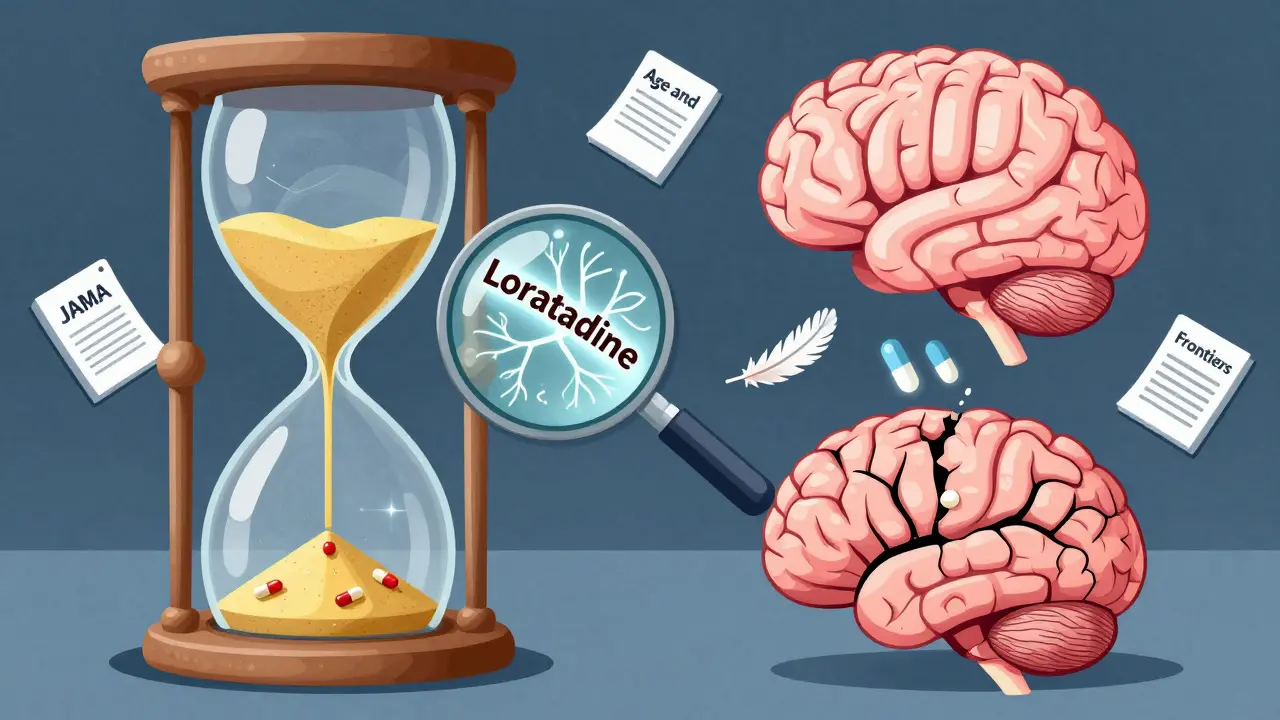
The biggest concern came from a 2015 study in JAMA Internal Medicine that followed over 3,400 people aged 65 and older for a decade. Researchers tracked their medication use and found a higher risk of dementia among those who took anticholinergic drugs regularly - especially antidepressants, bladder meds, and antipsychotics. But here’s the twist: when they looked at antihistamines alone, the risk wasn’t statistically significant. The hazard ratio? Exactly 1.00. No increase. No decrease.That contradicts another study - a 2021 meta-analysis in Age and Ageing - which pooled data from multiple trials and found a 46% higher dementia risk with any anticholinergic use over three months. But that study lumped everything together: sleep aids, antidepressants, bladder meds, and antihistamines. That’s like saying eating apples and oranges both cause weight gain, without checking which one actually does.
Then came the 2022 study in Frontiers in Aging Neuroscience with nearly 9,000 older adults. It found dementia rates of 3.83% among users of first-gen antihistamines versus 1.0% among second-gen users. But after adjusting for age, health conditions, and other meds, the difference wasn’t statistically significant. The hazard ratio? 1.029 - practically flat. Even those who took first-gen antihistamines for over four years didn’t show a clear rise in risk.
And here’s another layer: the 2023 UK Biobank analysis found no link between antihistamine use and dementia when researchers controlled for sleep disorders. That’s important. Many people take these drugs because they have insomnia - and insomnia itself is linked to cognitive decline. So is the drug causing the problem, or is it the reason they’re taking the drug?
What Experts and Guidelines Say
The American Geriatrics Society updated its Beers Criteria in 2023 - the gold standard for safe prescribing in older adults. They gave first-generation antihistamines a firm “Avoid” rating with Level A evidence. That’s the strongest possible warning. They say the risks outweigh any benefits for long-term use in people 65+.Dr. Shelley Gray, lead researcher on the landmark 2015 study, makes this clear: “The association appears strongest for specific drug classes like antidepressants and bladder medications, not uniformly across all anticholinergics.” In other words, don’t panic because you took Benadryl once. But if you’ve been taking it every night for five years? That’s a different story.
Meanwhile, the European Medicines Agency says the evidence is “inconsistent” and calls for more long-term studies. The FDA, while requiring dementia warnings on prescription anticholinergics, still allows OTC products like Benadryl to carry only a simple “may cause drowsiness” label.
Why So Many People Are Still Taking Them
You’d think with all this warning, people would stop. But they don’t. A 2022 survey by the National Council on Aging found 42% of adults over 65 regularly use OTC antihistamines for sleep. And 78% had no idea these drugs have anticholinergic effects.On Reddit, a verified geriatric care manager wrote: “83% of my clients over 70 are taking diphenhydramine nightly. They think it’s harmless.”
Why? Because it works. It’s cheap. It’s easy. It’s in every pharmacy aisle. And doctors - especially in primary care - often prescribe it out of habit, not because they’ve reviewed the risks. One 2023 AgingCare.com post from a daughter whose mother developed dementia after years of Benadryl use sums it up: “My mother’s doctor prescribed it for years. Now I can’t help but wonder.”
What to Do Instead
If you or a loved one is using diphenhydramine or doxylamine for sleep or allergies, here’s what to consider:- Switch to second-generation antihistamines. Loratadine, cetirizine, and fexofenadine work just as well for allergies with no brain-blocking effects. They’re available over the counter and cost about the same.
- For sleep, try CBT-I. Cognitive Behavioral Therapy for Insomnia has been shown to help 70-80% of older adults. It’s not a pill - it’s a structured program that reteaches your brain how to sleep. The downside? It’s hard to find a therapist, and Medicare pays only $85-$120 per session. But it’s safer than any long-term medication.
- Consider low-dose doxepin. This prescription sleep aid (Silenor) has an anticholinergic burden score of 1 - very low. It’s approved for insomnia and doesn’t cause the same cognitive fog as Benadryl.
- Review all meds every six months. The American Academy of Neurology recommends this. Ask your pharmacist or doctor: “Is this still necessary? Is there a safer alternative?”
The Bigger Picture: A Shift in How We Think About Sleep and Aging
The real issue isn’t just Benadryl. It’s how we treat aging. Instead of asking why someone can’t sleep, we hand them a pill. We’ve normalized long-term use of sedating drugs as part of growing older. But the truth is, sleep problems in older adults often stem from untreated conditions - sleep apnea, restless legs, chronic pain, or even depression.The Choosing Wisely campaign, led by the American Board of Internal Medicine, specifically advises against using diphenhydramine for chronic insomnia in older adults. That’s not a suggestion. It’s a standard of care.
Market trends reflect this shift. First-gen antihistamine sales dropped 23.7% between 2015 and 2022. Second-gen sales jumped 18.4%. More pharmacies now put warnings on shelves. More doctors are asking questions. The conversation is changing.
What’s Next?
A major study called ABCO - funded by the NIH with $4.2 million - began in January 2023 and is tracking 5,000 people over 10 years. It’s the first to use detailed daily medication logs and annual cognitive testing. Results are expected by 2033.In the meantime, the American Geriatrics Society’s 2024 Beers Criteria update is coming in June. It’s expected to refine risk levels even further - possibly separating antihistamines by specific drug, not just by generation.
For now, the safest path is clear: if you’re taking diphenhydramine or doxylamine regularly, talk to your doctor. Don’t stop cold turkey - especially for sleep. But do ask: is this still helping? Is there a better way?
Are all antihistamines linked to dementia?
No. Only first-generation antihistamines like diphenhydramine (Benadryl) and doxylamine have strong anticholinergic effects that may affect cognition over time. Second-generation antihistamines like loratadine (Claritin) and cetirizine (Zyrtec) have minimal to no brain penetration and are considered safe for long-term use in older adults.
Can I stop taking Benadryl cold turkey?
Not if you’re using it for sleep. Stopping suddenly can cause rebound insomnia or anxiety. Talk to your doctor first. They can help you taper off safely or switch to a non-anticholinergic alternative like melatonin, low-dose doxepin, or cognitive behavioral therapy for insomnia (CBT-I).
Is it safe to take antihistamines occasionally?
Yes. Taking a first-generation antihistamine once in a while - like for a bad allergy day - is unlikely to cause harm. The concern is long-term, daily use over years. That’s when the cumulative anticholinergic burden can start to affect memory and attention.
Why aren’t antihistamines banned if they’re risky?
They’re not banned because they’re effective for short-term use, and the risk is dose- and duration-dependent. Regulatory agencies like the FDA and EMA require updated labeling and warnings, but banning OTC drugs requires overwhelming evidence of harm - which isn’t yet clear-cut. The focus now is on education and safer alternatives.
What’s the Anticholinergic Cognitive Burden Scale?
It’s a tool that rates how much a drug affects brain function based on its anticholinergic strength. Diphenhydramine scores a 3 - the highest level. Second-gen antihistamines score 0. Medications with a score of 2 or higher are flagged as risky for older adults. Doctors can use this to review prescriptions and make safer choices.






12 Comments
It’s wild how we’ve normalized drugging ourselves to sleep like it’s just part of aging. I’ve seen my grandma take Benadryl every night for 12 years-she never questioned it. But when she started forgetting where she put her glasses… or that she’d already eaten dinner… I realized it wasn’t just old age. It was pharmacology. The science is clear: anticholinergics aren’t harmless. They’re silent thieves of cognition. And we’re letting them walk right into our medicine cabinets.
/p>Oh please. Another fear-mongering article. You’re acting like Zyrtec is a miracle drug and Benadryl is the devil. Wake up. People have been taking diphenhydramine for decades and we’re still here. My uncle took it every night since the 80s and he’s 91, still golfing. You want to scare people? Fine. But don’t pretend this is some groundbreaking revelation. It’s not. It’s just trendy neuro-hysteria.
/p>Thank you for writing this 🙏 I’ve been terrified to stop my nightly Unisom because I thought I’d never sleep again. But now I’m switching to cetirizine + a sleep mask + white noise. Small changes. No drama. Just… better. I didn’t know second-gen antihistamines were this safe. Also, CBT-I sounds like a lot of work, but I’d rather work than be a zombie. 💤🧠
/p>Interesting read. In India, many older people use antihistamines for colds and allergies, not sleep. But they don’t take them daily. Most use them for 2-3 days and stop. Maybe the risk is tied to chronic use, not the drug itself. Also, in rural areas, people don’t even know what anticholinergic means. They just know it helps them breathe. Education matters more than fear.
/p>The data presented here is methodologically sound and aligns with current geriatric pharmacology guidelines. The American Geriatrics Society’s Beers Criteria is not arbitrary-it is evidence-based and updated annually. The burden of proof lies with those who continue prescribing first-generation antihistamines to older adults without a clear clinical indication. This is not a matter of opinion; it is a matter of patient safety.
/p>My mom took Benadryl for 7 years. She forgot my wedding. She forgot my dog died. She forgot I existed for three days. I’m not blaming her. I’m blaming the system. Why did her doctor never warn us? Why is this still OTC? Why is there no warning label like on cigarettes? I’m not mad. I’m just… done. We need to do better. 💔
/p>I work with seniors and see this every day. People think if it's in the pharmacy aisle it's safe. But we don't teach them about brain chemistry. We just hand them the bottle. We need community workshops. Not more articles. Real talk. With pictures. In their language. In their homes. Not online./p>
Why are we even talking about this? America is falling apart and we’re worried about some old lady taking a sleep pill? What about the real problems? Like food insecurity? Loneliness? Medicare fraud? This is just woke medical theater. Let people take what helps them sleep. If they forget things later, that’s their problem. We have bigger fires to put out./p>
Oh honey. You think Benadryl is the villain? Please. Have you seen the cocktail of NSAIDs, statins, proton-pump inhibitors, and beta-blockers half these seniors are on? That’s the real anticholinergic dumpster fire. One little diphenhydramine pill? Pfft. It’s like blaming a single drop of water for the flood. This whole narrative is a distraction-designed to sell you Zyrtec ads and CBT-I subscriptions. Wake up. It’s not the drug. It’s the system.
/p>Let me just say, as someone who has spent 14 years in palliative care and witnessed the slow unraveling of cognition in the elderly… this is not speculation. This is a tragedy. A quiet, systemic, heartbreaking tragedy. The fact that we allow a drug with a Level A avoidance rating to remain on pharmacy shelves without a mandatory warning label… is not negligence. It is moral failure. We have normalized the erasure of memory in exchange for a few hours of sleep. And we call it progress.
/p>In my village in Tamil Nadu, elders use neem leaves, warm milk, and quiet walks to sleep. No pills. No fear. Just rhythm. Maybe the answer isn’t better drugs but better lives. Less loneliness. More routine. More sunlight. More connection. The pill is a bandage. We forgot how to heal./p>
Thank you for the thorough breakdown. The ABCO study is critical. Until we have longitudinal data tracking daily use patterns and cognitive decline in real time, we’re operating on fragmented evidence. But the precautionary principle applies here. When the risk is irreversible-dementia-and the alternative is safe, cheap, and effective, the choice is clear. No need for controversy. Just common sense.
/p>