Imagine spending your day mapping out every single bathroom in a shopping center or skipping a dinner party because you're terrified of how your gut will react. If you've dealt with chronic bloating, cramping, or unpredictable bathroom trips, you've probably wondered if you're dealing with Irritable Bowel Syndrome (IBS) or something more severe like Inflammatory Bowel Disease (IBD). While they sound similar and share a lot of the same frustrating symptoms, they are completely different beasts. One is a glitch in how your gut works; the other is an actual physical attack on your digestive tissues.
| Feature | IBS (Functional) | IBD (Structural) |
|---|---|---|
| Physical Damage | None (Gut looks normal) | Ulcers, inflammation, scarring |
| Blood in Stool | Very Rare/None | Common (especially in UC) |
| Systemic Symptoms | Rarely causes fever/weight loss | Fever and weight loss common |
| Diagnostic Tool | Rome IV Criteria (Exclusion) | Colonoscopy, Biopsy, MRI |
| Risk of Cancer | No increased risk | Increased risk (long-term) |
What Exactly is IBS? The "Glitchy" Gut
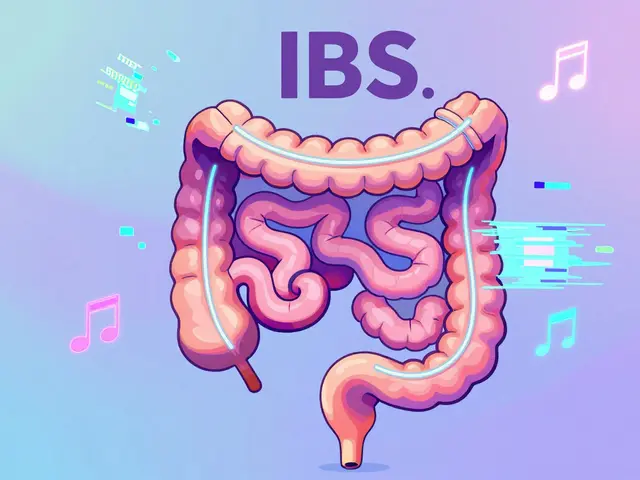
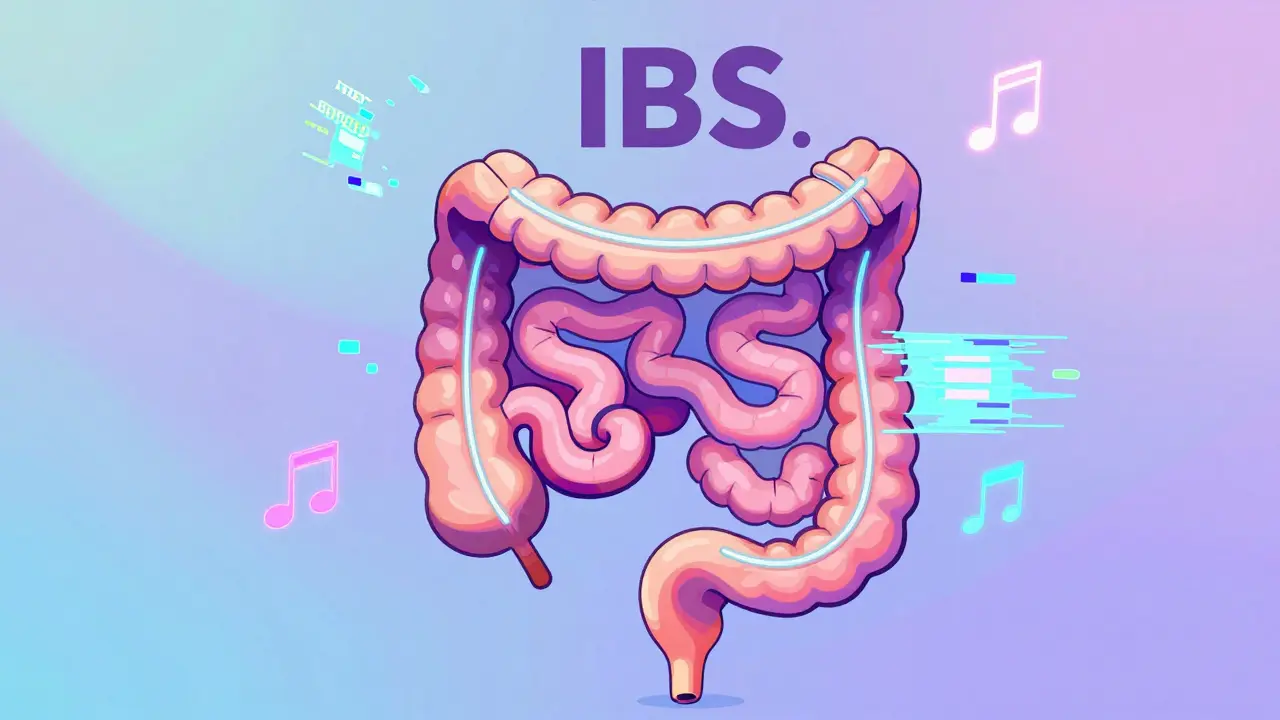
Think of Irritable Bowel Syndrome as a software problem. Your hardware (the intestines) is built perfectly fine-there are no holes, no sores, and no inflammation-but the "code" that tells your gut how to move and feel is buggy. In medical terms, this is a functional gastrointestinal disorder. According to the Rome IV criteria, which experts use to diagnose the condition, the main hallmark is abdominal pain happening at least once a week for three months, usually paired with a change in how often you go to the bathroom.
For most people with IBS, the issue is motility and sensitivity. Your gut might move too fast (leading to diarrhea) or too slow (leading to constipation), or it might just be hypersensitive to the gas and food moving through it. About 76% of patients report bloating, and many experience mucus in their stool. It's incredibly disruptive-some people even find themselves willing to give up caffeine or social activities just to get a day of peace-but it doesn't cause permanent damage to your insides.
What Exactly is IBD? The Physical Attack
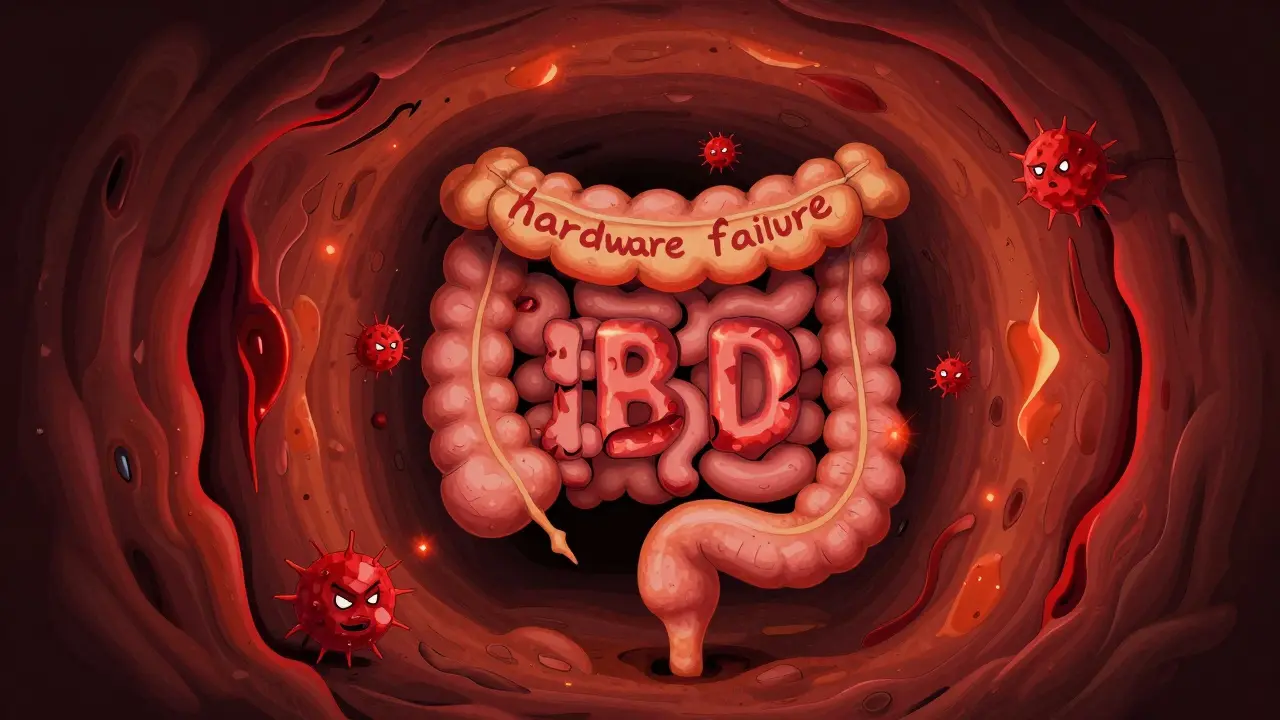
If IBS is a software glitch, Inflammatory Bowel Disease is a hardware failure. IBD is an umbrella term for two primary conditions: Crohn's Disease and Ulcerative Colitis. In these cases, the body's immune system essentially attacks the lining of the digestive tract, causing chronic inflammation, deep ulcers, and sometimes actual holes (perforations) in the bowel wall.
While Ulcerative Colitis typically stays in the colon and rectum, Crohn's Disease can hit anywhere from the mouth to the anus. This inflammation isn't just "irritation"; it's structural damage. We're talking about strictures (where the bowel narrows) and fistulas (abnormal tunnels between organs). Because the damage is physical, IBD can lead to severe complications like toxic megacolon or an increased risk of colorectal cancer if left unmanaged over a decade.
Red Flags: When It's Probably Not Just IBS
Because both conditions cause cramping and diarrhea, it's easy to confuse them. However, there are "alarm features" that should immediately signal a need for a doctor. If you have IBS, you generally won't wake up in the middle of the night with a fever or suddenly lose 10 pounds without trying. These are systemic responses to inflammation, not functional glitches.
The biggest red flag is hematochezia-which is just a fancy way of saying blood in your stool. While IBS can occasionally cause a bit of blood if you have a hemorrhoid from straining, blood coming from the intestinal lining is a classic sign of IBD. In fact, about 92% of people with ulcerative colitis experience bloody stools. Other warning signs include:
- Unexplained weight loss (common in 65% of IBD cases).
- Persistent low-grade fever.
- Joint pain or skin rashes (extraintestinal manifestations like uveitis or arthritis).
- Anemia, often showing up as extreme fatigue.
How Doctors Tell the Difference
Diagnosing IBS is often a process of elimination. Since there's no single blood test that says "Yes, you have IBS," doctors use the Rome IV guidelines and rule out other things first. If your blood work is clean, your inflammatory markers are low, and a colonoscopy shows a healthy-looking gut, you're likely looking at IBS.
IBD, on the other hand, leaves a trail of evidence. Doctors look for specific biological markers. For example, C-reactive protein (CRP) is a protein in your blood that spikes during inflammation. If your CRP levels are over 5 mg/L, it's a strong signal. They also use a stool test for fecal calprotectin; if this protein is high (above 250 µg/g), it's almost always a sign of active inflammation rather than just a sensitive gut.
The gold standard for IBD is the colonoscopy with a biopsy. A pathologist looks at the tissue under a microscope to find mucosal inflammation or granulomas, which are practically never present in IBS patients.
Different Problems, Different Solutions
You wouldn't try to fix a broken screen by updating the app's software, and you can't treat IBD with the same tools used for IBS. Because IBD is an autoimmune-driven inflammatory process, the goal is to suppress the immune system to stop the damage. This is where biologics and anti-TNF agents like infliximab come in. These heavy-hitters target the proteins causing the inflammation to bring the patient into remission.
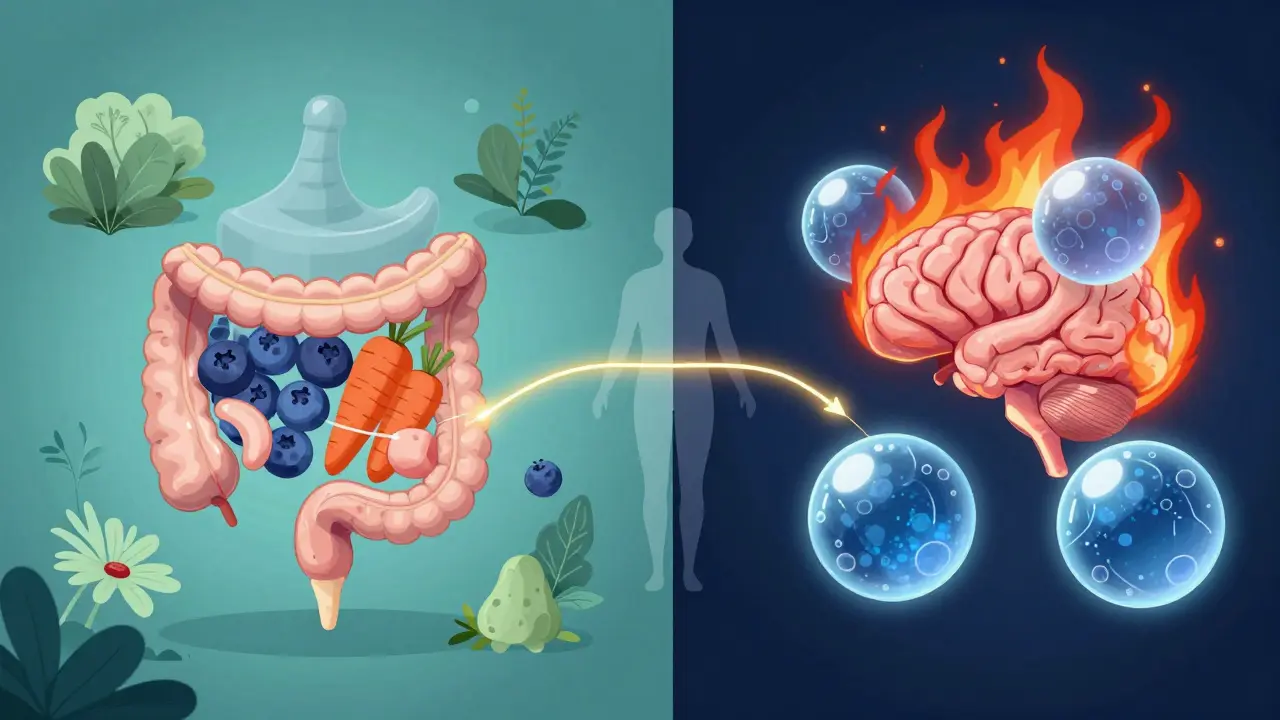
IBS management is all about soothing the system and managing triggers. Many find success with the low-FODMAP diet, which removes certain fermentable carbs that cause gas and bloating. Since the gut-brain axis plays a huge role in how we perceive pain, some doctors prescribe low-dose tricyclic antidepressants. These aren't for depression, but to "turn down the volume" on the pain signals traveling from the gut to the brain.
Can You Have Both?
Here is a surprising twist: yes, you can actually have both. It sounds like a nightmare, but it's more common than you'd think. About 22-35% of people with IBD who have their inflammation under control (meaning they are in remission) still meet the criteria for IBS. Their bowel is no longer bleeding or ulcerated, but it still functions erratically, causing bloating and pain. This is why treating IBD often requires a dual approach: biologics to stop the inflammation and dietary or behavioral changes to manage the lingering functional symptoms.
Can IBS turn into IBD over time?
No. This is a common myth, but IBS does not cause structural damage and cannot "evolve" into IBD. They are fundamentally different types of disorders-one is functional and the other is inflammatory.
Is a colonoscopy necessary for IBS?
Not always, but it is often used as a tool of exclusion. If you have "red flag" symptoms like weight loss, anemia, or a family history of bowel cancer, a doctor will insist on one to make sure there isn't IBD or malignancy causing your symptoms.
Why does IBD cause joint pain?
IBD is a systemic autoimmune condition. The same inflammatory process that attacks the lining of your colon can also target the joints (arthritis) or the eyes (uveitis), which is why it's called "extraintestinal manifestations." IBS does not do this.
What is the best diet for IBS?
While everyone is different, the low-FODMAP diet is widely recognized as effective, reducing symptoms in about 76% of patients. It involves temporarily removing high-fermentation sugars and then slowly reintroducing them to identify specific triggers.
Are there any permanent risks with IBS?
Unlike IBD, IBS does not cause permanent damage to the intestines, does not cause bleeding, and does not increase your risk of developing colorectal cancer.