
Imagine paying $100 for a pill and then finding out the exact same medication, made by a different company, costs $10. That's the core of the generics game. For most of us, a generic is just a cheaper version of a brand-name drug. But behind that price tag is a complex web of international laws, patent wars, and government gambles. Some countries slash prices so aggressively that manufacturers almost go broke, while others balance the scales to make sure new medicines keep being invented. If we don't get this balance right, we risk a future where drugs are cheap but occasionally disappear from shelves or, worse, fail to meet quality standards.
The Big Picture: Why Generics Matter Now
The global market for global generics is the industry focused on producing therapeutically equivalent versions of branded medications after their patents expire is exploding. By 2025, this market hit roughly $468 billion and is on track to soar toward $728 billion by 2034. Why the sudden jump? We're living longer, chronic diseases like diabetes and hypertension are more common, and governments are desperate to stop their healthcare budgets from hemorrhaging money.
When a generic enters the market, it doesn't just save a few bucks; it can slash pharmaceutical spending by 30% to 80%. In the U.S., for example, Medicare saved a staggering $142 billion recently, which works out to over $2,600 in savings per beneficiary. In Europe, generics make up about 65% of all prescriptions but only account for 22% of the total spend. It's a massive win for the wallet, but the way different countries achieve this varies wildly.
How Different Nations Handle the Price Tag
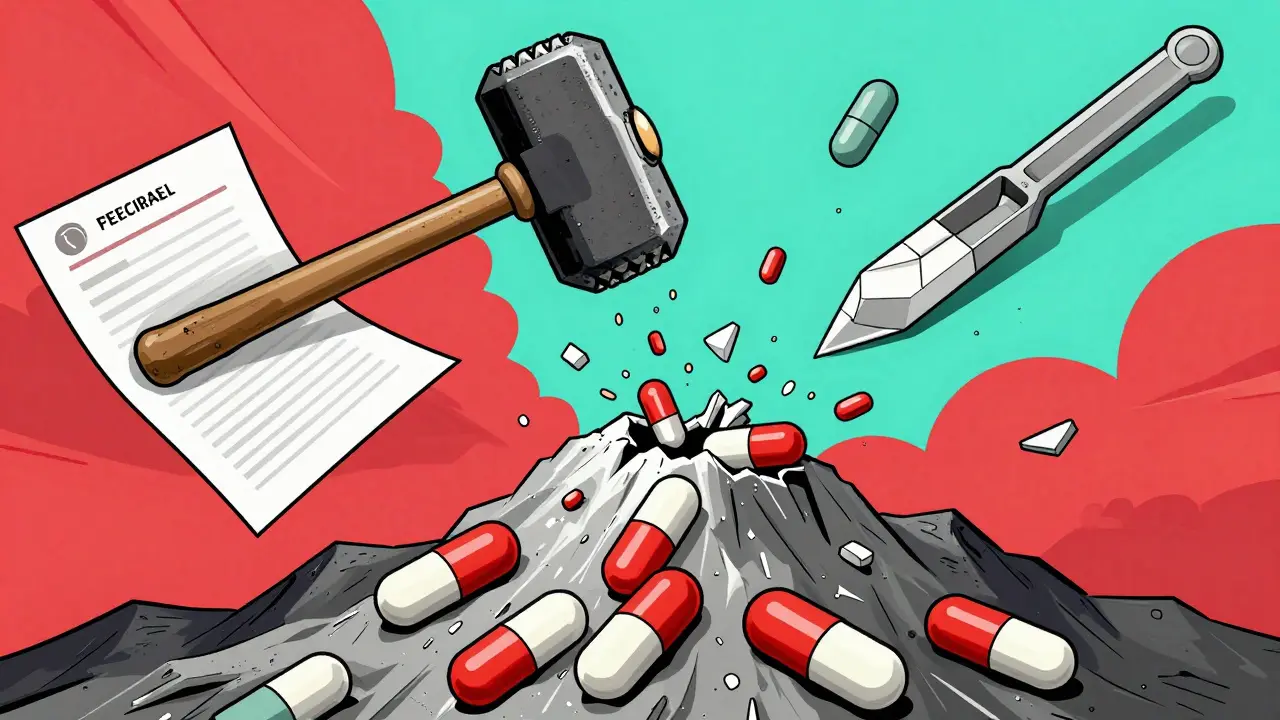
Not all "cheap" is created equal. Some countries use a scalpel to lower prices, while others use a sledgehammer.
China has gone for the sledgehammer approach with its Volume-Based Procurement (VBP). Instead of letting pharmacies set prices, the government runs massive bulk tenders. If you win the bid, you get huge volume, but you accept a tiny margin. This has led to price drops averaging over 54%, with some drugs plummeting by 93%. The downside? When margins get too thin, manufacturers sometimes stop producing, leading to shortages of essential meds like Amlodipine besylate.
South Korea uses a more surgical method. Their "1+3 Bioequivalence Policy" limits how many generics can enter the market based on shared data to stop the market from being flooded with identical, redundant products. They also use a tiered pricing system: if your drug meets both quality and price goals, you get 53.55% of the original brand price. If you're just "okay," you get 38.69%.
The Netherlands takes a bit of a "shopping around" approach called external reference pricing. They look at prices in France, Belgium, the UK, and Norway and strategically pick the lowest benchmarks to keep their own prices down. Meanwhile, the U.S. relies on massive competition and high penetration-about 90.1% of prescriptions are generics-which keeps the net price of these drugs lower than in many peer countries.
| Country/Region | Primary Strategy | Generic Penetration | Key Outcome |
|---|---|---|---|
| United States | High Market Competition | 90.1% | Lowest net prices for public sector |
| European Union | Centralized Approval / National Pricing | ~65% (Avg) | High price variation between members |
| China | Volume-Based Procurement (VBP) | Increasing | Extreme price cuts (up to 93%) |
| India | Compulsory Licensing | Very High | World's largest volume provider (20%) |
The Quality vs. Cost Tug-of-War
Here is the uncomfortable truth: when you push prices to the absolute bottom, quality can slip. This isn't just a theoretical worry. Between 2022 and 2024, the FDA issued 17% more warning letters to manufacturers in India specifically regarding data integrity issues. When profit margins are razor-thin, some companies might be tempted to cut corners in the lab.
For patients, this manifests as "bioavailability" issues. In India, some doctors have reported that locally made generics for epilepsy or blood thinners don't always work as consistently as the branded versions. This is why bioequivalence-the requirement that a generic must stay within 80-125% of the original drug's absorption rate-is so critical. If a drug absorbs too quickly or too slowly, it's not a true generic; it's a risk.
Navigating the Regulatory Maze
Getting a generic drug to market is like running an obstacle course. In the U.S., companies use the Abbreviated New Drug Application (ANDA) pathway. Normally, this takes 18 to 24 months and costs about $5.9 million. However, if a drug is designated as a Competitive Generic Therapy (CGT), that timeline can be slashed to under a year to get a critical medicine to patients faster.
In Europe, the European Medicines Agency (EMA) handles the scientific approval, which is great for consistency. But the real headache starts afterward. Each of the 27 EU member states decides its own pricing. This creates a weird situation where the exact same pill can cost 300% more in one country than it does in the neighbor next door.
Developing markets are catching up. India's approval window dropped from 36 months in 2019 to just 14 months in 2025. China's NMPA has managed to get approvals down to 10-12 months. The problem now isn't the paperwork-it's the profit. About 23% of Chinese manufacturers report losing money on government-contracted products because the VBP prices are lower than the cost to actually make the drug.

What's Next for the World of Generics?
We are entering a "patent cliff" era. Between 2025 and 2030, branded drugs that currently make over $200 billion annually will lose their exclusivity. This opens a massive door for generic companies to step in, potentially adding another $200 billion in sales opportunities.
But the landscape is shifting. The U.S. Inflation Reduction Act is allowing the government to negotiate prices for high-spend drugs, which will likely push more people toward generics even faster. In the EU, new rules expected in late 2025 aim to reward the "first generic" to hit the market, hoping to speed up the time patients wait for a cheaper alternative.
The long-term trend is consolidation. We're seeing the number of global manufacturers shrink. Industry experts predict we'll go from 3,500 companies down to about 2,200 by 2030. Only the giants who can handle R&D and massive manufacturing at scale will survive the price wars.
Are generic drugs as effective as brand-name drugs?
Yes, provided they meet bioequivalence standards. To be approved, a generic must demonstrate that it delivers the same amount of active ingredient into the bloodstream at a similar rate as the brand-name drug (usually within an 80-125% range). While the inactive ingredients (fillers) may differ, the therapeutic outcome should be identical.
Why are some generics so much cheaper than others?
Price depends on competition and government policy. In markets like China, bulk procurement (VBP) forces prices down through massive volume. In the U.S., high competition among many manufacturers drives prices down. Some countries also use reference pricing, where they set the price based on the lowest cost in a group of neighboring countries.
What is a "patent cliff"?
A patent cliff occurs when a major branded drug loses its patent protection, allowing generic manufacturers to enter the market. This typically leads to a sharp drop in the original manufacturer's revenue and a significant price decrease for patients.
Can generic drugs cause different side effects?
While the active ingredient is the same, generics use different inactive ingredients (excipients) for binding or coloring. In rare cases, a patient may be sensitive to one of these fillers, which could cause a different reaction than the brand-name version, though the primary therapeutic effect remains the same.
Why do some countries have drug shortages after generic policies are implemented?
When governments force prices too low (as seen in China's VBP), the profit margin may drop below the cost of production. Manufacturers may then stop producing the drug or prioritize other markets where they can make a profit, leading to regional shortages.
Moving Forward: Tips for Patients and Providers
If you're a patient, don't be afraid to ask your pharmacist about generic substitution, but be mindful of "narrow therapeutic index" drugs-these are medications where a tiny change in dose can be dangerous. For these, switching brands might require closer monitoring by your doctor.
For healthcare providers, the key is communication. Patients are far more likely to accept a generic if the pharmacist or doctor explains the bioequivalence standards. In Europe, acceptance rates jumped by up to 35% simply because professionals took the time to explain that "cheaper" doesn't mean "lower quality." Keep an eye on the source of your generics and stay updated on any FDA or EMA quality alerts to ensure your patients are getting the best of both worlds: affordability and safety.


10 Comments
Oh sure, just trust the 80-125% range and everything will be just peaches and cream. I love how we're expected to just ignore the fact that a 20% difference in absorption can be the difference between a drug working or making you feel like garbage.
/p>I totally get where you're coming from. It's scary when you're dealing with health and the numbers feel vague. Maybe we could look into how to find more transparent data on specific batches to feel more secure?
/p>The mention of data integrity issues in India is a complete joke. It's obviously a coordinated effort by Western conglomerates to discredit the only region capable of breaking their price monopolies. They want us terrified of 'bioavailability' so we keep paying $100 for a pill that costs pennies to make. It is truly laughable that anyone believes the FDA's 'warning letters' aren't just political tools to keep the global south subservient to Big Pharma's greed. The actual chemistry is fine, but the narrative is manufactured. They don't want us to have affordable medicine; they want a subscription model for human life. Wake up and see the strings being pulled by the lobbyists in D.C. and Brussels. This isn't about quality, it's about control of the supply chain to ensure no one becomes too independent of the corporate healthcare machine. Absolute rubbish.
/p>I must insist that we maintain a positive outlook regarding the industrialization of pharmaceuticals in India. It is an absolute necessity that we push through these regulatory hurdles with utmost vigor and determination to ensure global health equity!
/p>Imagine thinking China's 'sledgehammer' is actually efficient. Hilarious. We've got the real deal here in the States where the market actually breathes, unlike those government-run circus acts. It's almost poetic how they try to copy our success and then act surprised when their meds vanish from the shelves. Peak comedy right there.
/p>Exactly!! 🇺🇸 Our system is the only one that actually works because we prioritize innovation over some socialist dream of 'cheap' pills 💅✨ It's literally embarrassing that other countries are even trying to compete with US standards!!
/p>Omg, can we all just like... get along??? 🌸 It's so cute that everyone is fighting over who has the best pills!!! Like, as long as I don't break the bank, who cares where it's made??! 🙄💖✨
/p>You all are missing the spiritual energy of healing... the cost is just a reflecsion of your own inner lack. If you focused more on hollistic alignment, you wouldn't need these cheap synthetics anyway. Just a though!!
/p>While I appreciate the effort to lower costs, we must aggressively demand that safety is never compromised for the sake of a budget. We should be celebrating the progress in approval timelines, but only if the quality remains impeccable!
/p>Wait, so you're telling me the drugs could just... disappear? This is a nightmare! I can't believe we're just okay with the possibility of a total medical blackout because some bureaucrat wanted a 93% discount. Absolutely tragic!
/p>