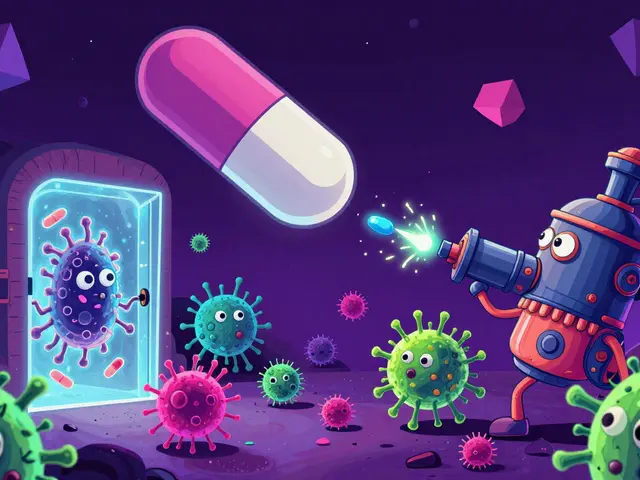
Imagine a world where a simple scratch from a garden rose or a routine tonsillectomy could be a death sentence. This isn't a plot from a dystopian movie; it's the reality we face if we don't get a handle on antibiotic resistance is the process where bacteria evolve mechanisms to withstand the drugs designed to kill them. When we misuse these powerful medicines, we aren't just failing to treat an infection-we're essentially training bacteria to become "superbugs" that can shrug off our best medical defenses.
| Metric | Impact/Value |
|---|---|
| Annual Global Deaths | Approx. 1.27 million |
| EU Annual Deaths | Approx. 33,000 |
| Economic Risk (by 2050) | Over $1 trillion annual damage |
| Unnecessary Prescriptions (US) | Up to 30% of outpatient scripts |
How Bacteria Outsmart Our Medicine
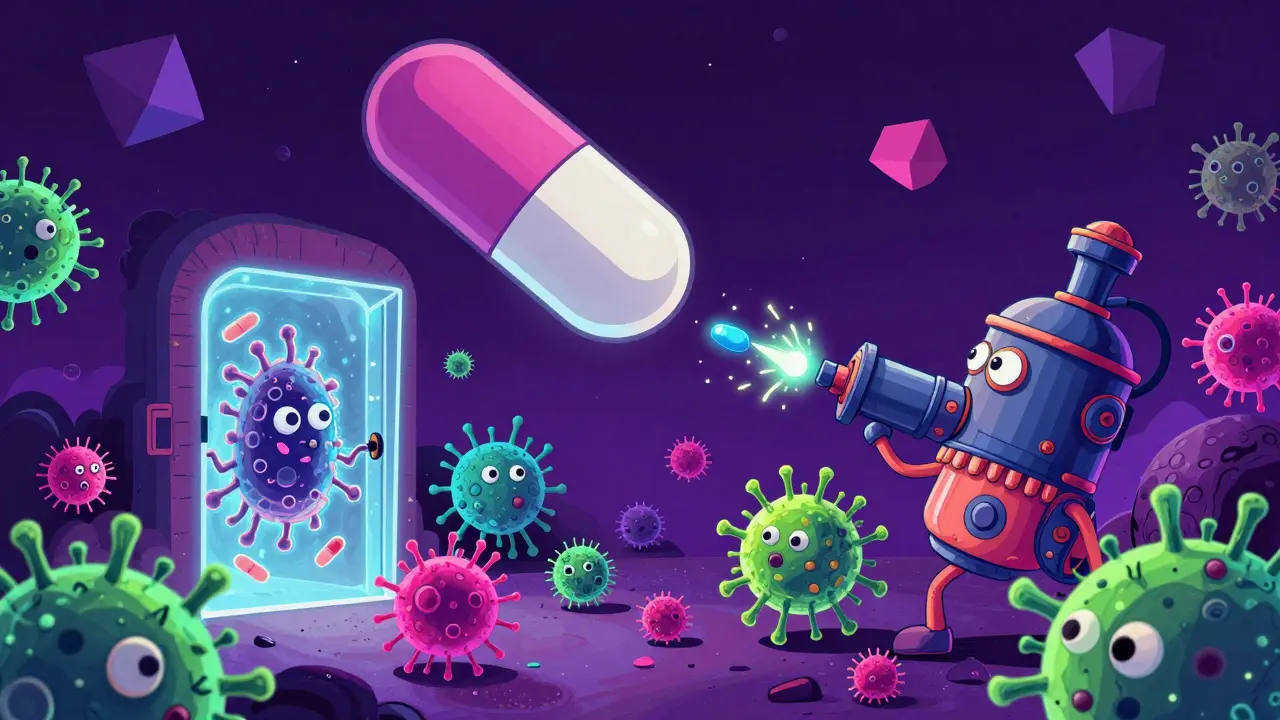
Bacteria aren't just passive targets; they are survival experts. Resistance doesn't happen by magic-it happens through specific biological strategies. Think of it as a security system that the bacteria upgrade every time we expose them to a drug. According to research published in Microbiology Spectrum in 2024, bacteria primarily use five methods to survive antibiotics:
- Blocking the door: They reduce permeability, meaning the drug simply can't get inside the cell.
- Pumping it out: They use antibiotic efflux pumps, which act like tiny bilge pumps to eject the medicine before it can do any damage.
- Changing the lock: They modify the target site (like a protein or enzyme) so the drug no longer "fits" and cannot bind.
- Destroying the drug: They produce enzymes that chemically deactivate or break down the antibiotic.
- Finding a detour: They alter their metabolic pathways to bypass the specific step the antibiotic is trying to block.
It's a constant arms race. For example, resistance to amoxicillin often involves mutations in the ampC genes, while cefepime resistance usually stems from pbp mutations. The scary part? These bacteria can share their "cheat codes" with each other through a process called horizontal gene transfer, meaning one resistant bacterium can teach its neighbors how to survive.
The Science of the "Superbug" Mutation
You might wonder why some infections are harder to treat than others. It comes down to how the mutation stabilizes. Recent studies in EMBO Press (2025) show that bacteria often start with "quick fixes" called epigenetic modifications, specifically DNA methylation. This is like a temporary patch that helps them survive for a few generations.
However, if the pressure continues-like when someone takes a low dose of antibiotics for too long-the bacteria develop stable, permanent mutations in their core metabolic genes. These mutations are much harder to reverse. In dynamic environments, these permanent changes can appear as early as generation 150. If the environment is static, it might take up to 550 generations. This tells us that the way we use drugs directly influences how fast these superbugs evolve.
Even more alarming is that it's not just antibiotics causing this. Research from Nature (2025) suggests that some non-antibiotic pharmaceuticals can actually help antibiotic resistance genes move from one bacterium to another. Our environment is becoming a training ground for resistance.
Practical Steps for Appropriate Use
Since we can't simply "reset" bacterial evolution, our best bet is antimicrobial stewardship, which is a coordinated effort to ensure the right drug is used at the right dose for the right amount of time. This isn't just for doctors; it's for patients too.
First, understand that antibiotics only work on bacteria. They do absolutely nothing for viruses. If you have a cold or the flu, taking an antibiotic is like trying to put out a grease fire with a blanket-you're not fixing the problem, and you're likely making it worse by killing off the "good" bacteria in your gut, leaving a vacuum for resistant strains to fill.
- Finish the entire course: Even if you feel 100% better after three days, keep taking the meds until the prescription is gone. Stopping early leaves the most resilient bacteria alive to multiply and evolve.
- Never share meds: Your leftover pills might be the wrong type or dose for someone else, which creates the exact "sublethal" environment that triggers mutations.
- Ask about the "Why": If a doctor prescribes an antibiotic for a respiratory infection, it's fair to ask if a viral test was performed first to confirm it's actually bacterial.
The Big Picture: The One Health Approach
We can't look at human medicine in a vacuum. The One Health framework, recognized by the World Health Organization, tells us that the health of people, animals, and the environment are all linked. If we over-use antibiotics in livestock to make them grow faster, those resistant bacteria enter our water systems and food chain, eventually ending up back in humans.
This interconnectedness is why the World Bank warns that AMR could push 24 million people into extreme poverty by 2050. When common surgeries become too risky because we can't prevent infections, the economic impact on healthcare and productivity is staggering.
New Frontiers in the Fight
Is there hope? Yes, but the pipeline is thin. The WHO's 2024 report showed that while there are 67 antibiotics in development, only 3 are truly innovative compounds capable of beating current resistance. We are relying heavily on "recycled" versions of old drugs.
However, scientists are exploring wild new ideas. CRISPR/Cas9 gene editing is being tested to specifically target and "cut out" resistance genes from bacteria. Others are using bioinformatics to predict exactly how a bacterium will mutate, allowing us to stay one step ahead of the evolution.
Why can't I just take a broad-spectrum antibiotic for everything?
Broad-spectrum antibiotics are like carpet-bombing; they kill a wide range of bacteria, including the helpful ones in your microbiome. This creates an ecological void that resistant bacteria quickly occupy, making future infections much harder to treat. Targeted, narrow-spectrum drugs are always preferred when the specific bacteria are known.
Does the bacteria in my body "learn" to resist the drug?
It's not learning in the conscious sense, but rather a process of natural selection. The drug kills the weak bacteria, and the few that have a random mutation allowing them to survive are the only ones left to reproduce. Their offspring inherit that resistance, and soon, the entire population is resistant.
Will I become resistant to antibiotics if I take them too often?
It is important to clarify: you do not become resistant; the bacteria do. However, if you use antibiotics frequently, the bacteria living in and on your body are more likely to develop resistance. If you then get a serious infection, the antibiotics may no longer work.
What are the most common genes involved in resistance?
Across many species, mutations in genes like fusA, gyrA, and parC are very common. In gram-negative bacteria, mutations in efflux pump genes are frequently seen, as these pumps are highly effective at removing various drug types from the cell.
What should I do if I suspect my infection isn't responding to antibiotics?
Contact your healthcare provider immediately. Do not increase the dose yourself or switch to a different leftover medication. Your doctor may need to perform a culture and sensitivity test to identify the specific strain and find an antibiotic that still works.