
Barrier Repair in Eczema: Ceramides and Bathing Tips
If you deal with eczema, you know that feeling of tight, raw skin that no amount of lotion seems to fix. You slather on cream after a shower, hoping for relief, but the itching starts again within an hour. This happens because most moisturizers only sit on top of your skin. They don’t actually repair the damaged wall underneath. To stop the cycle of flare-ups, we need to understand the mechanics of your skin barrier and how to rebuild it properly.
The Missing Mortar in Your Skin Wall
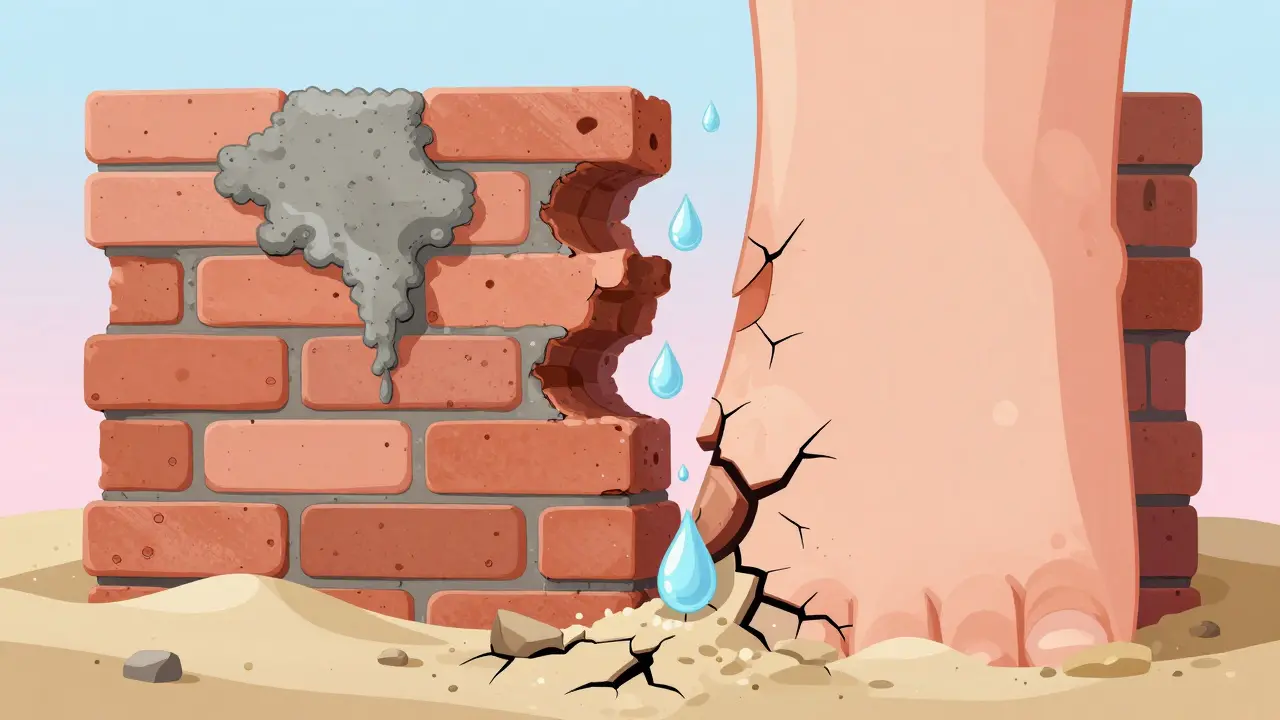
Your outermost layer of skin, known as the stratum corneumthe outermost layer of the epidermis, works like a brick wall. The cells themselves are the bricks, held together by lipids, which are the mortar. When you have Atopic DermatitisEczema, this mortar crumbles. Specifically, you lack the right amount of ceramides, cholesterol, and free fatty acids in the correct balance.
Think of it this way: if you build a house but use sand instead of cement between the bricks, water gets in, and pests get out. In healthy skin, ceramides make up about 50% of that lipid mix. In eczema-prone skin, this number drops significantly, often by half. Without enough structural integrity, water escapes (Transepidermal Water Loss), leaving your skin dry and irritated. This leak allows allergens and bacteria to slip through, triggering the immune system to attack your own skin.
Why Regular Lotion Might Not Be Enough
You might reach for a generic drugstore moisturizer when your skin itches, but those products often rely on petrolatum or mineral oil. While these sealants help temporarily, they don’t replace what you’ve lost. Research suggests that to truly repair the barrier, you need a specific ratio of lipids: roughly three parts ceramides to one part cholesterol and one part free fatty acids.
This 3:1:1 ratio isn’t just a nice idea; it’s physiological necessity. Studies indicate that applying ceramides alone can actually make recovery slower compared to using the full lipid mixture. Imagine trying to patch a hole with only one type of brick-you need the binder material to hold everything together effectively. That’s why specialized products exist today.

Choosing the Right Barrier Repair Cream
Not all ceramide products are created equal. The market offers a mix of over-the-counter options and prescription-strength emulsions designed specifically to mimic the skin’s natural chemistry.
| Type of Product | Active Ingredients | Clinical Benefit | Best For |
|---|---|---|---|
| Petrolatum-Based | Occlusive only | Temporary hydration (20-30%) | Dry patches, short-term protection |
| Physiological Emollients (e.g., EpiCeram) | Ceramides + Cholesterol + Fatty Acids | Structural repair, TEWL reduction | Chronic maintenance, flare prevention |
| Topical Corticosteroids | Hormones (e.g., Hydrocortisone) | Inflammation control (Fast relief) | Acute flare-ups, intense redness |
| Ceramide Creams (OTC e.g., CeraVe) | Mixed ceramides | Hydration + mild barrier support | Daily maintenance, sensitive skin |
When shopping for these, look for brands that mention “restorative lipids” or specify the 3:1:1 blend. Products like EpiCeram or TriCeram are often prescribed because they have been tested for efficacy. Over-the-counter brands like CeraVe are excellent for general maintenance, though some users report they aren’t strong enough during severe flares.
A common misconception is that you only need these creams when you are itching. In reality, consistent use is what stops the flare-ups from happening in the first place. Most experts recommend switching from steroids to barrier repair once the acute inflammation has calmed down, using the creams daily thereafter to keep the skin strong.
The Bathing Protocol: Soak and Seal
Bathing plays a huge role in managing eczema, yet many people take baths that actually worsen their barrier function. Hot water strips oils, and harsh soaps damage the pH balance your skin needs to synthesize its own protective lipids.
Instead of a hot shower, aim for lukewarm water that lasts no longer than 10 to 15 minutes. During this soak, avoid scrubbing. Use a gentle cleanser that doesn’t leave a tight residue. Some people swear by adding colloidal oatmeal to the water to reduce irritation, though simple water is fine if you follow up correctly.
The critical step comes immediately after you step out of the tub. You have a window of about three minutes before moisture evaporates rapidly. Pat your skin gently so it stays slightly damp. Do not rub it dry. While your skin is still wet, apply your barrier repair cream. This technique traps the water in the skin rather than letting it evaporate, enhancing absorption by up to 70%. If you wait until your skin is bone dry, the product sits on top rather than soaking into the damaged layers.
- Keep bath temperature below 32°C (90°F).
- Limit time to 15 minutes maximum.
- Pat dry, leaving skin damp.
- Apply emulsion within 3 minutes of stepping out.
- Focus application on previously affected areas even if they aren’t currently red.

What to Expect When You Start Treatment
Restoring the skin barrier takes patience. Unlike hydrocortisone cream which quiets inflammation quickly, barrier repair works at a cellular level to rebuild the wall. Clinical trials suggest you need to apply these emulsions consistently for four to six weeks to see significant improvements in scratch-free days. Early on, you might feel less tightness, but true resilience takes time.
Financially, these therapies differ from standard lotions. Prescription-grade barrier repair creams can cost anywhere from $30 to $35 per tube, whereas generic moisturizers are often less than $10. Insurance coverage varies, and as of late 2023, many commercial plans began covering specific devices or prescriptions like EpiCeram. If your doctor recommends a specific brand, checking with your provider for prior authorization is essential to avoid unexpected bills.
Troubleshooting Common Issues
Sometimes the product burns upon application. A small percentage of users experience transient tingling when applying lipid-rich creams to inflamed skin. This is usually due to the alcohol base used to preserve the formula or simply the sensitivity of broken skin. Switching to a pump dispenser version can sometimes reduce waste and improve texture, making application smoother.
If you notice no improvement after two weeks, check your water habits. Are you taking long hot showers? Are you changing detergents on your clothes? Sometimes external irritants overpower the topical treatment. Additionally, verify that you are using the product daily. Spot-treatment rarely works for barrier defects; your entire affected surface area needs the coating to prevent moisture loss.
Can I use steroid creams with ceramide creams?
Yes, but timing matters. Apply the steroid first to calm active inflammation, then wait a few minutes before applying the ceramide cream. Using them together helps treat both immediate symptoms and underlying structural damage.
How often should I apply barrier repair creams?
For best results, aim for twice daily application-once after your morning wash and again after your evening bath. During severe flares, increasing frequency to three times a day may accelerate healing.
Are synthetic ceramides as effective as natural ones?
True physiological formulations that match the skin’s natural composition are generally preferred. Synthetic “pseudo-ceramides” may provide some benefit, but clinical studies favor precise matching of the lipid matrix including cholesterol and fatty acids.
Does insurance cover barrier repair products?
Coverage depends on whether the product is classified as a prescription medication or a cosmetic device. Many plans now cover FDA-approved barrier repair emulsions, but you should verify with your specific insurer before purchasing.
Is the “soak and seal” method necessary?
It is highly recommended. Applying cream to damp skin significantly improves hydration retention. Dry skin application reduces the product’s ability to penetrate the stratum corneum effectively.





11 Comments
The concept of the skin wall reminds me of the fragility of human connection we often ignore in daily life. It suggests that without proper maintenance even the strongest structures eventually crumble under pressure. We spend so much time trying to fix the outside when the internal mortar is failing us completely. This approach to health requires a shift from reactive panic to proactive reconstruction of our own defenses. I find it fascinating how biology mirrors architecture in such a literal physical sense regarding our epidermis.
/p>Wait wait wait?!?! Is this thing safe for sensitive skin?!?! 🧴💦👀 Everyone acts like expensive stuff is the only way to fix dry skin 🙄🤔 #SkinCareReality
/p>Oh please another person preaching about chemicals and lipids while ignoring the fact that stress causes most flare ups anyway 🙃 You people sound so clinical about something so personal. It’s funny how nobody talks about the mental toll but here we go talking about brick walls again. Most of us just want simple answers not a chemistry class.
/p>Just want to add that you should stick with the routine and not stop using it even when it looks better because stopping causes relapse which happens very frequently. Also check the ingredients list carefully because some brands use fillers instead of real lipids which won't help your barrier repair process at all. Consistency is key here guys.
/p>I really think you need to understand that patience is the most important ingredient in any skincare regimen regardless of what you put on your face. Many people give up too soon because they want instant relief that matches the urgency of their suffering rather than the speed of biological renewal. When you consider that skin cells turnover every single month you realize why six weeks is necessary before judging results truly. Your body is trying to heal deep damage that took years to build up through constant irritation and poor habits initially. If you stop applying the cream after two weeks you are essentially painting over a crack in the foundation of your house without fixing the concrete. This leads to frustration and then more scratching which damages the wall even further down the line into deeper layers. You must commit to the full protocol including the bath temperature control and timing of application every single day without fail. Skipping applications creates gaps in the lipid matrix that allow water to escape rapidly again causing dryness. Think of it as rebuilding trust in yourself because your skin needs a reliable environment to function properly again. The cost might seem high initially but compare that to the lost time and medical bills from chronic untreated flares later on. Trust the science behind the ratios mentioned because physiology doesn’t lie about what the cells require to survive. Remember that inflammation is just a signal that things aren’t right and calming it down is step one but repair is step two. Keep going even when you feel nothing happening because the microscopic changes are occurring beneath the surface still. Stay consistent and protect your peace of mind during this period of adjustment to new routines. It gets easier once you see progress. Keep pushing forward.
/p>My dermatologist told me exactly this but I felt like she was speaking alien code until I read this breakdown here today 😱😭. I thought my skin was just broken forever man. Now I feel hope again that I can actually get rid of these scars eventually. But seriously who knew the ratio mattered so much huh?
/p>While the sentiment behind the advice is generally correct the commercial availability of such products remains questionable in many regions. One must verify the regulatory status of prescription-grade emulsions in their specific jurisdiction before attempting procurement. Furthermore anecdotal evidence suggests that absorption rates vary significantly based on individual hydration levels prior to application. The claims regarding insurance coverage also require substantial verification as policies differ wildly between providers. I remain skeptical of the generalization applied to all OTC options listed in the comparison table provided earlier. It would be beneficial to include data sources for the efficacy percentages stated within the text. Overall a useful guide though perhaps too optimistic regarding universal accessibility.
/p>You guys need to stay strong and remember that healing takes time and effort on your part daily. Believe in your body to recover if you give it the right tools and nutrients to do so effectively. Don't let frustration stop you from doing the work that needs to be done for your health. Keep believing in the process and trust that consistency brings results eventually. Never forget to love yourself through this journey even when it feels like a long road ahead of you.
/p>Western medicine always wants to sell you expensive creams while ignoring natural solutions we used for centuries back home 🇮🇳🧪🚫. My grandpa never had this problem eating healthy food instead of buying tubes. They only care about profit margins not real health outcomes for regular people 📉💸. Don't trust foreign labs over traditional wisdom passed down correctly 👨⚕️✋.
/p>That is extremely narrow minded and dismissive of actual medical progress that helps millions of lives every single day globally! 🌍🛑 Stop spreading misinformation about natural remedies being superior when studies clearly show otherwise in clinical settings! 💢 You are hurting people by discouraging them from seeking effective medical treatment that actually works! 🛑🩺 Respect the science and don't gatekeep help for those suffering with serious conditions! 🔬✨
/p>This ignores the underlying hormonal triggers entirely!!!
/p>