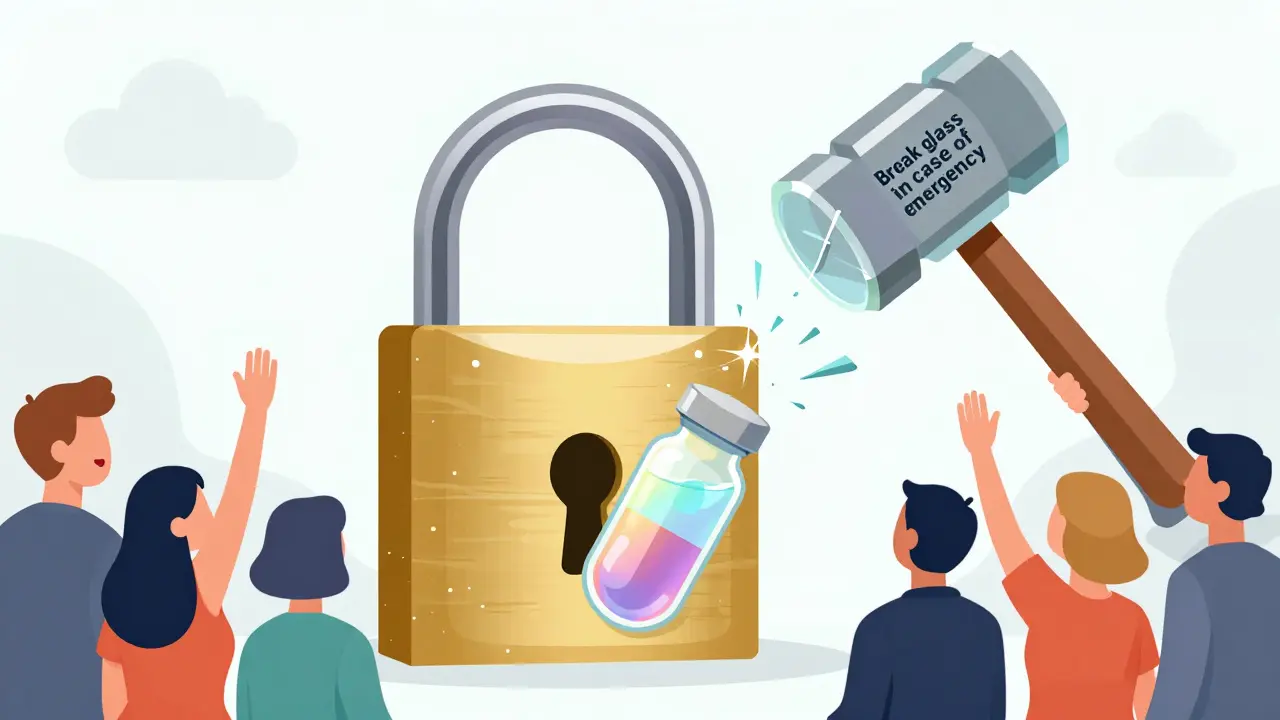
Imagine a company discovers a life-saving drug but prices it so high that only the wealthiest 1% can afford it. While the patent gives that company a legal monopoly to recoup their research costs, what happens when thousands of people are dying because they can't access the medicine? This is where compulsory licensing is a legal mechanism that allows a government to authorize someone else to produce a patented product without the patent owner's consent . It's essentially a legal "break glass in case of emergency" tool that balances private profit with the public's right to survive.
The Rules of the Game: TRIPS and International Law
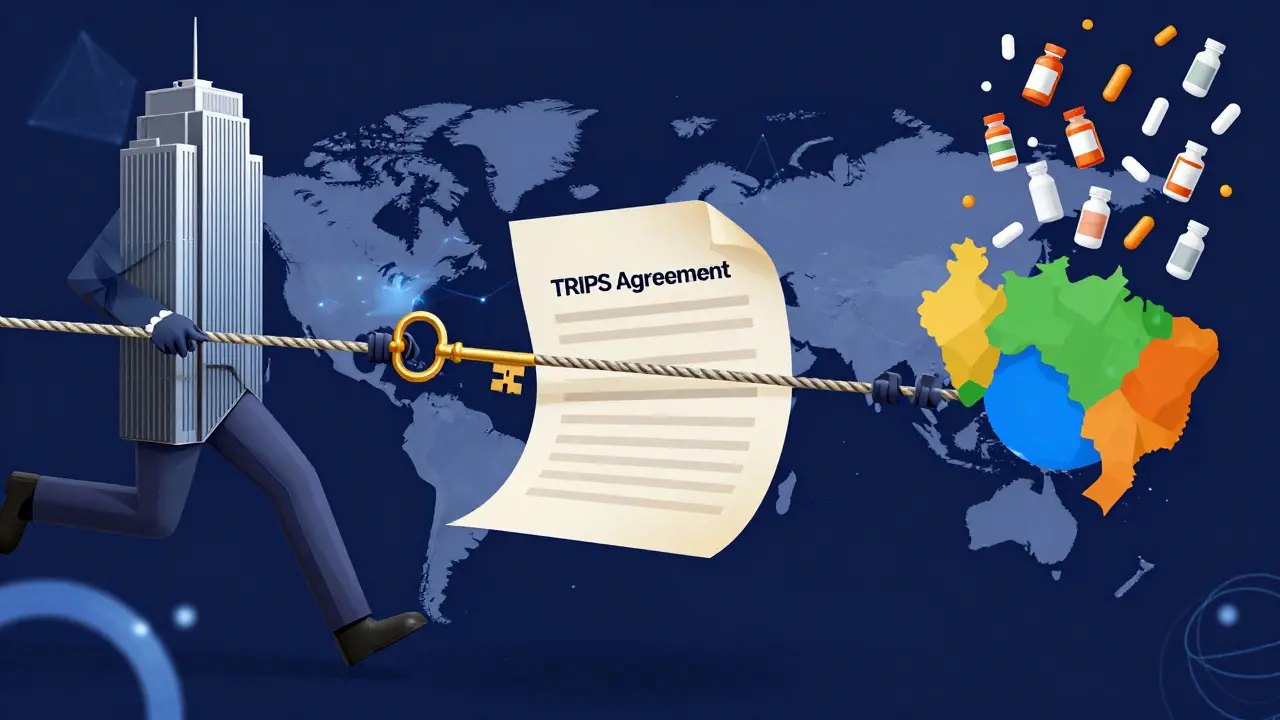
You can't just seize a patent on a whim. Most countries follow a set of global rules managed by the World Trade Organization (WTO). The heavy hitter here is the TRIPS Agreement, which stands for Trade-Related Aspects of Intellectual Property Rights. Specifically, Article 31 of TRIPS sets the ground rules for how a government can legally bypass a patent.
For a compulsory license to be legal under international law, it usually needs to meet a few criteria. First, the government typically requires the user to try and negotiate a voluntary license with the patent holder on reasonable commercial terms. If the company says no, or the price is absurd, the government steps in. However, in cases of "extreme urgency"-like a sudden pandemic-this negotiation step can be skipped entirely. The catch? The patent owner still gets paid. They receive "adequate remuneration," which is a polite way of saying a royalty fee, though it's usually much lower than what the company would have charged on its own.
How Different Countries Handle Patent Overrides
Not every country uses this tool the same way. Some are aggressive about public health, while others treat patents as sacred. For instance, India has become a global hub for affordable generics by utilizing its 1970 Patents Act. Between 2005 and 2021, India issued 22 compulsory licenses, mostly for cancer drugs, to make them affordable for the general population.
The United States takes a much more cautious approach. While the US does have tools like Title 28, U.S.C. section 1498, which lets the federal government use a patent and pay damages later, it's rarely used for public health. There are also "march-in rights" under the Bayh-Dole Act. This allows the government to force a license if a discovery was funded by federal taxpayers but the company isn't actually making the product available to the public. Interestingly, despite receiving 12 petitions to "march in" between 1980 and 2022, the NIH has never actually granted one.
| Country/Region | Primary Legal Driver | Typical Use Case | Stance on Patents |
|---|---|---|---|
| India | Patents Act 1970 | Life-saving medicines (Cancer/HIV) | High Public Interest priority |
| USA | Section 1498 / Bayh-Dole | Government procurement/Defense | Strictly protective of IP |
| Brazil | Presidential Decree 3,201/1999 | HIV/AIDS antiretrovirals | Strategic public health use |
| EU (Germany/France) | National Laws (via TRIPS) | National Defense/Public Health | Balanced / Rarely exercised |
Real-World Impact: When the Law Saves Lives
When these legal tools are used, the price drop is often staggering. In Brazil, a compulsory license for the drug efavirenz crashed the price from $1.55 to just $0.48 per tablet. Thailand saw even bigger wins between 2006 and 2008, reducing the cost of some HIV and heart medications by up to 90%. For a patient, the difference isn't just a few dollars-it's the difference between getting treatment or not.
But it's not just about the licenses that actually get signed. Often, the mere threat of compulsory licensing is enough to force a pharmaceutical company to lower its prices voluntarily. According to some experts, this "shadow of the law" has helped secure lower prices for 90% of HIV medications in developing nations since 2000. Companies would rather agree to a fair price than lose control of their patent entirely.
The Pushback: Does This Kill Innovation?
If you ask a big pharma executive, they'll tell you that compulsory licensing is a disaster for science. The argument is simple: developing a new drug costs billions of dollars. If governments can just take the patent away, why would any company risk the money to invent the next cure? Some research suggests a 15-20% drop in R&D investment in countries that aggressively use these overrides.
There's also the legal nightmare factor. These aren't quick fixes. When India issued a license for the drug Nexavar, the company Bayer fought it in court for eight long years. For many small countries, the cost of fighting a legal war against a multi-billion dollar corporation is too high, even if the law is on their side. The World Health Organization has noted that about 60% of low-income countries simply don't have the legal or technical experts needed to navigate these complex filings.

The Future of Patents in a Pandemic World
COVID-19 changed the conversation. The world realized that relying on a few companies in wealthy nations to distribute vaccines doesn't work during a global crisis. In 2022, the WTO agreed to a temporary waiver for COVID-19 vaccine patents, allowing developing countries to produce them without permission until 2027. This was a massive shift in how we think about intellectual property during emergencies.
Looking ahead, we're seeing a move toward "automatic' licensing." There are ongoing talks at the WHO for a new Pandemic Treaty that would trigger automatic licenses for essential health products the moment a Public Health Emergency of International Concern is declared. This would remove the red tape and the years of litigation, moving straight from "emergency declared" to "production started." We're also seeing these tools expand beyond medicine, with potential use in climate change technologies to help the world hit carbon goals faster.
Can a company stop a government from issuing a compulsory license?
They can't stop the government from exercising its legal right, but they can challenge the decision in court. They usually argue that the "emergency" isn't real or that the compensation offered is too low. These battles can take years, as seen in the Bayer vs. India case.
Does the patent owner get paid?
Yes. A compulsory license is not an expropriation (theft). The user or government must pay "adequate remuneration." In some places, like India, this is often calculated as a percentage (e.g., 6%) of the net sales of the product.
What is the "Export Clause" in TRIPS?
Normally, compulsory licenses are for the domestic market. However, a special amendment allows countries that can't make their own drugs to import generics produced under a compulsory license in another country. Canada used this to send HIV meds to Rwanda in 2012.
Is compulsory licensing common?
No, it's relatively rare. Only about 143 licenses have been formally notified to the WTO since 1995. Most are in the pharmaceutical sector, but some apply to agricultural chemicals or manufacturing tools.
Why is the Bayh-Dole Act important?
It allows the US government to "march in" and force a license if a company uses government funding to invent something but then refuses to make it available to the public in a practical way.
Next Steps for Implementation
If you're a policymaker or a legal professional looking to navigate this, start by assessing your technical capacity. Do you have a clear formula for "reasonable compensation," or will you be arguing over every cent in court? For most, the first step is establishing a transparent procedural framework. Without a clear set of rules, the threat of a license is just a bluff; with a clear framework, it's a powerful tool for public health. If you're representing a patent holder, the best strategy is usually to offer a tiered pricing model-charging high in wealthy markets and low in developing ones-to avoid the compulsory license trigger altogether.