
Warfarin-NSAID Bleeding Risk Calculator
Understanding Your Risk
Taking NSAIDs with warfarin can significantly increase your bleeding risk. The article shows that some NSAIDs can increase bleeding risk by up to 4.1 times. This calculator estimates your risk based on your specific medication regimen.
Your Bleeding Risk Assessment
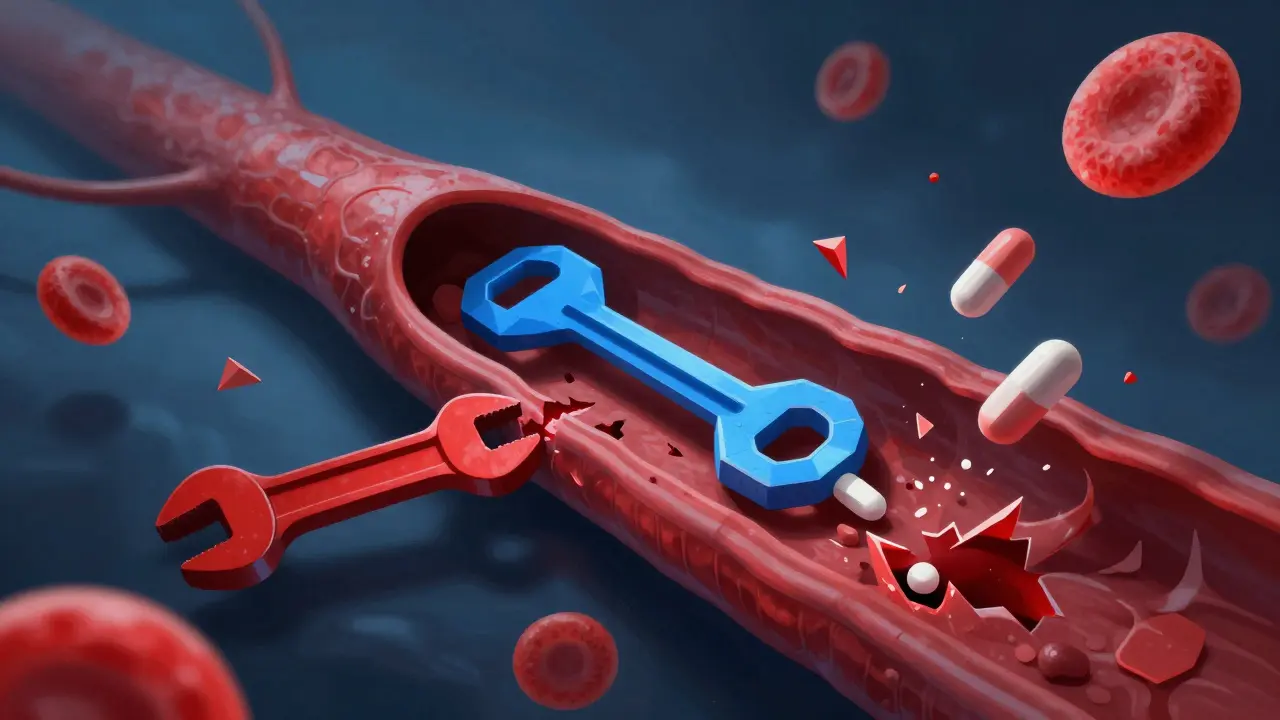
When you take Warfarin is a vitamin K antagonist anticoagulant first approved by the FDA in 1954, you're relying on it to prevent dangerous blood clots. But if you reach for common painkillers like ibuprofen or naproxen (NSAIDs), you could be risking severe bleeding. Recent studies show that NSAIDs (nonsteroidal anti-inflammatory drugs) are over-the-counter pain relievers that inhibit cyclooxygenase enzymes and, when combined with warfarin, bleeding risk increases dramatically-up to 4.1 times higher for some NSAIDs. This isn't just a theoretical concern; it's a real danger affecting thousands of people every year.
How Warfarin Works
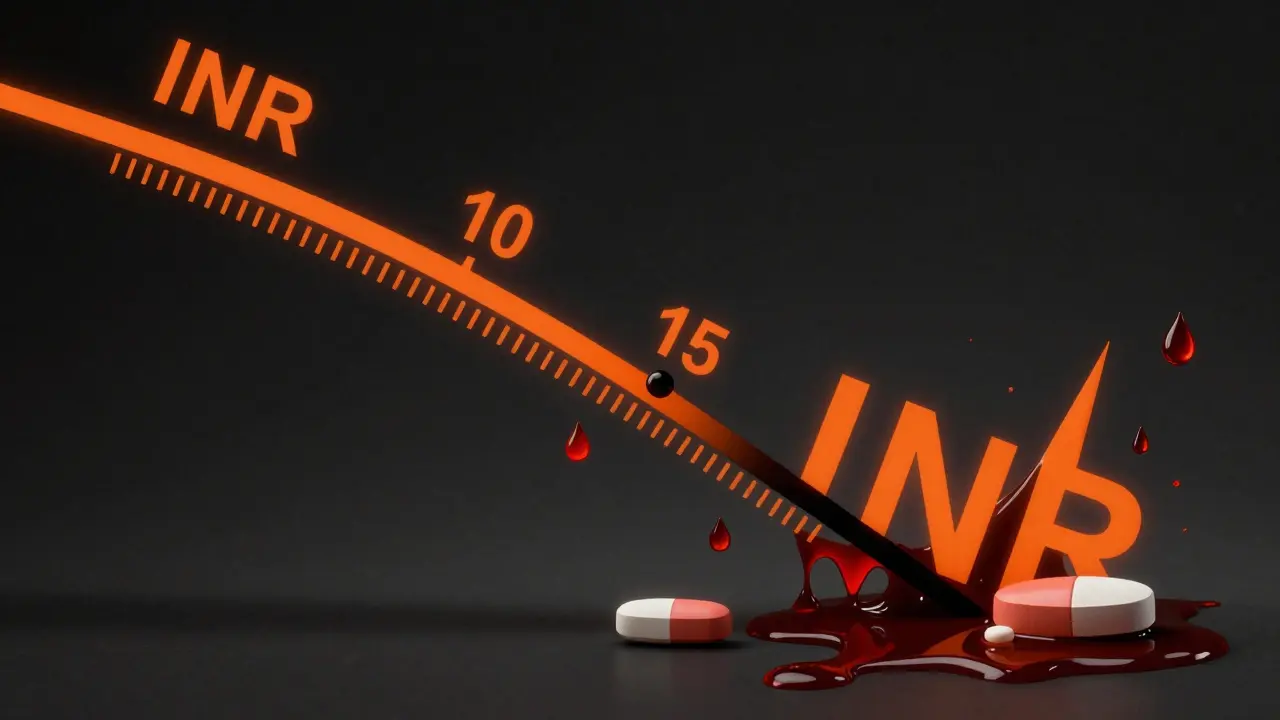
Warfarin works by blocking vitamin K from recycling in your body. Vitamin K is essential for making clotting factors II, VII, IX, and X. Without enough of these factors, your blood can't clot properly. That's why doctors monitor your INR (International Normalized Ratio)-a standardized measure of blood clotting time used to monitor warfarin therapy. A normal INR is around 1.0. For most people on warfarin, the target range is 2.0 to 3.0. If your INR gets too high, you're at risk of bleeding.
How NSAIDs Interfere
NSAIDs like ibuprofen or naproxen work by reducing inflammation and pain, but they also affect blood clotting. They inhibit cyclooxygenase-1 (COX-1), which reduces thromboxane A2 production. Thromboxane is crucial for platelets to stick together and form clots. So NSAIDs make platelets less effective. On top of that, NSAIDs damage the stomach lining by reducing protective prostaglandins, making it easier to bleed. This dual effect-impaired platelets and weakened stomach lining-creates a perfect storm when combined with warfarin.
Real-World Risk Data
A 2019 analysis by the European Society of Cardiology found that people taking both warfarin and NSAIDs had a 2.09 times higher risk of bleeding compared to those on warfarin alone. The risk varies by NSAID type: naproxen increased bleeding risk 4.1-fold, diclofenac 3.3-fold, and ibuprofen 1.79-fold. Gastrointestinal bleeding is the most common problem. A 2024 meta-analysis in Gut and Liver confirmed that warfarin plus NSAIDs doubles the risk of GI bleeding. But it's not just stomach issues-brain bleeds (intracranial hemorrhage) risk jumps 3.22 times, lung bleeds 1.36 times, and urinary tract bleeds 1.57 times. There's also almost triple the risk of anemia from bleeding.
Who's Most at Risk
Not everyone is equally at risk. A 2010 study by Choi et al. identified four key factors that make bleeding more likely when taking NSAIDs with warfarin:
- Taking more than 40 mg of warfarin per week
- Using other medications that interact with warfarin (like antibiotics)
- Taking meloxicam (an NSAID)
- Having a low baseline INR value
If you fall into any of these categories, the risk is especially high. For example, patients with a low baseline INR (meaning their blood is less thin) might not have enough physiological reserve to handle further anticoagulation effects. This makes sudden INR spikes more dangerous.
Safe Pain Relief Alternatives
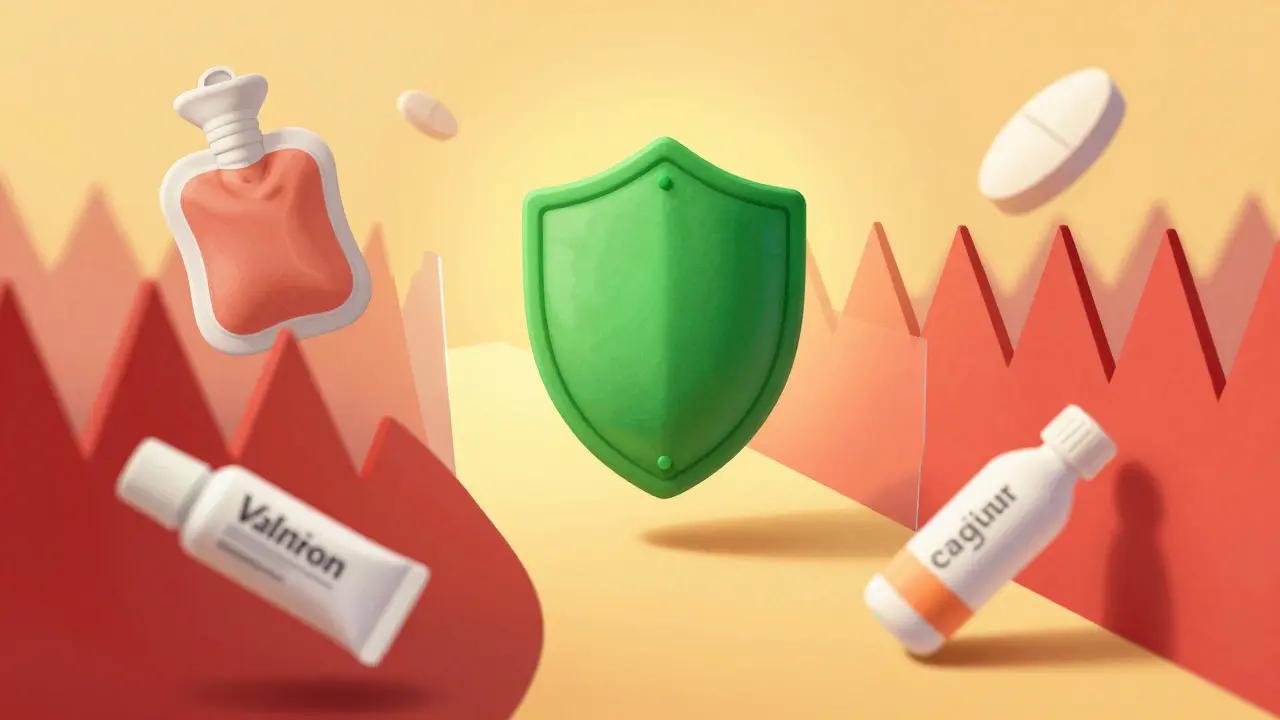
For pain relief, acetaminophen (Tylenol) is usually safe up to 3,000 mg per day. Physical therapy, heat packs, or topical creams like diclofenac gel (which doesn't get into your bloodstream much) can also help. If you absolutely need an NSAID, your doctor might prescribe a proton pump inhibitor (PPI) like pantoprazole 40 mg daily to protect your stomach and monitor your INR closely. The American College of Chest Physicians' 2021 guidelines explicitly recommend acetaminophen as the first-line option for pain management in patients on anticoagulants.
What to Do If You Must Take Both
If you absolutely need an NSAID while on warfarin, your healthcare provider will take extra precautions. They'll check your INR within 3-5 days of starting the NSAID and weekly thereafter during concurrent use. They'll also monitor for signs of bleeding, like black stools, unusual bruising, or dizziness. Never take NSAIDs without talking to your doctor first. Even "low-risk" NSAIDs like ibuprofen still increase bleeding risk significantly. The FDA's warfarin package insert specifically states that concomitant NSAID use requires "frequent monitoring of INR" and warns about the "increased risk of bleeding."
Even Newer Blood Thinners Have Risks
It's not just warfarin. Newer anticoagulants like dabigatran (Pradaxa) also interact dangerously with NSAIDs. A 2018 study in the Journal of the American College of Cardiology found that NSAID use increased major bleeding in dabigatran users too. While the risk pattern differs slightly-non-GI bleeding represented 60% of major bleeding events in NSAID users-this confirms the danger isn't limited to warfarin alone. The same caution applies to rivaroxaban, apixaban, and other direct oral anticoagulants (DOACs).
Why This Interaction Is So Common
Despite clear guidelines, inappropriate co-prescribing remains alarmingly common. A 2022 analysis in the Journal of General Internal Medicine found that 28.7% of warfarin users received at least one NSAID prescription within a 12-month period. This represents a significant quality gap in medication safety that contributes to preventable hospitalizations. Many patients don't realize over-the-counter painkillers can be dangerous with blood thinners. Even doctors sometimes overlook this interaction during busy clinic visits.
Can I take ibuprofen with warfarin?
No. Even though ibuprofen has a lower bleeding risk (1.79-fold increase) compared to other NSAIDs like naproxen (4.1-fold), it still significantly raises your risk of bleeding. The American College of Chest Physicians explicitly recommends avoiding NSAIDs when possible. If you need pain relief, use acetaminophen instead and talk to your doctor before taking any NSAID.
What if I have a headache and can't take acetaminophen?
If acetaminophen isn't an option, never self-medicate with NSAIDs. Contact your healthcare provider immediately. They might suggest alternatives like physical therapy, ice packs, or topical analgesics. In rare cases where NSAIDs are absolutely necessary, they'll prescribe a proton pump inhibitor (PPI) to protect your stomach and schedule frequent INR checks. Never take NSAIDs without medical supervision.
Do all NSAIDs carry the same risk?
No. The risk varies by NSAID type. Naproxen has the highest bleeding risk (4.1-fold increase), followed by diclofenac (3.3-fold). Ibuprofen carries a lower but still significant risk (1.79-fold). Meloxicam was specifically identified as an independent risk factor for INR elevation in a 2010 study. Always check with your doctor before using any NSAID, even "mild" ones like aspirin or celecoxib.
Can I take NSAIDs if I've been on warfarin for years?
Yes, but only under strict medical supervision. Long-term warfarin use doesn't make you immune to this interaction. In fact, patients with stable INR levels for years might still experience dangerous spikes when adding NSAIDs. A 2010 study showed that even patients with low baseline INR values (meaning their blood was less thin) were at higher risk of INR elevation after NSAID use. Always consult your doctor before adding any new medication.
What should I do if I accidentally take NSAIDs with warfarin?
Call your doctor immediately. Do not wait for symptoms. Signs of bleeding include unusual bruising, nosebleeds, blood in urine or stool, severe headaches, or dizziness. Your doctor will likely check your INR right away and may adjust your warfarin dose or prescribe medication to stop the bleeding. If you experience severe symptoms like vomiting blood or weakness, go to the emergency room immediately.



9 Comments
NSAIDs with warfarin is a disaster waiting to happen. I had a friend who had a GI bleed from taking ibuprofen. The FDA should ban these combos. Seriously, this should not still be a thing. People need to stop being lazy and take Tylenol instead. It's not rocket science. This is why America needs better education on meds. Stop the madness! 🤬 Also, I read a study that showed even low-dose NSAIDs increase risk. People ignore this despite it being simple to avoid.
/p>Interesting data. In my country, we often use alternative pain relief methods for patients on anticoagulants. It's good to see the stats on GI bleeding risk doubling. Physical therapy and topical creams are effective options. Always consult a doctor before changing medications.
/p>This is such an important topic. I always recommend acetaminophen to my patients on warfarin. Physical therapy and topical creams are great alternatives. We need to spread awareness. Always check with your healthcare provider before taking any NSAID.
/p>Taking ibuprofen with warfarin is a terrible idea. 🤦♂️ Seriously, people need to stop being reckless. Acetaminophen is right there. People choose the dangerous option despite knowing better.
/p>This is basic. People should know better. Stop taking NSAIDs if on warfarin. Simple. The data is clear. Ignoring it is stupid.
/p>OMG this is why we need to ban NSAIDs in the US! People keep dying bc they don't listen. So stupid. 😭 I had a friend who had a massive bleed from ibuprofen. Her INR went through the roof. Now she's in the hospital. This is such a stupid mistake. People ignore the labels. It's not hard. Tylenol is right there. Stop being lazy. This is why America is falling apart. 😭
/p>I must emphasize that this interaction is dangerous. Many patients ignore it, leading to severe outcomes. Doctors need to be more vigilant. It's not just about prescribing; it's about patient education. Every time someone takes an NSAID with warfarin, they're gambling with their life. This is unacceptable. We need stricter regulations and better communication. Patients deserve to know the risks. This is a clear case of medical negligence. We must act now to prevent further harm.
/p>Warfarin and NSAIDs interaction is critical.
/p>COX inhibition leads to reduced thromboxane A2, impairing platelet aggregation.
Combined with warfarin's vitamin K antagonism, this creates a perfect storm for bleeding.
Studies show GI bleeding risk doubles.
INR monitoring is essential.
Patients with low baseline INR are particularly vulnerable.
Meloxicam and naproxen carry highest risk.
Even ibuprofen increases risk 1.79-fold.
PPIs may mitigate gastric risk but not overall bleeding.
DOACs also interact.
This is a major public health issue requiring better physician education.
We need mandatory warnings on OTC NSAIDs.
The current guidelines are insufficient.
Patients are at risk daily.
This must change.
NSAIDs + Warfarin = bad 😬
/p>