
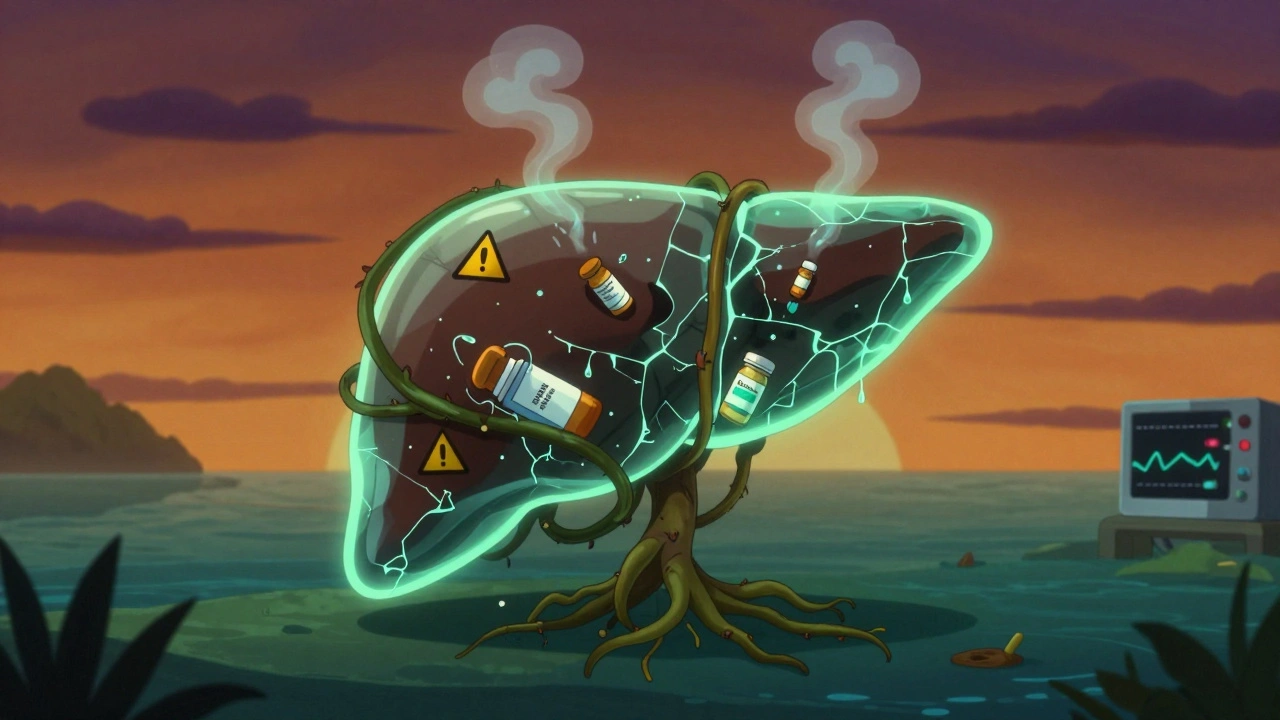
Many people turn to kava as a natural way to calm anxiety, relax after a long day, or improve sleep. But if you're taking any sedative medication-whether it's for anxiety, insomnia, or pain-you could be putting your liver and safety at risk. This isn't just a theoretical concern. Real people have ended up in the hospital after mixing kava with their prescription drugs. And the danger isn't always obvious until it's too late.
What is kava, really?
Kava (Piper methysticum) is a plant from the Pacific Islands, traditionally brewed into a drink for ceremonies and social gatherings. Its active compounds, called kavalactones, interact with your brain in ways similar to anti-anxiety medications. They reduce nerve activity, relax muscles, and make you feel calm-sometimes even sleepy. In Western countries, it's sold as capsules, teas, or liquid extracts, often marketed as a "natural alternative" to benzodiazepines like Xanax or Valium.
But here’s the catch: kava isn’t regulated like medicine. In the U.S., it’s classified as a dietary supplement, which means manufacturers don’t have to prove it’s safe before selling it. Doses vary wildly. One capsule might contain 70 mg of kavalactones; another might have 300 mg. And the extraction method matters. Alcohol or acetone-based extracts-common in store-bought products-concentrate the compounds that may harm your liver. Traditional water-based preparations, used for centuries in the Pacific, are far less risky.
Why kava can hurt your liver
Your liver breaks down everything you take-food, alcohol, medications, supplements. Kava interferes with this process. Studies show kavalactones can block key liver enzymes, especially CYP2D6, CYP2C9, and CYP3A4. These are the same enzymes that process many sedatives, antidepressants, and painkillers. When kava blocks them, your body can’t clear those drugs properly. The result? Higher drug levels in your blood, longer effects, and more strain on your liver.
Between 1999 and 2023, over 25 international cases linked kava to severe liver injury, including hepatitis, cirrhosis, and liver failure requiring transplants. The FDA issued a warning in 2002, and countries like Canada, the UK, and Switzerland banned kava entirely. Australia and the EU still allow it but with strict warnings. The truth? The risk is low overall-but it’s real, unpredictable, and irreversible in some cases.
One Sacramento County case from 2023 showed a 42-year-old man taking 300 mg of kava daily with 2 mg of alprazolam. Within three months, his liver enzymes spiked to 2,840 U/L (normal is under 40). He developed jaundice. He needed hospital care. His liver barely recovered.
Why combining kava with sedatives is dangerous
If you're taking any of these, kava is not safe:
- Benzodiazepines (alprazolam, lorazepam, diazepam)
- Barbiturates
- Sleep aids (zolpidem, eszopiclone)
- Opioids (oxycodone, hydrocodone)
- Antidepressants like trazodone or mirtazapine
- Antipsychotics like haloperidol
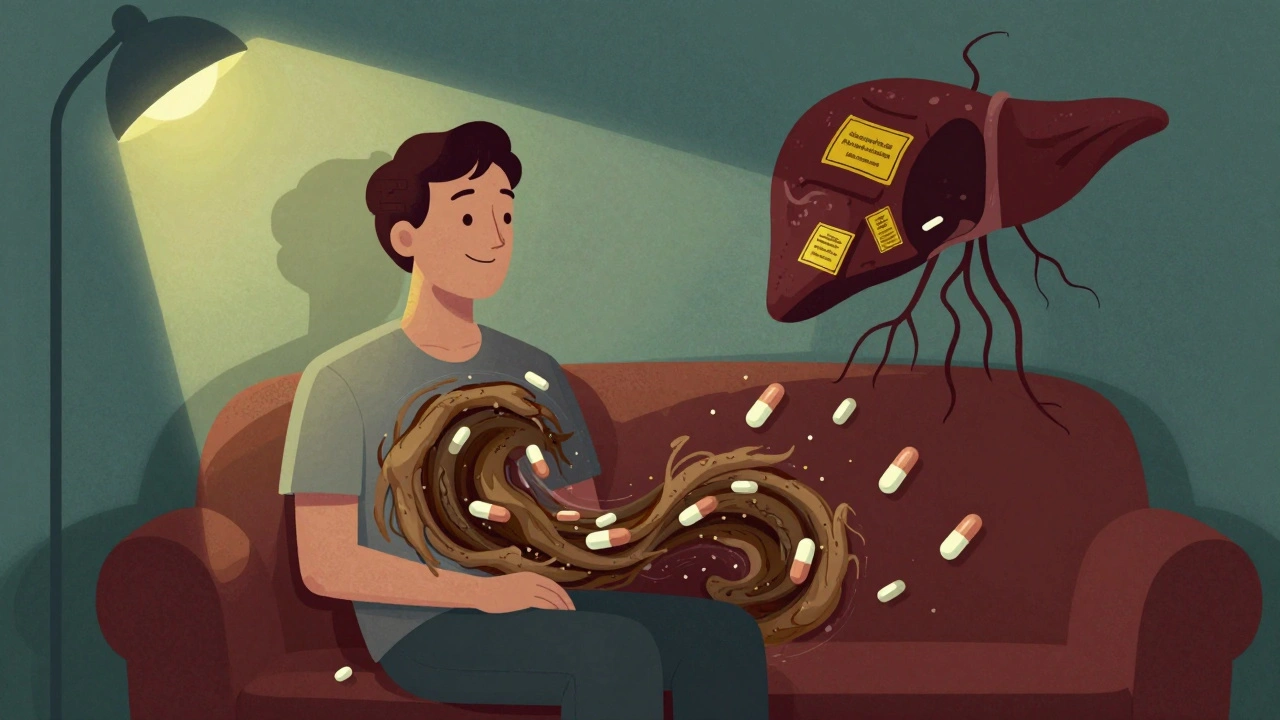
When kava meets these drugs, the sedative effects don’t just add up-they multiply. One Reddit user reported taking 0.5 mg of lorazepam with kava and being unable to stand for eight hours, with confused speech. That’s not "just tired." That’s central nervous system depression. In extreme cases, it can lead to respiratory failure.
Research shows kava can increase midazolam (a sedative used in surgery) levels in the blood by 27%. That’s the same as taking nearly a third more of your prescription than intended. No one checks for that. No one warns you. And by the time you feel too drowsy, it’s already too late.
Who’s most at risk?
Not everyone who takes kava gets liver damage. But certain factors make it far more likely:
- You take more than 250 mg of kavalactones daily
- You use alcohol-based extracts or concentrated capsules
- You’ve been using kava for more than 4 months
- You already have liver disease, fatty liver, or drink alcohol regularly
- You’re taking multiple sedatives or medications metabolized by the liver
People over 50 and women are also more vulnerable to liver toxicity. And here’s the scary part: most users don’t tell their doctors they’re taking kava. Sacramento County found only 22% of patients with liver problems mentioned kava use when asked. They assume it’s "just a herb" and not medicine. It is medicine. And it’s powerful.
What do experts say?
There’s disagreement on whether kava itself causes liver damage-or if it’s contaminated products, poor quality control, or other factors. Dr. J. Christopher Gorski suggests other causes might be to blame. But Dr. Jay H. Hoofnagle, a leading liver specialist and editor of LiverTox, says: "At least a dozen cases of acute liver failure have been clearly linked to kava."
The European Food Safety Authority says there’s no safe dose for people on medication. The World Health Organization found traditional water-prepared kava has 9 times fewer adverse events than commercial extracts. That’s critical. If you’re going to use kava, stick to traditional preparations. Avoid pills, tinctures, or alcohol-based liquids.
Australia’s Therapeutic Goods Administration says the risk is "very low but not negligible"-but only if you stay under 250 mg daily and don’t combine it with other sedatives. The U.S. FDA hasn’t banned kava, but it still has its 2002 warning active. And in 2024, California issued a formal public warning. New York is pushing for mandatory liver toxicity labels.
What should you do?
If you’re on sedative medication:
- Stop kava immediately. Don’t wait for symptoms. The damage can be silent until it’s severe.
- Talk to your doctor or pharmacist. Tell them exactly what you’re taking-even if you think it’s "natural." They need to check for interactions.
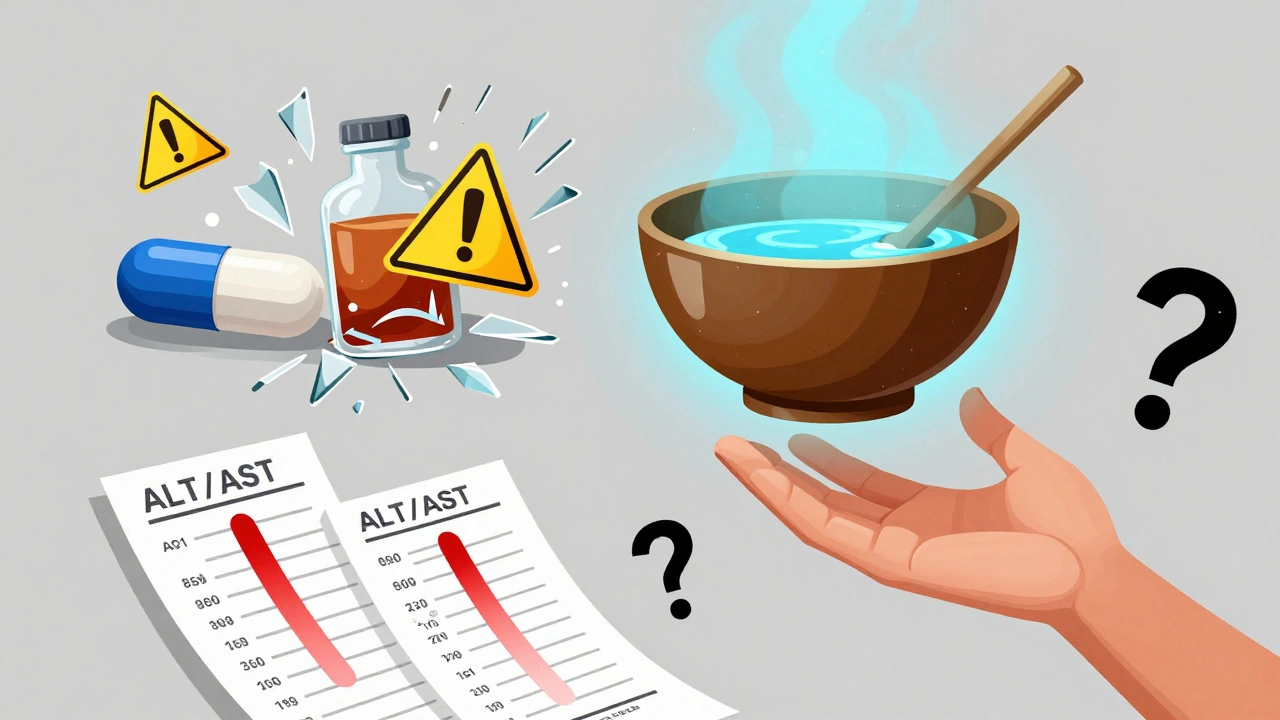
- Get a liver test. If you’ve used kava for more than a month, ask for ALT and AST blood tests. Elevated levels mean your liver is stressed.
- If you have liver disease, avoid kava completely. The CDC says it’s not safe for you.
- If you still want to try kava, only use water-based preparations, keep doses under 70 mg daily, and get liver checks every two weeks.
There are safer alternatives for anxiety and sleep. Valerian root has almost no drug interactions. L-theanine, magnesium glycinate, and cognitive behavioral therapy (CBT) have strong evidence and zero liver risk. Prescription options like buspirone or SSRIs are monitored, dosed precisely, and tested for safety.
The bottom line
Kava isn’t inherently evil. It’s been used safely for centuries in Pacific cultures-when prepared correctly and used in moderation. But today’s commercial products are not the same. They’re concentrated, unregulated, and often sold without warnings. And when you mix them with sedatives, you’re playing Russian roulette with your liver.
If you’re taking any medication that makes you drowsy, don’t risk it. The consequences aren’t worth it. You don’t need kava to feel calm. There are better, safer ways.
Can kava cause liver damage even if I don’t take any medications?
Yes. While the risk is lower without other medications, liver injury from kava has been reported in people taking only kava supplements. Most cases involve long-term use (over 4 months), high doses (above 250 mg daily), or alcohol-based extracts. Traditional water-based kava has far fewer reports of harm, but no form is completely risk-free.
How long does it take for kava to affect the liver?
Liver damage can appear anywhere from 1 to 4 months after starting kava. Symptoms like fatigue, nausea, dark urine, or yellowing skin often show up gradually. By the time they’re noticeable, the damage may already be significant. That’s why regular liver tests are crucial if you’re using it regularly.
Is kava safer than prescription anxiety meds?
No. Prescription anxiolytics like alprazolam have a documented liver injury rate of about 1 in 100,000 prescriptions. Kava’s estimated rate is lower-less than 1 in 1,000,000 daily doses-but the problem is unpredictability. With prescription drugs, dosing is controlled, monitoring is standard, and side effects are well-known. With kava, you don’t know the dose, purity, or ingredients. That makes it riskier in practice.
What should I do if I’ve already taken kava with my sedative?
Stop using kava right away. Monitor yourself for symptoms like extreme drowsiness, confusion, nausea, or yellowing of the eyes or skin. Contact your doctor immediately and ask for a liver function test (ALT, AST, bilirubin). Even if you feel fine, the damage can be happening silently. Don’t wait for symptoms to get worse.
Are there any kava products that are considered safe?
The only form with a better safety profile is traditional water-extracted kava, prepared from peeled root and consumed as a beverage. Commercial capsules, tinctures, and alcohol-based extracts carry the highest risk. Even then, no kava product is proven completely safe, especially if you’re on other medications. The safest choice is to avoid it altogether if you’re taking sedatives.

8 Comments
Kava? Nah. Just take a walk and breathe.
/p>I used to take kava capsules for sleep after long shifts. Didn’t think twice about it-until I started feeling like my body was made of wet cement. One morning I couldn’t get out of bed without holding onto the wall. My doc asked if I was mixing it with anything. I said no. He looked at me like I’d just admitted to juggling chainsaws. Turned out my ALT was through the roof. I stopped cold. Now I use chamomile tea and a weighted blanket. No hospital visits. No panic. Just quiet. Sometimes the simplest things are the safest.
/p>People treat herbs like they’re harmless candy. Kava isn’t some spiritual tea-it’s a potent neuroactive compound. If you’re on meds, you’re not being ‘natural,’ you’re being reckless. Your liver doesn’t care if it’s ‘organic.’ It just processes toxins. Stop pretending you’re a wellness guru when you’re just gambling with your organs.
/p>Oh, the irony of modern wellness culture: we’ve turned ancient, ritualistic, water-based plant medicine into a profit-driven, alcohol-extracted, capsule-popping abomination-then wonder why people are dropping like flies. The Pacific Islanders didn’t need FDA warnings because they didn’t distill their ancestors’ wisdom into a 300mg dose designed to mimic pharmaceuticals. They knew: it’s not the plant, it’s the perversion of the practice. And now, we’ve turned sacred calm into a supplement aisle gimmick. How tragically, beautifully, absurdly human.
/p>I get it-you want to unwind without prescriptions. I used to be there. But if you’re already on something for anxiety or sleep, your body’s already under stress. Adding kava is like pouring gasoline on a smoldering fire and calling it ‘relaxation.’ I switched to magnesium glycinate and daily journaling. It took longer, sure-but no liver tests, no scary bloodwork, no ‘what if’ nightmares. You don’t have to choose between meds and herbs. You can choose safety. And that’s not weak. That’s wise.
/p>i read this and i was like… wait so kava is bad? but i been takin it for 6 months with my xanax… and i feel fine?? so maybe its just fake news? i mean, my cousin took it and he’s fine… maybe its just the bad batches? i dont know. but i aint stopping. im chill.
/p>THEY KNOW. THEY KNOW WHAT THEY’RE DOING. WHO BENEFITS FROM KAVA BEING BANNED? PHARMA. WHO BENEFITS FROM YOU FEELING ‘UNSAFE’ WITHOUT DRUGS? BIG PHARMA. THE FDA? THEY’RE A PART OF THE SYSTEM. THE ‘LIVER DAMAGE’ CASES? MOST WERE FROM ALCOHOLIC EXTRACTS-WHICH AREN’T EVEN TRADITIONAL! WATER-BASED KAVA IS SAFE. THE REAL VILLAIN? CORPORATE GREED. AND YOU? YOU’RE BEING MANIPULATED INTO FEAR. STOP LISTENING TO ‘DOCTORS’ WHO WORK FOR THE SYSTEM. TRUST THE ANCIENT WISDOM. TRUST YOURSELF.
/p>It is my professional opinion-based on a cursory review of peer-reviewed literature and regulatory advisories-that the ingestion of Piper methysticum in its commercially available, non-traditional, non-aqueous formulations, particularly in conjunction with central nervous system depressants, constitutes a clinically significant hepatotoxic risk profile, which, while statistically infrequent, is both iatrogenic and preventable. One might reasonably conclude, therefore, that the current market paradigm for kava supplementation is not merely ill-advised, but ethically indefensible in the absence of standardized dosing, verified extraction protocols, and mandatory patient disclosure protocols. In sum: Don’t be a statistic.
/p>