Warfarin: What It Is, How It Works, and What You Need to Know
When you take warfarin, a blood-thinning medication used to prevent dangerous clots in the heart, legs, or lungs. Also known as Coumadin, it’s one of the most prescribed anticoagulants in the world — and one of the most misunderstood. Warfarin doesn’t dissolve clots. It stops new ones from forming by blocking vitamin K, which your body needs to make clotting proteins. That’s why it’s used after heart attacks, for atrial fibrillation, or if you’ve had a deep vein thrombosis. But it’s not a simple pill. Getting it right means regular blood tests, watching what you eat, and knowing which other drugs can mess with it.
INR monitoring, a blood test that measures how long it takes your blood to clot is the backbone of safe warfarin use. A normal INR for most people on warfarin is between 2 and 3. Too low, and you’re still at risk for a stroke. Too high, and you could bleed internally from a minor bump. That’s why doctors don’t just hand you a script and walk away — they track your INR closely, especially when you start or change doses. And it’s not just about the pill. vitamin K, a nutrient found in leafy greens like spinach, kale, and broccoli directly fights warfarin’s effect. You don’t need to avoid these foods — just keep your intake steady. One day eating a big salad, then skipping it for a week? That’s when your INR goes wild.
Warfarin also plays well with almost nothing. Antibiotics, painkillers, even some herbal supplements like St. John’s wort or garlic pills can change how your body handles it. That’s why you need to tell every doctor, pharmacist, or even your dentist that you’re on warfarin before they give you anything. Even over-the-counter cold meds can be risky. And if you’re taking something like warfarin for atrial fibrillation — which shows up in several of the posts here — you’re likely trying to prevent a stroke. That’s serious business. Missing a dose or skipping an INR check isn’t just inconvenient; it can be life-threatening.
There’s no sugarcoating it: warfarin demands attention. But for millions of people, it’s the difference between living normally and facing a stroke or pulmonary embolism. The posts below cover real-world issues tied to warfarin — from how it interacts with other drugs like benzodiazepines or HRT, to how kidney function affects dosing, and even how patients manage long-term therapy. You’ll find practical tips on avoiding bleeding risks, understanding lab results, and what to do when things go off track. This isn’t theory. It’s what people actually deal with every day — and what you need to know if you’re on it, or caring for someone who is.
Warfarin and NSAIDs: Understanding the Increased Bleeding Risk
Combining warfarin and NSAIDs significantly increases bleeding risk. This article explains why, covering mechanisms, real-world data, and safer alternatives. Learn how to manage pain while on blood thinners without dangerous complications.
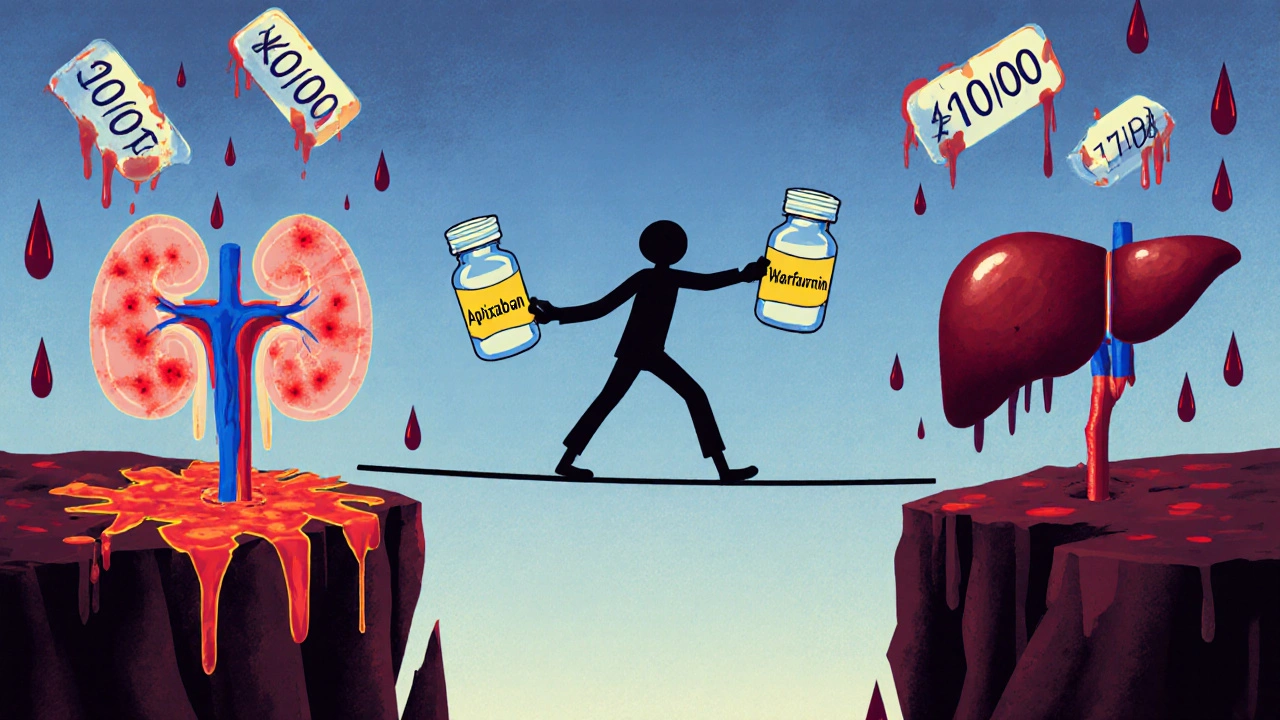
Anticoagulation in Kidney and Liver Disease: What Doctors Really Do
Managing blood thinners in kidney and liver disease is complex. Apixaban is often safest in moderate kidney disease, while warfarin remains common in severe cases. DOACs are risky in advanced liver failure. Real-world decisions rely on individual risk, not just guidelines.