
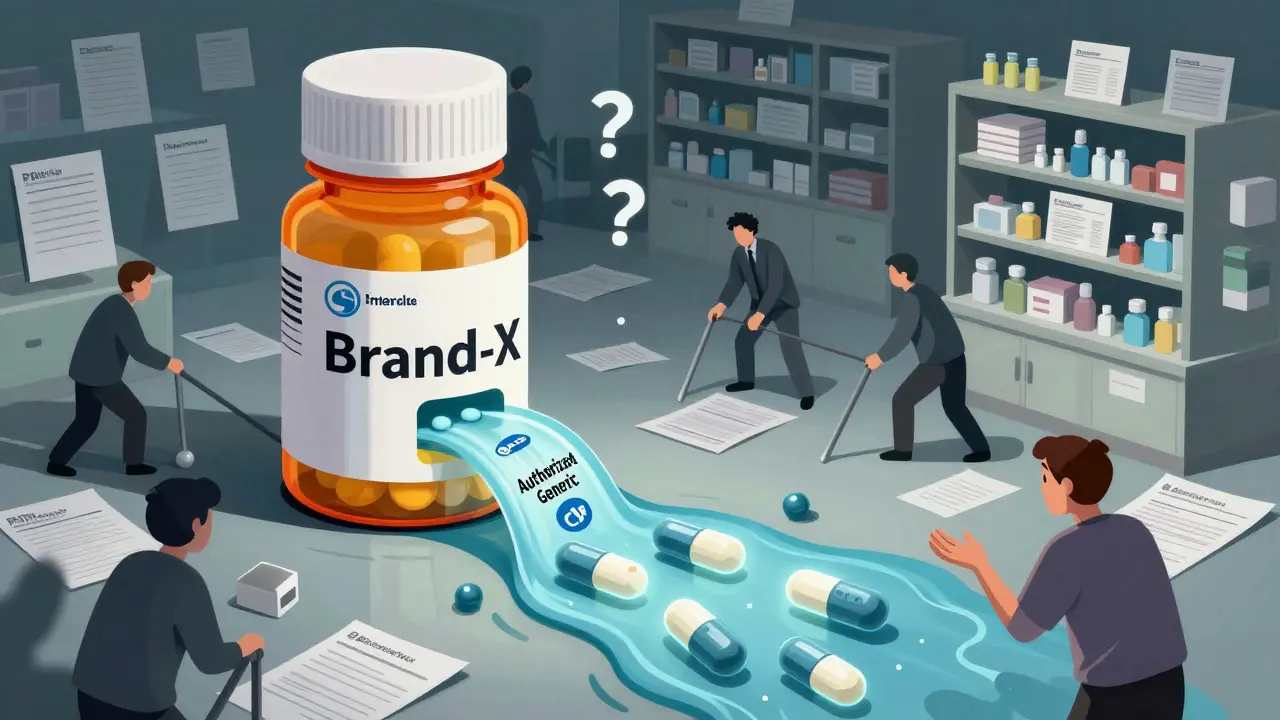
When you pick up a prescription, do you ever stop to think about whether the pill in your hand is the same as the brand-name version you’ve been taking? Most people don’t. But the answer matters more than you think-especially when it comes to authorized generics.
These aren’t your typical generics. They’re made by the same company that makes the brand-name drug, in the same factory, with the exact same ingredients. No guesswork. No changes. Just a different label and a lower price. So why don’t more patients choose them? And do they even know they’re available?
What Exactly Are Authorized Generics?
Let’s cut through the confusion. An authorized generic is not a knockoff. It’s not a copycat. It’s the real thing-just sold without the brand name. Think of it like buying a smartphone directly from Apple, but in a plain box instead of the shiny retail package. Same phone. Same warranty. Same everything. Just cheaper.
Here’s how it works: When a brand-name drug’s patent expires, another company can usually apply to make a generic version. That process takes 18 to 24 months. But the original manufacturer can skip all that. They can just slap a generic label on their own product and start selling it. No FDA review needed because they’re already approved under their original New Drug Application (NDA). The FDA calls these "products with no applicant" in their Orange Book-a technical term that hides a big truth: you’re getting the exact same drug, made by the same people, in the same place.
That’s why they’re different from traditional generics. Those have to prove they’re bioequivalent-same effect in the body. But even if they pass, they might use different fillers, dyes, or coatings. And for some people, those tiny changes cause real problems: stomach upset, rashes, or even a drop in how well the drug works. Authorized generics? No such risk. Their inactive ingredients match the brand perfectly.
Do Patients Notice the Difference?
Here’s the surprising part: most patients can’t tell the difference.
A 2018 study tracked over 210,000 people switching from brand-name drugs to either authorized generics or traditional generics. The results were clear. Only 22.3% of those who switched to an authorized generic went back to the brand. For those who switched to a regular generic? That number jumped to 28.7%. That’s a 22% drop in switchbacks just because the drug was made by the same company.
Another study, done by Consumer Reports in late 2022, gave 1,200 people unlabeled pills-some brand, some authorized generic, some traditional generic-and asked them to spot the difference. Seventy-eight percent couldn’t tell authorized generics from the brand. Only 52% could tell traditional generics apart. That’s not luck. It’s because they’re identical.
Reddit users weighed in too. In a thread about authorized generics, 63% of 87 respondents said they noticed no difference at all between the brand and the authorized version. Only 28% reported similar experiences with traditional generics. People aren’t imagining this. They’re feeling it.
Price Still Matters-But Not Always
So if they’re the same, why don’t everyone choose authorized generics? Because price kicks in later.
During the first 180 days after a brand-name drug goes generic, authorized generics help drive prices down. The FTC found they reduce retail prices by 4-8% and wholesale prices by 7-14%. That’s real savings. But after that window, traditional generics come in with prices 15-25% lower. And that’s where most patients go.
AmerisourceBergen’s 2022 data shows that after the exclusivity period ends, traditional generics capture 65-75% of the market. Why? Because they’re cheaper. For someone paying out-of-pocket or with high copays, every dollar counts. An authorized generic might save you $5 a month. A traditional generic might save you $15.
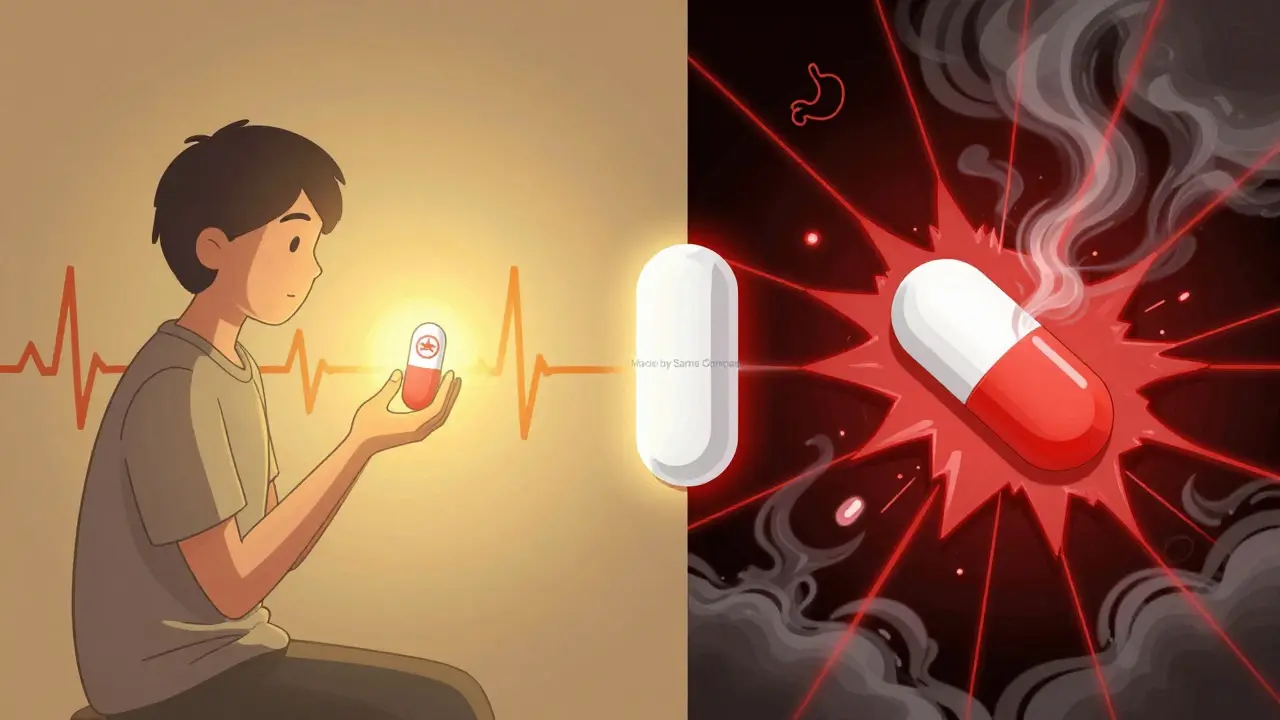
But here’s the catch: if you’re on a stable medication-like a blood pressure pill, a thyroid hormone, or an antidepressant-you don’t want to risk switching. Even small differences in inactive ingredients can throw off your routine. That’s why many patients stick with authorized generics even when cheaper options exist. They’re not choosing based on price. They’re choosing based on peace of mind.
Why Don’t More People Know About Them?
Here’s the real problem: most patients never get a choice.
Insurance plans and pharmacy benefit managers (PBMs) decide what gets dispensed. According to a 2022 KFF analysis, 82% of commercial insurance plans automatically substitute generics-authorized or not-without asking. Only 12% let you or your doctor request the brand if you prefer.
Pharmacists know this. They see it every day. A patient comes in asking for their usual pill. The system says "generic available." The pharmacist dispenses it. The patient never knows if it’s an authorized generic or a traditional one. Even if they did, they wouldn’t know how to ask.
And the labeling doesn’t help. Authorized generics look just like traditional generics on the bottle. There’s no label that says "Made by the same company as Brand-X." You have to dig into the FDA’s Orange Book or check the manufacturer’s website. Most people don’t.
Pharmacists are stuck in the middle. The American Pharmacists Association says many patients get confused when they learn their pharmacy is giving them a drug made by the same company as the brand. "Wait, so this is the same thing?" they ask. And then: "Why is it cheaper?" It’s not fraud. It’s just opaque.
The Bigger Picture: Who Benefits?
It’s not just about patient choice. There’s a game being played behind the scenes.
The FTC warned back in 2011 that some brand companies use authorized generics as a tactic to scare off competitors. They’ll threaten to launch their own generic version if another company tries to enter the market. That scares off the first generic maker, who might agree to delay their launch in exchange for a cut of the profits. The result? Less competition. Higher prices in the long run.
That’s why the Congressional Budget Office warned in 2023 that if this pattern continues, Medicare Part D could lose $1.2 billion by 2027. Brand companies get to keep revenue. Patients get less choice. And the system gets more complicated.
But here’s the flip side: when authorized generics enter the market without collusion, they deliver immediate savings. The 2022 Drug Patent Watch study on entacapone showed price drops of over 18% in on-invoice costs when authorized generics arrived. That’s money back in patients’ pockets right away.
What Should You Do?
So what’s the takeaway for someone picking up a prescription?
- If you’re on a long-term medication and you’ve had side effects with traditional generics, ask your pharmacist: "Is this an authorized generic?"
- Check your prescription label. If the manufacturer name matches the brand-name drug, you’re getting an authorized generic.
- If cost is your main concern, wait until after the 180-day exclusivity window-traditional generics will be cheaper.
- If stability matters more than savings, ask your doctor to write "Dispense as Written" on the prescription. That blocks automatic substitution.
You don’t need to be a pharmacist to make smart choices. You just need to ask the right questions.
What’s Next?
The FDA is trying to make authorized generics easier to spot. Their 2023 draft guidance wants clearer labeling and better public access to the "Products with No Applicant" list. The goal? Transparency. If patients knew more, they’d have more control.
Right now, authorized generics sit in a gray zone-better than traditional generics in consistency, worse in price. But for millions of people who rely on steady, predictable medication, that consistency is priceless.
They’re not magic. They’re not a scam. They’re just the original drug, quietly rebranded. And if you’ve ever worried that a generic wasn’t the same-you might have already been taking one.
Are authorized generics the same as brand-name drugs?
Yes. Authorized generics are made by the same company that produces the brand-name drug, in the same facility, using the exact same ingredients-both active and inactive. The only difference is the label and price. The FDA confirms they are chemically identical.
Why are authorized generics cheaper than the brand?
They’re cheaper because they don’t carry the marketing, advertising, or brand-name premium. The manufacturer saves money by skipping the brand packaging and promotion, but the drug itself remains unchanged. This allows them to offer a lower price without sacrificing quality.
Can I request an authorized generic from my pharmacy?
You can ask, but you may not get it. Most insurance plans automatically substitute any generic-authorized or traditional-without asking. To increase your chances, ask your doctor to write "Dispense as Written" or "Brand Necessary" on your prescription. You can also ask your pharmacist to check if the generic dispensed is an authorized one.
Do authorized generics have fewer side effects than traditional generics?
They often do, because they contain the same inactive ingredients as the brand-name drug. Traditional generics can use different fillers, dyes, or coatings, which sometimes cause allergic reactions or affect absorption. Patients who’ve had issues with traditional generics often report better tolerance with authorized generics.
How can I tell if my generic is an authorized generic?
Check the manufacturer name on the prescription label. If it matches the brand-name drug’s manufacturer, it’s likely an authorized generic. You can also look up the drug in the FDA’s Orange Book and search for "products with no applicant." Your pharmacist can help with this too.
Are authorized generics available for all medications?
No. Only about 10-15% of drug categories with generic competition have authorized generics available. They’re most common in cardiovascular and central nervous system drugs. Companies like Pfizer, Merck, and AbbVie have used them for popular medications, but many others haven’t.



14 Comments
I’ve been taking my blood pressure med for years. Switched to the generic and felt like crap for a week. Turned out it was a traditional one. My pharmacist finally checked and switched me to the authorized version. Same pill, different label. I’m not going back.
Why do pharmacies even hide this? It’s not like they’re trying to scam you. They just don’t care enough to explain./p>
Same company. Same factory. Same pill. Why isn’t this common knowledge?/p>
OMG I just realized I’ve been taking authorized generics for my antidepressant for two years and didn’t even know it. My anxiety went down after the switch and I thought I was just getting used to it. Turns out I was just getting the real deal.
Why is this not on the pill bottle? Like, a little sticker? ‘Made by the same folks who made Lexapro.’ That’s all it takes. People need to feel safe, not confused./p>
This article is dangerously misleading. The FDA doesn’t ‘approve’ authorized generics differently - they’re not even submitted as separate entities. They’re just the brand drug in a different box. The entire premise of ‘better consistency’ is a marketing lie pushed by pharma to keep you paying more.
Traditional generics have to meet bioequivalence standards. Authorized generics? They skip the whole process. That’s not a feature - it’s a loophole. You think you’re getting premium quality? You’re getting the same drug because the company owns both the brand and the ‘generic’ - not because it’s safer. It’s monopoly economics dressed up as patient care./p>
So let me get this straight - the drug is identical, the company is the same, but if you ask for it by name, you’re basically begging for a discount?
And the pharmacy? They’re just like, ‘Sure, here’s the generic.’ No explanation. No choice.
Wow. Capitalism. Truly beautiful./p>
Life is a river, and pills are just stones we throw into it to see how deep the silence goes.
Authorized generics? They’re mirrors. They reflect the brand, but without the ego. The brand screams ‘I’m special.’ The generic whispers, ‘I’m here.’
Yet we fear the whisper. We fear the silence. We fear the truth that the same hand that made the expensive version also made the cheap one.
Are we afraid of equality? Or just afraid of saving money?/p>
The system is designed to obscure choice. The patient is not a customer. The patient is a data point. The pharmacy is a conduit. The insurer is a gatekeeper. The manufacturer? A silent puppeteer.
Authorized generics exist not to empower, but to manipulate. They are a tool to delay true competition. The FTC knew this. The CBO warned. And yet, here we are - still confused, still paying, still unaware./p>
I read this entire thing. I didn’t say anything. Just nodded. Then went to my prescription bottle. Manufacturer name matched. So I’ve been taking it all along. No big deal. Just… interesting./p>
You people are naive. Authorized generics are not a solution - they’re a trap. The company that makes the brand? They control the entire supply chain. They own the patents. They own the manufacturing. They own the pharmacy contracts.
When they release an authorized generic, they’re not lowering prices - they’re crushing competition before it even starts. They flood the market with their own ‘cheap’ version so no one else can enter. Then, after 180 days? They jack up the price again.
This isn’t about patient choice. It’s about corporate control. And you’re celebrating it like it’s a gift from God. It’s not. It’s a tactic. A very well-funded, very legal tactic./p>
I’m so tired of people acting like this is some revolutionary discovery. It’s not. It’s basic. The same company. The same factory. The same pill.
If you’re still taking brand-name drugs because you ‘trust’ them more, you’re not being careful - you’re being manipulated. You’re paying $100 for the same thing you could get for $15.
And no, your ‘side effects’ aren’t because the generic is inferior. They’re because you’re not used to the different filler. Get over it./p>
Patient safety and medication consistency are paramount. Authorized generics provide a clinically equivalent option without the brand premium. It is both ethical and practical to prioritize access to identical formulations when available. Pharmacists and providers should actively educate patients on this distinction. Stability in treatment outcomes should never be sacrificed for marginal cost savings./p>
The irony is that the very people who demand transparency in healthcare are the ones who never check the manufacturer name on their prescription labels.
If you don’t know who made your pill, you’re not informed - you’re passive.
This isn’t about trust. It’s about attention. Pay attention. It’s right there./p>
I just looked at my bottle. Manufacturer is Pfizer. My brand is Lipitor. So I’ve been taking an authorized generic for three years and didn’t know.
My doctor never mentioned it. My insurance never explained.
I’m glad I read this. But I’m also sad that it took an article to make me realize I’ve been getting the right thing all along./p>
Let’s be real - if this was some revolutionary breakthrough, why is it buried in a 5,000-word article nobody reads?
Because pharma doesn’t want you to know. They want you to think generics are risky. They want you to pay extra.
And you? You’re still clicking ‘accept’ on your insurance form without reading a single word.
So stop acting like you’re enlightened. You’re just late to the party./p>