
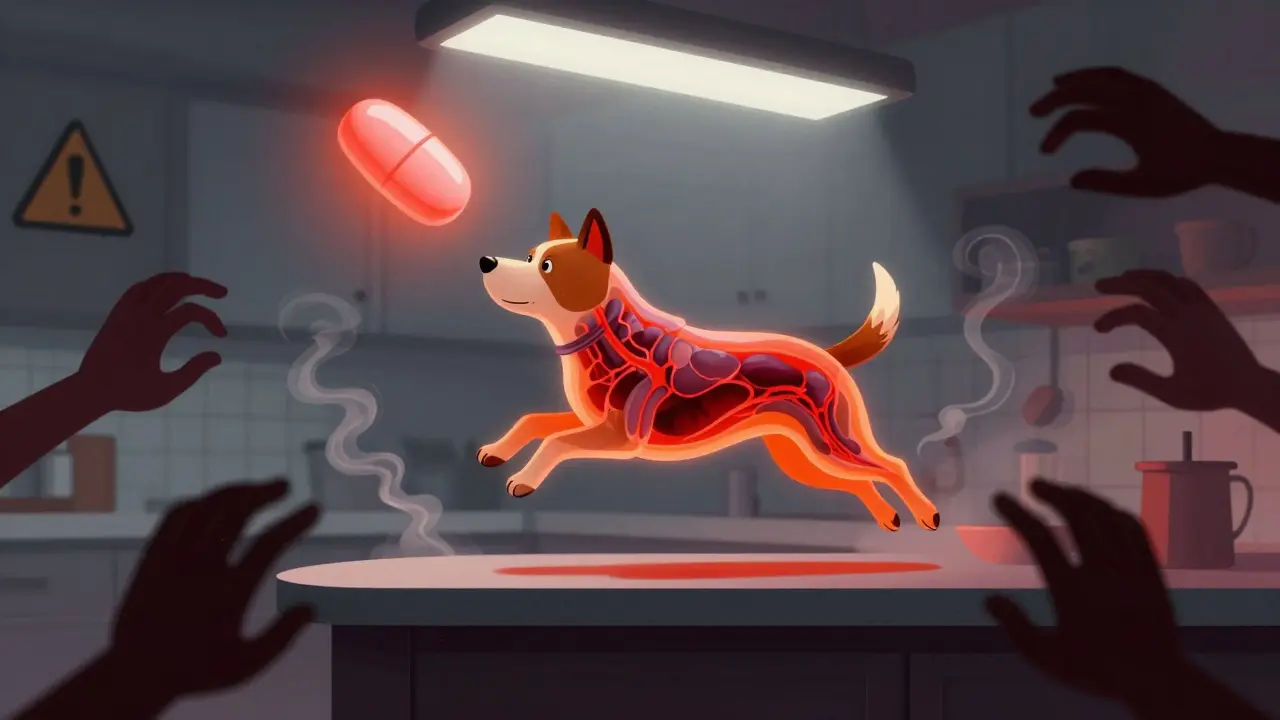
Every year, over 150,000 pets in the U.S. end up in emergency vet clinics because they ate human medication. Most of these cases aren’t accidents involving spilled bottles - they’re simple, preventable mistakes. A dog sniffs out a dropped pill. A cat jumps onto the counter and licks a sticky tablet. Before you know it, your pet is trembling, vomiting, or acting completely out of character. The problem? Human medications are deadly to pets, even in tiny doses. And the symptoms don’t always look like what you’d expect.
Why Human Medications Are So Dangerous for Pets
Your body and your pet’s body process drugs in completely different ways. What’s safe for you can be lethal for them. Cats, for example, lack a key liver enzyme needed to break down acetaminophen - the active ingredient in Tylenol. Just one tablet can poison a cat. Dogs metabolize NSAIDs like ibuprofen (Advil) differently too. A single 200mg pill can cause stomach ulcers and kidney failure in a 20-pound dog. The biggest culprits? Antidepressants, ADHD meds, painkillers, and sleep aids. According to the Pet Poison Helpline, NSAIDs like ibuprofen are the #1 cause of pet poisonings, followed closely by antidepressants and acetaminophen. And it’s not just pills - patches, gels, and extended-release capsules are just as dangerous. A single Effexor XR capsule can kill a cat. A few Adderall tablets can send a dog into cardiac arrest.Key Symptoms by Medication Type
Not all overdoses look the same. Recognizing the right signs means knowing which meds your pet likely ate. Here’s what to watch for, grouped by drug class.Antidepressants (SSRIs like Prozac, SNRIs like Effexor)
Symptoms usually show up within 1-12 hours. In dogs, you’ll see:- High fever (103-106°F)
- Shaking or tremors
- Restlessness, pacing, or vocalizing
- Dilated pupils
- Seizures (if untreated)
- Extreme vocalization - yowling, crying
- Bumping into walls or furniture
- Jaundice (yellow gums)
- Liver enzyme levels skyrocketing (over 1,200 U/L)
ADHD Medications (Adderall, Concerta, Ritalin)
These are stimulants. Symptoms hit fast - often within 30 minutes. Your pet might look like they’re having a panic attack:- Heart rate over 220 beats per minute (normal is 60-140)
- Body temperature above 107°F
- Severe tremors or muscle rigidity
- Dilated pupils that don’t react to light
- Aggression or extreme hyperactivity
NSAIDs (Ibuprofen, Naproxen, Aleve)
These are common painkillers. Dogs are especially vulnerable. Signs appear within 1-6 hours:
- Vomiting (in 92% of cases)
- Black, tarry stools (sign of internal bleeding)
- Lethargy, loss of appetite
- Increased thirst and urination (early kidney damage)
- BUN levels above 120 mg/dL (normal: 10-25)
Cats are even more sensitive. A single 5mg dose can cause kidney failure. Many owners don’t realize their cat ate a pill - they just notice the cat isn’t eating or drinking. By then, it’s often too late.
Acetaminophen (Tylenol)
This is the most dangerous drug for cats. Even 10mg/kg can be fatal. Symptoms appear within 1-4 hours:
- Brown or blue-tinged gums (methemoglobinemia)
- Swelling of the face or paws
- Difficulty breathing
- Dark urine
- Coma or death if untreated
Dogs handle acetaminophen better - but not well. Doses over 150mg/kg cause liver failure. Symptoms show up in 24-72 hours:
- Yellowing of eyes or gums
- Vomiting, diarrhea
- Weakness, collapse
- ALT liver enzymes over 1,000 U/L
Benzodiazepines (Xanax, Ambien, Klonopin)
You’d think these sedatives would make pets sleepy. But in dogs, they often cause the opposite:
- Agitation, pacing, barking
- Hyperactivity
- Loss of coordination
This paradoxical reaction happens in over half of canine cases. Cats are more likely to develop liver damage, especially with Ambien. One study found 37% of cats with Ambien toxicity had liver enzyme levels over 1,200 U/L.
What to Do Immediately
Time is everything. The Merck Veterinary Manual shows 93% of pets survive if treated within two hours. Here’s your action plan:
- Don’t wait for symptoms. If you suspect your pet ate any human medication, call your vet or the Pet Poison Helpline (1-800-213-6680) immediately.
- Check for clues. Look for empty pill bottles, scattered pills, or chewed packaging. Note the name, dose, and time of ingestion.
- Measure temperature. Use a rectal thermometer. A reading above 103.5°F suggests stimulant or SSRI toxicity.
- Check gum color. Brown or gray gums = possible acetaminophen poisoning. Pale gums = possible blood loss or shock.
- Don’t induce vomiting unless told to. Some drugs cause more damage coming back up. Let the vet decide.
Common Mistakes Owners Make
Many people don’t realize how quickly things can go wrong. Here are the top missteps:
- Mistaking agitation for excitement. A dog acting hyper after eating Adderall isn’t “just excited” - it’s in medical crisis.
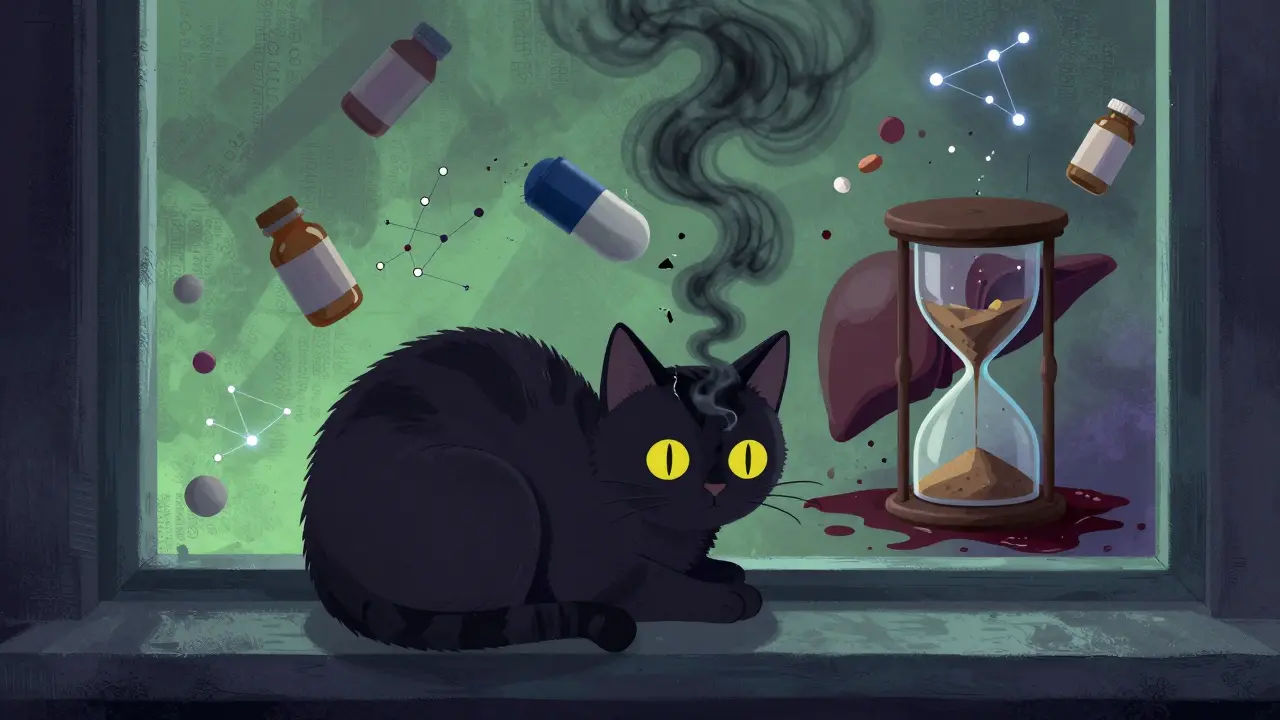
- Thinking “it’s just one pill.” One 200mg ibuprofen tablet is toxic to a 20-pound dog. One Effexor capsule can kill a cat.
- Waiting to see if they “get better.” Acetaminophen damage takes hours to show. By the time your cat looks sick, the liver is already failing.
- Assuming cats won’t eat pills. Cats are attracted to sweet coatings. They’ll eat entire bottles of Effexor or Adderall if left unattended.
A 2023 PetMD survey found 68% of owners initially misinterpreted early symptoms. Nearly half thought their dog’s tremors were just “shivering from cold.” That delay cost lives.
How to Prevent It
Prevention is simple - but requires discipline:
- Store all meds in closed cabinets - not on counters or nightstands. Cats jump. Dogs pull open drawers.
- Never leave pills on tables, in purses, or in coat pockets. A dropped pill is an open invitation.
- Use childproof containers. They’re not foolproof for pets, but they help.
- Dispose of old meds properly. Don’t flush them. Take them to a pharmacy drop-off.
- Know your pet’s risk. If you take antidepressants or ADHD meds, be extra careful. These are the most common causes of poisoning.
Many pet owners don’t realize their own prescriptions are a hidden danger. If you take four or more medications daily - as the average American over 65 does - your home is a minefield for curious pets.
When to Go to the Vet
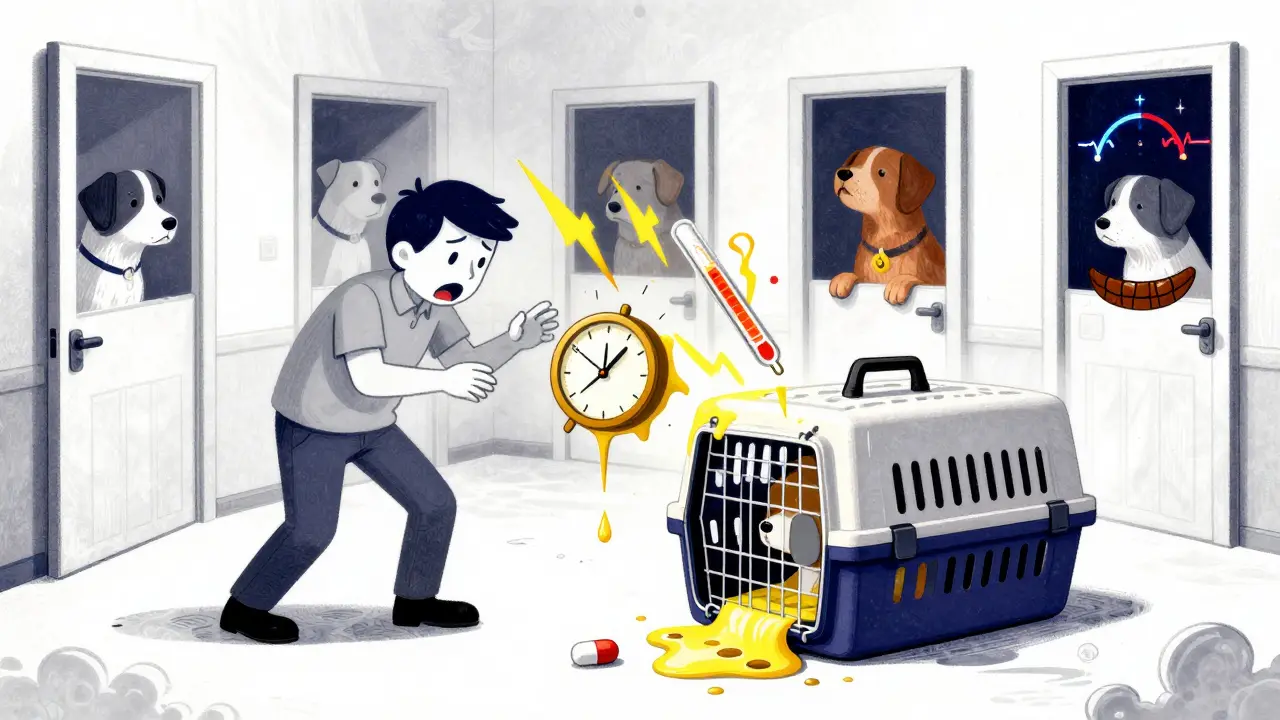
If your pet shows any of these signs after possible exposure to human meds, go now:
- High fever
- Seizures
- Difficulty breathing
- Brown gums
- Extreme lethargy or collapse
Even if you’re unsure, call ahead. Many emergency clinics have poison control specialists on staff. The Pet Poison Helpline answers calls in under a minute. They’ll tell you whether to rush in or wait.
What Happens at the Vet
Treatment depends on the drug, dose, and time since ingestion. Common steps:
- Activated charcoal - binds toxins in the stomach (only if given within 2 hours)
- IV fluids - flushes kidneys, supports circulation
- Medications - like cyproheptadine for serotonin syndrome, N-acetylcysteine for acetaminophen
- Monitoring - blood tests, temperature, heart rate, liver/kidney function
Recovery is possible - if caught early. Dogs that get treatment within two hours of ingesting ibuprofen have a 95% survival rate. Cats that get treatment for acetaminophen before their gums turn brown have a 70% chance of recovery. But if you wait, the odds drop fast.
Can a single pill kill my pet?
Yes. One 37.5mg Effexor capsule can kill a cat. One 200mg ibuprofen tablet can cause kidney failure in a small dog. Even one Adderall pill can trigger a life-threatening heart rate in a 30-pound dog. There’s no safe dose for pets - only toxic ones.
Are over-the-counter meds safer than prescription ones?
No. In fact, OTC painkillers like ibuprofen and acetaminophen are the most common causes of pet poisoning. People assume they’re harmless because they’re sold without a prescription. But they’re just as dangerous - if not more - than prescription drugs.
My pet ate a pill but seems fine. Should I still worry?
Yes. Many toxic effects don’t appear for hours. Acetaminophen damage in cats can take 12-24 hours to show. NSAID kidney failure may not show until 72 hours later. Don’t wait for symptoms. Call your vet or the Pet Poison Helpline immediately.
Can I use home remedies like milk or hydrogen peroxide?
Never give your pet anything without professional advice. Milk doesn’t neutralize toxins. Hydrogen peroxide can cause internal damage if used incorrectly. Some drugs become more dangerous when vomited. Always consult a vet or poison control center first.
Is there an app that can help me recognize symptoms?
Yes. The ASPCA Animal Poison Control app includes a symptom checker that helps identify possible poisoning based on your pet’s signs and the substance ingested. It’s free and available 24/7. The American College of Veterinary Emergency and Critical Care also launched an AI-powered recognition tool in 2023 with 89% accuracy in testing.
Can a single pill kill my pet?
Yes. One 37.5mg Effexor capsule can kill a cat. One 200mg ibuprofen tablet can cause kidney failure in a small dog. Even one Adderall pill can trigger a life-threatening heart rate in a 30-pound dog. There’s no safe dose for pets - only toxic ones.
Are over-the-counter meds safer than prescription ones?
No. In fact, OTC painkillers like ibuprofen and acetaminophen are the most common causes of pet poisoning. People assume they’re harmless because they’re sold without a prescription. But they’re just as dangerous - if not more - than prescription drugs.
My pet ate a pill but seems fine. Should I still worry?
Yes. Many toxic effects don’t appear for hours. Acetaminophen damage in cats can take 12-24 hours to show. NSAID kidney failure may not show until 72 hours later. Don’t wait for symptoms. Call your vet or the Pet Poison Helpline immediately.
Can I use home remedies like milk or hydrogen peroxide?
Never give your pet anything without professional advice. Milk doesn’t neutralize toxins. Hydrogen peroxide can cause internal damage if used incorrectly. Some drugs become more dangerous when vomited. Always consult a vet or poison control center first.
Is there an app that can help me recognize symptoms?
Yes. The ASPCA Animal Poison Control app includes a symptom checker that helps identify possible poisoning based on your pet’s signs and the substance ingested. It’s free and available 24/7. The American College of Veterinary Emergency and Critical Care also launched an AI-powered recognition tool in 2023 with 89% accuracy in testing.


14 Comments
Man I never realized how many of my meds are basically poison to my dog. I leave my Adderall on the nightstand every night because I'm tired of digging through drawers. Now I'm gonna start locking them up. This post is a wake-up call.
/p>OMG I just checked my purse and there’s a half-eaten Advil bottle under my keys 😭 I’m so scared. My cat’s been acting weird all day. I think she got into it. I’m calling the vet right now. THANK YOU for posting this. I literally would’ve waited till morning.
/p>It’s fascinating how evolution has shaped metabolic pathways so differently across species. Humans have CYP2D6 and CYP3A4 enzymes that process NSAIDs and acetaminophen efficiently, but cats lack the UDP-glucuronosyltransferase system entirely, making even trace amounts lethal. It’s not just about dosage-it’s about biochemical incompatibility. We treat pets like furry humans, but their physiology is closer to a chem lab with a broken fume hood. We owe them better than our negligence.
/p>Listen if you take meds and have a pet you’re either part of the problem or part of the solution. No in between. Store your shit in locked cabinets. Not drawers. Not shelves. LOCKED. And if your dog eats one pill and you think it’s fine because he’s still wagging his tail you’re gonna bury him. I’ve seen it. I’ve done it. Don’t be that guy. Call the helpline. Now. Not later. Not tomorrow. NOW
/p>My sister’s cat ate a single Effexor capsule last year. She waited because the cat was ‘just sleepy.’ By the time she got to the vet, the liver enzymes were over 1500. Cat didn’t make it. I keep all my meds in the bathroom safe now. Even my vitamins. Better safe than heartbroken.
/p>This post is basically just fearmongering dressed up as education. Most of these cases are avoidable by common sense. But you’re turning every pill into a death sentence. Did you cite any peer-reviewed studies or just grab stats from Pet Poison Helpline’s marketing brochure? Also why are you assuming everyone has a locked cabinet? My apartment has no storage. My cat lives on the counter. What am I supposed to do? Wear a hazmat suit while taking my antidepressants?
/p>I’m so glad someone finally put this out there. I used to think my dog was just being dramatic when he’d shake after I dropped a pill. Turns out he was having a reaction. Now I have a little plastic box I keep on the top shelf. I don’t even leave my coffee mug on the counter anymore. It’s not about being paranoid. It’s about being responsible.
/p>My dog ate 2 ibuprofen once. I panicked. Called the helpline. They told me to rush him in. We got there in 20 mins. They gave him charcoal and fluids. He’s fine now. But man if I’d waited even an hour… I don’t even wanna think about it. Just lock your meds. Seriously.
/p>yo i had no idea cats could get poisoned by tylenol like that. i always thought they just hated the taste. my lil girl licks my pill bottles all the time. i guess i gotta stop doing that. thanks for the heads up man
/p>I just found out my neighbor’s dog died last week from eating his owner’s antidepressants. They didn’t even know it was dangerous. I cried for like an hour. Please please please share this with everyone you know. It could save a life.
/p>Interesting how the article ignores cultural differences in pet care. In India, pets are often free-roaming. Locking meds in cabinets isn’t practical when your dog sleeps under the bed and your cat climbs the fridge. Prevention requires infrastructure. Not just awareness. This post reads like a suburban American fantasy.
/p>My vet said the most common mistake is people thinking their pet is fine because they’re still breathing. That’s not recovery. That’s just waiting for the next symptom. If you think your pet ate something toxic you’re already behind. Don’t wait for the tremors. Don’t wait for the vomiting. Don’t wait for the brown gums. Call now. Even if you’re wrong. Better to be wrong and alive than right and dead
/p>I’m crying. I just realized I left my Xanax on the bathroom counter last night. My dog was in there. I checked the trash. Empty bottle. I’m going to the ER right now. Thank you for this. I don’t know how I didn’t know this. I’m so sorry to every pet I ever put at risk.
/p>Wow. So we’re supposed to treat our pets like they’re fragile porcelain dolls while we live in a world full of actual dangers? People get poisoned by household cleaners, pesticides, plants. Why is this any different? You’re creating panic, not prevention. Maybe we should stop keeping pets altogether if we’re this terrified of our own medicine cabinets.
/p>