

Most people who lose weight end up gaining it back. It’s not because they lack willpower. It’s because the body fights back. After you drop pounds, your metabolism slows down, hunger hormones spike, and your brain starts screaming for food. This isn’t failure-it’s biology. And if you think weight maintenance starts after you hit your goal, you’re already behind.
The Real Problem Isn’t Losing Weight, It’s Keeping It Off
Only about 25% of people who lose weight manage to keep it off for more than a year. That’s not a small number-it’s the norm. The rest? They go back to their old habits, or worse, they never really changed them in the first place. A study from the National Weight Control Registry tracked over 700 people who lost at least 30 pounds and kept it off for a year or longer. What did they all have in common? They didn’t treat maintenance like a bonus round. They treated it like the main game.
Here’s the truth: weight loss programs end. Your coach stops checking in. Your app stops sending reminders. And your body? It starts rewiring itself to get you back to your old weight. Research shows that after losing 10% of your body weight, your resting metabolism drops by 15-25% more than you’d expect just from being lighter. That means you burn fewer calories just sitting still. Your body thinks it’s starving. So it slows down, and it makes you hungrier.
What Successful Maintainers Do Differently
If you want to be in that 25%, you need to copy what works. The National Weight Control Registry found clear patterns among those who kept the weight off:
- 90.6% exercised regularly-about an hour a day, every day. Not intense workouts. Just consistent movement. Walking, cycling, gardening, dancing-it all counts.
- 78.2% ate breakfast every single day. Skipping it didn’t save calories. It made them hungrier later.
- 62.3% weighed themselves at least once a week. Daily weighing was even better for many.
- 75% watched less than 10 hours of TV a week. Less screen time meant less mindless snacking and more active living.
They didn’t follow a strict diet. They didn’t count every calorie forever. They built habits that fit into real life. One person in the registry said, “I don’t think about dieting. I just don’t eat like I used to.” That’s the key. It’s not about restriction. It’s about permanent change.
Daily Weighing Isn’t Obsessive-It’s Essential
On Reddit’s r/loseit community, 78% of people who kept weight off for over a year said daily weighing was their #1 tool. Not because they were obsessed with numbers, but because it gave them early warning signs. A 2-pound gain? That’s not fat. That’s water. But if you ignore it, it turns into 5 pounds, then 10. Weighing daily lets you catch small slips before they become big ones.
One user wrote: “I weigh myself every morning before coffee. If I’m up 1.5 pounds, I cut carbs that day and go for a walk. No guilt. No panic. Just adjustment.” That’s how it’s supposed to work. It’s not about perfection. It’s about awareness.
Studies show that people who weigh themselves four or more times a week are 37% more likely to maintain their loss than those who weigh less often. You don’t need a smart scale. A basic digital scale on the same floor, at the same time, in the same clothes-that’s enough.
Food Isn’t the Enemy-Habits Are
Successful maintainers didn’t eat “diet food.” They ate real food. On average, they consumed 1,800-2,000 calories a day with a mix of 52% carbs, 19% protein, and 28% fat. That’s not keto. That’s not low-carb. That’s balanced. The trick wasn’t the food-it was the structure.
They ate at regular times. They didn’t skip meals. They planned ahead. One person said, “I always have a snack in my bag. If I’m hungry, I eat something healthy instead of grabbing whatever’s nearby.” Another said, “I cook Sunday meals for the week. Even if I don’t eat them all, I know I have options.”
Meal timing matters. Eating breakfast keeps your metabolism steady. Skipping meals leads to overeating later. And eating mindfully-without screens, without rushing-helps your brain recognize fullness before you’re stuffed.
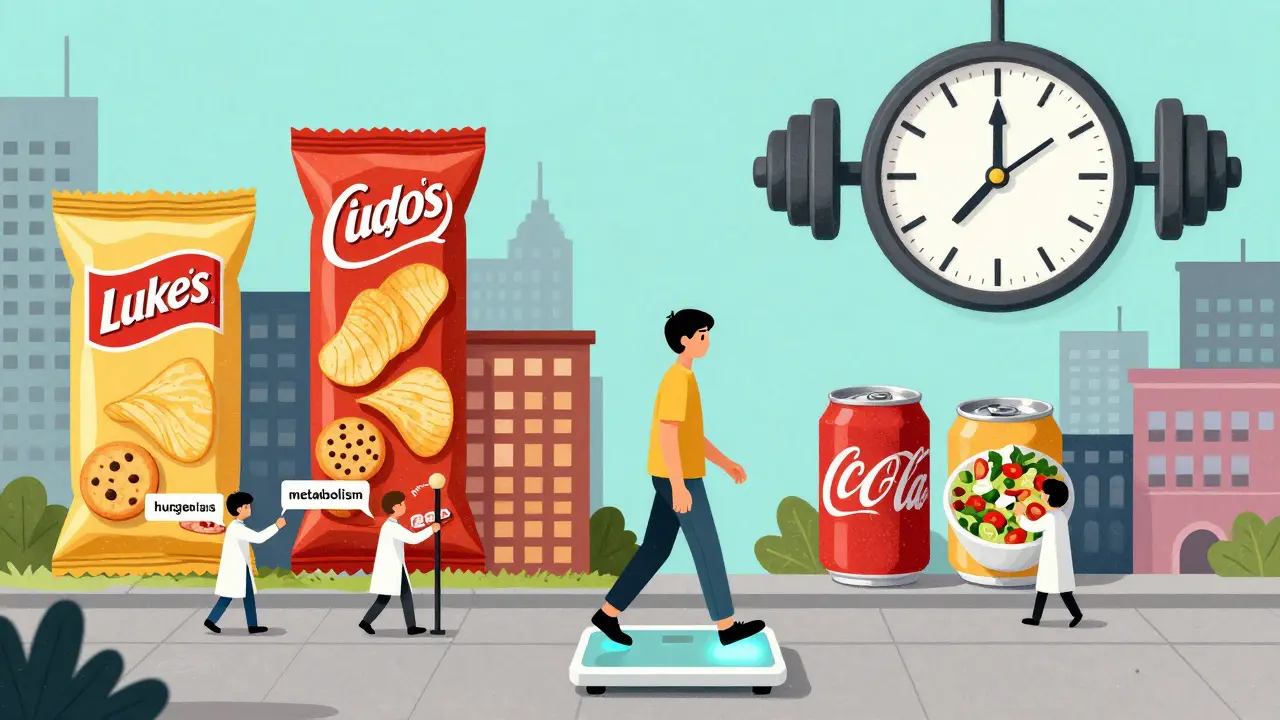
Exercise Isn’t Optional-It’s Your Metabolism’s Lifeline
People who keep weight off don’t exercise to burn calories. They exercise to keep their metabolism from crashing. That hour a day? It’s not about losing more weight. It’s about stopping the regain.
You don’t need to run marathons. You don’t need to lift heavy. You just need to move consistently. A brisk 30-minute walk five days a week is enough. Add two strength sessions a week, and you’re ahead of 90% of people trying to maintain weight.
Find something you actually enjoy. If you hate the gym, try dancing, swimming, hiking, or playing tennis. If you hate being outside, try online yoga or home workouts. The goal isn’t to burn 500 calories. It’s to stay active every single day. Movement is the anchor.
Plan for the Messy Stuff
Holidays. Vacations. Stress. Sick days. Life happens. And when it does, most people fall off the wagon and never get back on.
Successful maintainers plan for it. They don’t wait for the perfect moment. They know the worst times are coming, so they prepare.
- Before a holiday meal, eat a protein-rich snack so you’re not starving.
- When traveling, pack nuts, fruit, or protein bars.
- On vacation, aim to maintain-not lose. One extra pound is fine. Three is not.
- After a binge, don’t punish yourself. Just get back on track the next meal.
One person in the registry said, “I don’t try to be perfect on vacation. I just don’t let it turn into a two-week reset.” That’s the mindset.
Medication Can Help-But It’s Not a Magic Fix
Drugs like semaglutide (Wegovy) and tirzepatide (Zepbound) can help people lose and keep off weight. In trials, people lost 15-20% of their body weight. But here’s the catch: if you stop taking them, you’ll likely regain it. These drugs don’t change your habits. They just help you feel less hungry.
They’re expensive-over $1,300 a month without insurance. And they come with side effects: nausea, fatigue, and in rare cases, mental health changes. They’re tools, not solutions. And they work best when paired with lifestyle changes.
For most people, the goal isn’t to rely on pills forever. It’s to use them as a bridge to build habits that last.

Why Most Programs Fail
Commercial programs like Weight Watchers, Noom, and others promise weight maintenance-but most of them don’t deliver. Their focus is on getting you to lose weight fast. Once you hit your goal, the support drops off. You’re left alone with your old habits and a biology that’s screaming to get you back to your heaviest weight.
Programs that succeed in maintenance have ongoing support: weekly check-ins, group meetings, coaching. But even those struggle. The Look AHEAD trial-the most rigorous study ever done-showed that after four years, people still regained half the weight they lost. That’s not failure. That’s the system.
The real problem? We treat weight maintenance like a short-term project. It’s not. It’s a lifelong adjustment. Like brushing your teeth. You don’t stop after six months. You keep going.
What to Do Right Now
If you’ve lost weight and want to keep it off, here’s your action plan:
- Start weighing yourself daily. Don’t wait until you’ve hit your goal. Do it now.
- Move every day. Even if it’s just 20 minutes of walking.
- Eat breakfast. Even if you’re not hungry. A boiled egg, yogurt, or oatmeal is enough.
- Plan your meals. Don’t wait until you’re starving to decide what to eat.
- Build a slip plan. What will you do if you eat too much one night? Write it down: “I’ll skip dessert tomorrow. I’ll walk 30 minutes extra.”
- Find your people. Join a group, talk to someone who’s done it. You don’t have to do this alone.
You’re not fighting your willpower. You’re fighting your biology. And you can win-but only if you stop treating this like a diet. Start treating it like your new normal.
Weight Maintenance Is a Skill-Not a Miracle
There’s no magic trick. No secret supplement. No app that does it for you. The only thing that works is showing up every day, even when you don’t feel like it. The people who keep weight off aren’t stronger. They’re just more consistent.
They don’t wait for motivation. They build systems. They track. They adjust. They forgive themselves when they slip. And they never stop.
If you’ve lost weight, you already proved you can change. Now it’s time to prove you can keep it. Not for a year. Not for five. For the rest of your life. And yes-it’s hard. But it’s possible. You’ve already done the hardest part. Now just keep going.





9 Comments
This is the most realistic take on weight maintenance I've ever read. I lost 40 pounds two years ago and thought I was done once I hit my goal. Turns out, my body had other plans. Now I weigh myself every morning, walk 45 minutes before work, and never skip breakfast-even if it’s just yogurt and a banana. It’s not glamorous, but it works. I’ve kept it off because I stopped seeing it as a diet and started seeing it as my new normal.
/p>I used to think willpower was the issue. Then I lost 30 pounds and gained it all back in six months. I didn’t fail-I was just fighting biology I didn’t know existed. This article finally explains why I kept slipping. I’m trying daily weighing now. No promises, but I’m done blaming myself.
/p>The real tragedy isn’t the weight regain-it’s the cultural delusion that maintenance is optional. We treat weight loss like a finish line, when in truth it’s the starting gate of a lifelong negotiation with entropy, hormones, and the lazy, hungry ghost of our former selves. The body doesn’t remember your willpower-it remembers scarcity. And it will always, always, always demand repayment.
/p>OMG YES I’VE BEEN DOING THE DAILY WEIGHING THING AND IT’S A GAME CHANGER!! I went on vacation last month and gained 2.5 lbs-didn’t panic, just cut carbs and walked extra that day. No guilt, just action. I’m crying tears of joy because I finally get it!! Also, I’m gonna start cooking on Sundays like that one person said-my fridge is a disaster zone right now 😭
/p>It is, indeed, a profound and empirically supported observation that the physiological adaptations following significant weight loss are not merely inconvenient-they are evolutionarily entrenched mechanisms designed to restore energy homeostasis. The notion that maintenance is a passive outcome of prior weight loss is not only incorrect, but dangerously misleading. The data from the National Weight Control Registry, as cited, are robust and consistent across longitudinal studies. The behavioral markers-daily self-weighing, regular physical activity, breakfast consumption, and meal planning-are not suggestions; they are non-negotiable components of metabolic preservation.
/p>man i tried the whole ‘eat less move more’ thing for years and it always fell apart. this article gets it-its not about willpower, its about systems. i started walking after dinner every night and now i dont even think about it. its just what i do. also, i weigh myself every morning before i pee. weirdly, it helps me not freak out when the scale jumps. its not about the number, its about the trend. thanks for this.
/p>It is with the utmost seriousness that I affirm the scientific validity of the assertions presented herein. The metabolic adaptation following weight reduction is not anecdotal; it is documented in peer-reviewed literature across endocrinology, neurobiology, and behavioral psychology. To neglect daily self-monitoring, physical activity, and structured nutrition is to invite physiological rebellion. I commend the author for articulating this with clarity and precision. This is not a lifestyle-it is a biological imperative.
/p>So let me get this straight. You’re telling me I have to walk an hour a day, weigh myself daily, eat breakfast, and plan meals… just to keep off the 20 pounds I lost after starving myself for six months? And you call this ‘real life’? Cool. I’ll just keep eating pizza and pretending I’m ‘not a failure’ because my metabolism is ‘broken.’
/p>There’s something deeply human about the quiet resilience of those who maintain weight loss-not through willpower, but through ritual. They don’t conquer hunger; they outlast it. They don’t out-exercise biology; they out-schedule it. The brilliance lies not in the intensity of the effort, but in its unyielding, unglamorous consistency. This isn’t about discipline-it’s about devotion to a daily practice that honors the body’s truth, not our illusions. Thank you for this. It’s the most honest thing I’ve read all year.
/p>