

Antihistamine Cross-Reactivity Checker
How This Tool Works
Based on the article's findings about antihistamine-induced hypersensitivity, this tool helps identify potential cross-reactivity patterns when you've had adverse reactions to specific antihistamines. Note: This is for informational purposes only and does not replace medical advice.
Potential Cross-Reactivity
Based on your selections and the article's findings about H1 receptor cross-reactivity, the following antihistamines may also cause adverse reactions:
Important Note
This tool is based on documented cases of antihistamine hypersensitivity but does not replace medical diagnosis. Your reaction pattern may differ based on individual biology, underlying conditions, and other factors. Always consult an allergist or immunologist for proper evaluation.
It’s a cruel twist: you take an antihistamine to stop your itching, sneezing, or hives-and instead, your skin gets worse. You break out in more welts. Your throat tightens. Your eyes swell. You didn’t get better. You got worse. And now you’re stuck. No medication seems safe. This isn’t rare. It’s real. And it’s being missed-again and again.
When the Cure Makes It Worse
Antihistamines are among the most common drugs in the world. Brands like Zyrtec, Claritin, Benadryl, and Allegra are on shelves in every pharmacy. They work by blocking histamine, the chemical your body releases during an allergic reaction. Simple, right? Not always. In rare cases, these drugs don’t block histamine-they trigger it. The H1 receptor, the target of these medications, can flip its response. Instead of calming down, it activates. This isn’t a placebo effect. It’s not anxiety. It’s a biological paradox. A 2017 study documented a woman who developed chronic hives from every major second-generation antihistamine-loratadine, cetirizine, fexofenadine-even though she took them to treat her hives. Her symptoms vanished only after she stopped all of them and treated an underlying infection. How does this happen? Structural studies from 2024 show that antihistamines normally fit into a deep pocket in the H1 receptor like a key in a lock, holding it in an inactive state. But in some people, that same key turns the lock the wrong way. The receptor flips open. Histamine-like signals fire. The body reacts as if it’s under attack-even though the drug was meant to protect it.It’s Not About the Chemical Class
You might think, “If I’m allergic to cetirizine, I’ll just switch to loratadine.” That’s the usual advice. But it doesn’t work here. A 2018 case from Korea showed a patient reacting to ketotifen, a drug with a completely different chemical structure than cetirizine or fexofenadine. Skin tests came back negative. But when the patient took an oral dose, hives appeared within two hours-and got worse with higher doses. The same thing happened with other antihistamines, even ones from different families: piperidines, piperazines, ethanolamines. The common thread? Not chemistry. Not brand. Not generation. It was the body’s own response. First-generation antihistamines like diphenhydramine (Benadryl) cross into the brain and cause drowsiness. Second-generation ones like cetirizine are supposed to stay outside the brain. But neither is safe if your H1 receptors are primed to react the wrong way. One study even reported an immediate allergic reaction to pheniramine, a first-gen drug, in someone with multiple drug hypersensitivity syndrome. The pattern? No clear rules. No safe group. No easy swap.Why Skin Tests Lie
Doctors often rely on skin prick tests to check for drug allergies. But with antihistamines, these tests are useless. Or worse-they give false reassurance. The Korean case mentioned earlier had negative skin tests for ketotifen. Yet, the patient had a clear, dose-dependent reaction when they took it orally. The same thing happens with cetirizine, levocetirizine, and others. The skin test only shows if your body reacts to a tiny amount injected under the skin. It doesn’t predict how your system will respond when the drug is swallowed, absorbed, and distributed throughout your body. Oral challenge tests are the only reliable method. But they’re risky. If you’re already sensitive, taking even a small dose can trigger a full-blown reaction. That’s why these tests are done in controlled settings-with emergency meds on hand, trained staff nearby, and no rush to get results.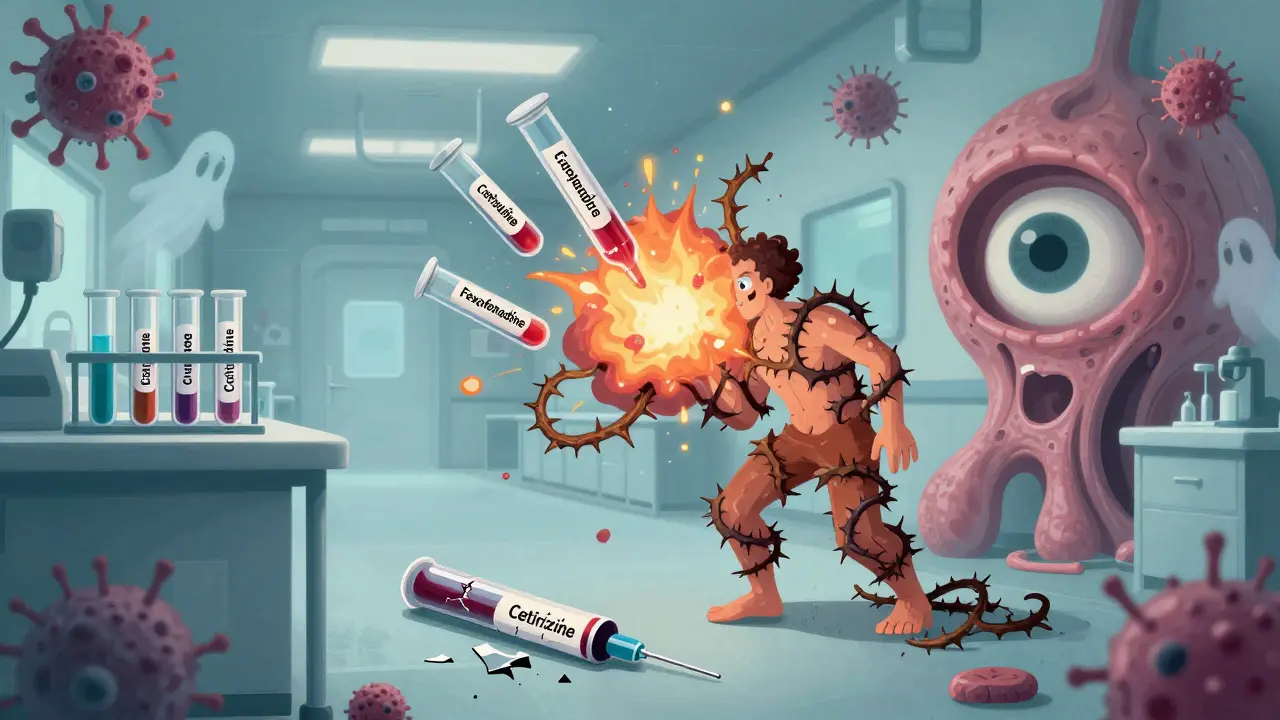
What Else Could Be Hiding in the Background?
In the case of the woman whose hives disappeared after stopping antihistamines, doctors found something else: a chronic infection. That infection wasn’t causing the hives directly. But it was changing how her immune system behaved. It was lowering the threshold for H1 receptors to flip into overdrive. This isn’t isolated. Other studies have linked persistent urticaria to underlying issues like H. pylori, thyroid autoimmunity, or even untreated sinus infections. When you treat the infection, the body stops overreacting-not just to histamine, but to the drugs meant to block it. That’s why simply avoiding antihistamines isn’t always enough. You might need to dig deeper. Blood tests. Stool samples. Thyroid panels. A good allergist won’t stop at “try a different antihistamine.” They’ll ask: What else is going on in your body?What Can You Use Instead?
If antihistamines are off the table, you’re not out of options. But you need a different strategy. - Leukotriene inhibitors like montelukast (Singulair) can help with chronic hives. They block a different part of the allergic pathway. - Immunosuppressants like cyclosporine are used in severe, treatment-resistant cases. They calm the immune system broadly. - Biologics like omalizumab (Xolair) are FDA-approved for chronic spontaneous urticaria. They target IgE antibodies, the root trigger in many allergic responses. - Topical treatments like cool compresses, calamine lotion, or low-dose corticosteroid creams can ease itching without systemic effects. - Stress and sleep management matter more than people realize. Poor sleep and high cortisol levels can make skin reactions worse, even without antihistamines. H2 blockers like famotidine (Pepcid) are sometimes added to help. They don’t affect H1 receptors, so they’re unlikely to trigger the same reaction. But they’re not a standalone fix-they’re a backup.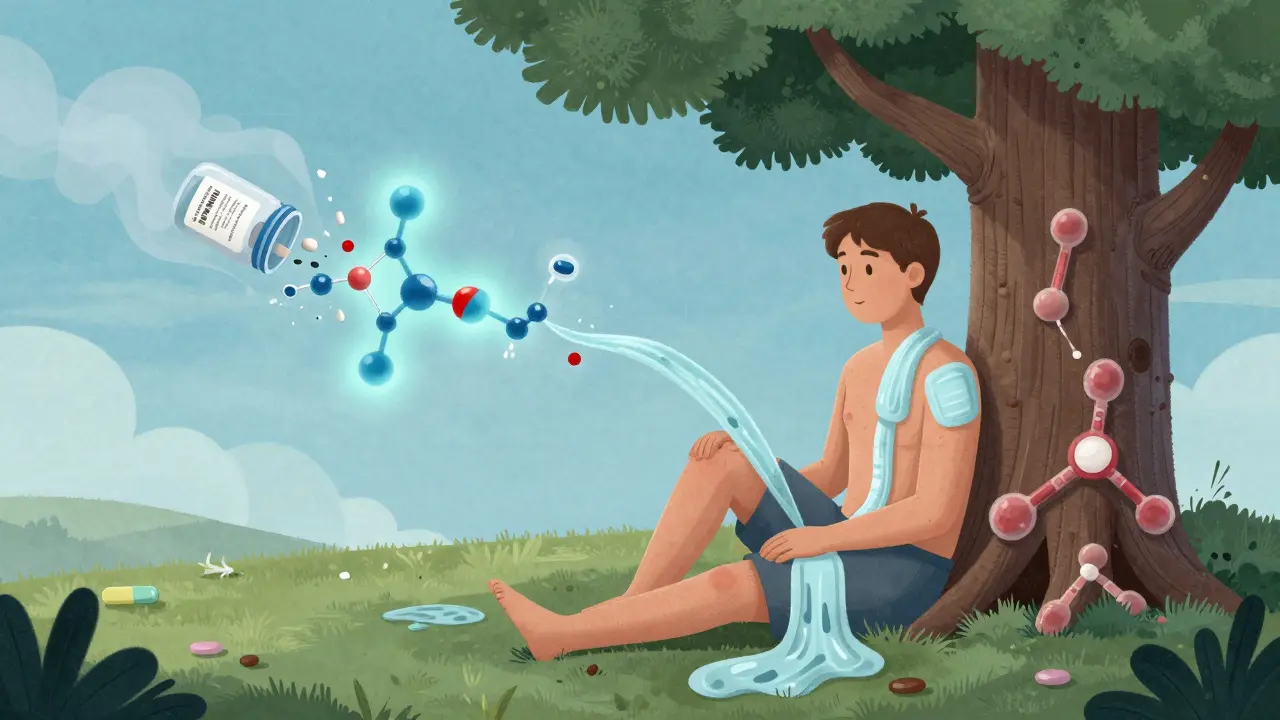
What to Do If You Think You’re Reacting
Stop taking the antihistamine. Not “try a lower dose.” Not “wait and see.” Stop. Write down exactly what happened: when you took it, what symptoms appeared, how long it took, how severe it got. See a specialist. Not your GP. Not a walk-in clinic. An allergist or immunologist who’s seen this before. Bring your notes. Ask specifically: “Could I have antihistamine-induced hypersensitivity?” Don’t let anyone tell you it’s “just anxiety” or “all in your head.” This is a documented, peer-reviewed phenomenon. The science is clear. The cases are real.Future Hope: Better Drugs on the Horizon
The 2024 cryo-EM study that mapped exactly how antihistamines bind to the H1 receptor was a breakthrough. For the first time, scientists could see why some drugs trigger the receptor instead of blocking it. They found a second binding site-something no one knew existed. That’s huge. It means drugmakers can now design new antihistamines that avoid that second site entirely. Drugs that don’t just block histamine-but won’t accidentally flip the switch on a broken receptor. We’re not there yet. But the path is visible. The next generation of antihistamines may be safer, smarter, and less likely to backfire.Bottom Line: Trust Your Body, Not the Label
If you’ve taken an antihistamine and got worse, you’re not crazy. You’re not failing. You’re not allergic to “allergies.” Your body is signaling something deeper. This isn’t common. But it’s real. And it’s underdiagnosed. Don’t keep trying different brands hoping one will work. Don’t blame yourself. Don’t wait for your doctor to bring it up. Stop the drug. Track your symptoms. Find a specialist. Look for hidden triggers. Explore alternatives. Your relief isn’t in another pill-it’s in understanding what’s really going on.Antihistamines are powerful tools. But like any tool, they can hurt if used in the wrong hands-or the wrong body.






9 Comments
They don't want you to know this because Big Pharma makes billions off antihistamines. The H1 receptor flip? Total cover-up. The real cause is glyphosate in your food poisoning your mast cells. I've seen it in my own blood work. Stop taking anything with 'dextrin' or 'corn starch'-those are the hidden triggers. Doctors are paid to keep you dependent. You think Benadryl is safe? It's laced with neurotoxins disguised as inactive ingredients. Read the fine print. No one else will.
/p>This is one of the most elegantly written medical explainers I’ve read in years. The way you framed the receptor as a lock that can be turned the wrong way? Brilliant. I’ve spent years in immunology labs and never heard this described so vividly. The 2024 cryo-EM findings are game-changing-not just for antihistamines, but for receptor pharmacology as a whole. It’s like discovering that a key can not only open a door but also jam it shut from the inside. We need more science like this: precise, poetic, and terrifyingly accurate.
/p>Great breakdown. I’ve seen this in practice-patients who’ve been on three different antihistamines, all worsening their hives, and no one connects the dots until they’re in the ER. The key is recognizing the pattern: symptom escalation after dosing, negative skin tests, and no other clear trigger. I always tell my patients: if it gets worse after you take it, it’s not working. It’s activating. And yes, oral challenges are scary, but they’re the only way to confirm it. Also, don’t overlook the gut. H. pylori and leaky gut are silent accomplices here.
/p>So you're saying I'm allergic to EVERYTHING now? Like literally everything? I took Zyrtec once and my face swelled up and now I'm scared to breathe. I think my pillow is poisoning me. I think my cat is a spy. I think the wifi is making my skin itch. I don't trust anything anymore. I need a bunker. And maybe a new identity.
/p>This is wild 😱 I had no idea this could happen. I’ve been on cetirizine for 5 years and just assumed my rashes were ‘stress-related’. Now I’m terrified to even look at a pharmacy shelf 🤯 But omalizumab? That’s the one my cousin got for her asthma-super expensive but life-changing. Maybe I should ask my allergist about it? 🤔
/p>Listen. If you’ve had this happen to you-you’re not broken. You’re not weird. You’re not failing. You’re a walking case study in how medicine still has blind spots. And guess what? You’re not alone. I’ve helped over 30 people navigate this exact nightmare. Stop Googling ‘is this anxiety?’ and start asking for an immunology consult. Montelukast + cool compresses + sleep hygiene = your new holy trinity. You don’t need another pill. You need a new map. And I’ll help you draw it.
/p>So let me get this straight-you take a drug to stop an allergic reaction and your body goes ‘oh you want me to chill? Nah, let’s turn this into a rave’? That’s not science, that’s a sitcom plot. I mean, come on. If your body’s that dramatic, maybe it needs a therapist, not a new pill. But hey, at least we’ve got biologics now. Next up: antihistamine therapy for existential dread. I’ll take two and call me in the morning.
/p>They’re all lying. The whole system is rigged. The H1 receptor flip? That’s just the tip. The real truth is the FDA banned the real antihistamine in 1987 because it cured everything and made people too healthy. They replaced it with these weak versions that keep you coming back. That’s why you need to stop ALL of them. Even the ‘safe’ ones. I’ve been off everything since 2019. I drink apple cider vinegar and stare at the moon. My hives vanished. Coincidence? I think not.
/p>bro why are you even reading this like who cares its just allergies man just take a nap or something
/p>