

Imagine a patient moving from the hospital to a nursing home. In that brief window, information vanishes. According to recent safety data, about 60% of medication errors happen right at these specific moments when a person moves between levels of care. It is a silent crisis. We often think of hospital floors as the safest place to take drugs, yet the transfer points are where lives hang in the balance.
This isn't just about forgetting a name or a dose. A missed antibiotic can lead to sepsis. A duplicated blood thinner can cause internal bleeding. The stakes are incredibly high. That is why we need to look beyond standard protocols and understand how the system actually breaks down during handovers. The World Health Organization identified this specifically in their third Global Patient Safety Challenge, aiming to cut severe harm by half. We are closer than ever to meeting those goals, but implementation varies wildly across facilities.
Understanding the Vulnerability of Transitions
A care transition happens whenever a patient changes providers, locations, or levels of care. It could be admission to a ward, transfer to ICU, or discharge back home. At every single stop, the medication list needs to be accurate. When we talk about Medication Error is any preventable event that may cause or leads to inappropriate medication use or patient harm while the medication is in the control of the health care professional, patient, or consumer., we aren't just discussing typos. We are talking about unintended consequences.
The problem usually stems from information gaps. When a doctor admits a patient, they might rely on a verbal history. If that history conflicts with what the pharmacist knows, one version gets chosen arbitrarily. Dr. Tejal Gandhi, President of the National Patient Safety Foundation, highlighted in her testimony that nearly 80% of transition errors stem directly from these communication breakdowns. It is rarely malicious; it is simply a friction in the workflow.
We see this play out in discharge instructions too. A patient leaves with a stack of papers they cannot read or understand. They return to their community pharmacy, which has never seen the new specialist's prescription. The system silos are real. Even in advanced markets, only about 37% of hospitals could electronically share medication details with community pharmacies in mid-2024. We are still largely operating in islands.
The Four Steps of Effective Medication Reconciliation
The cornerstone of stopping these errors is a formal process known as Medication Reconciliationa formal process for creating the most complete and accurate list possible of a patient's current medications and comparing the list to those in the patient record or medication orders.. This practice has been part of The Joint Commission's National Patient Safety Goals since 2005, yet its execution remains inconsistent.
To get this right, you need a structured approach. Current standards recommend four critical actions:
- First, create a definitive list of what the patient is actually taking today.
- Second, develop a clear plan for what they will be prescribed during the upcoming stay or after discharge.
- Third, compare the two lists side-by-side to spot discrepancies immediately.
- Fourth, make a clinical decision based on that comparison, such as adding, dropping, or changing a dose.
Skipping even one step increases risk. For example, if you verify the old list but fail to document the change for the next setting, the cycle repeats. The American Society of Health-System Pharmacists notes that dedicated transition pharmacists help catch about 53% more adverse drug events. It works because someone focuses entirely on matching the data.
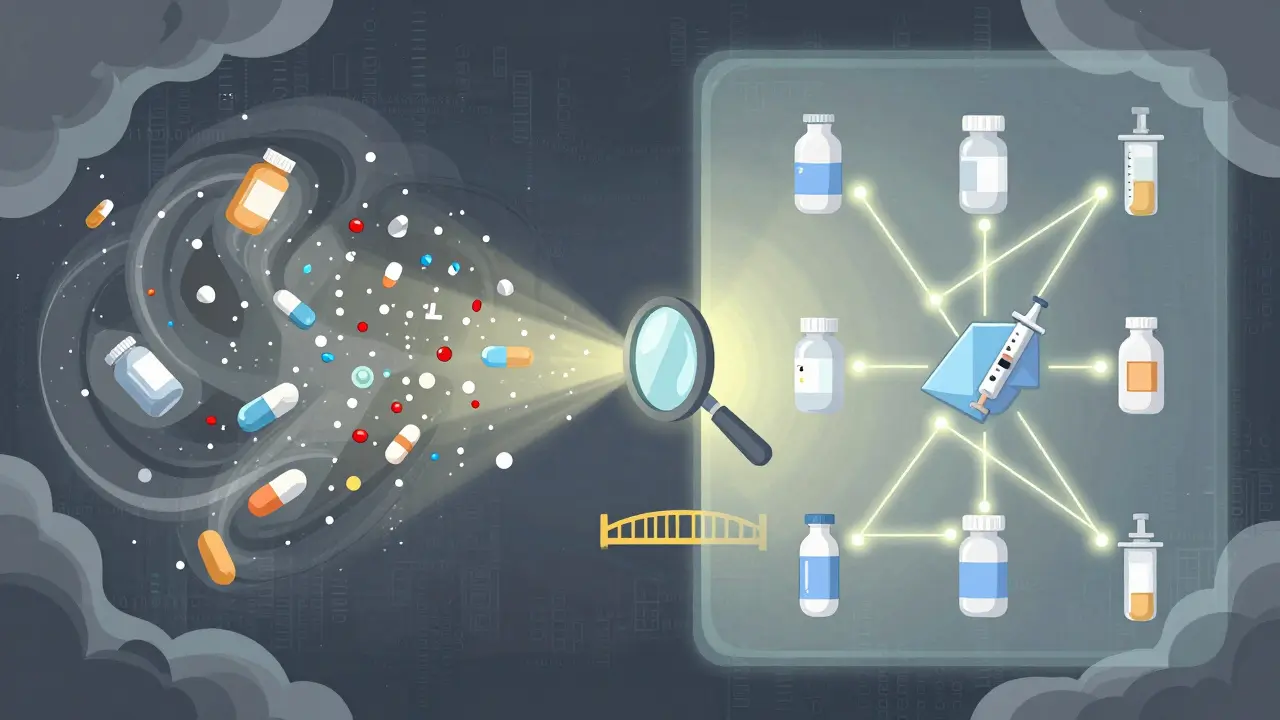
Technology Tools and Their Paradoxes
We often assume computers fix everything. While technology aids safety, it introduces its own set of hazards if not managed well. Most modern facilities use a mix of Electronic Health Record(EHR) systems, which allow digital storage and retrieval of patient medical information including medication histories..
Studies show that implementing an EHR can reduce overall errors by roughly 32%. However, there is a twist. During the initial rollout of these systems, medication discrepancies can actually spike by up to 18% as noted in the MARQUIS study. Why? Because clinicians try to game the system, using shortcuts to save time, which inadvertently skips checks. This is why training must evolve alongside the software.
| Tool | Primary Function | Safety Impact |
|---|---|---|
| CPOE | Digital entry of orders | Reduces handwriting errors significantly |
| BCMA | Scanning patient ID and meds | Ensures right med, right patient, right time |
| CDSS | Alerts for interactions/allergies | Potentially reduces harmful prescribing |
Computerized Physician Order Entry (CPOEsystem that allows physicians to electronically enter orders for medications, tests, or procedures instead of writing them on paper.) eliminates the 'illegible scribble' issue. Combined with Barcode Medication Administration (BCMAa system that uses barcode scanning to confirm the five rights of medication administration.), acute hospital settings have seen error reductions of nearly 48%. But these tools require constant vigilance. Alert fatigue is real; if staff see warnings constantly, they begin to ignore the red flags.
Clinical Decision Support Systems are also vital. These act as safety nets, checking for allergies or drug interactions before an order hits the screen. When implemented correctly, they are powerful. When poorly tuned, they become noise.
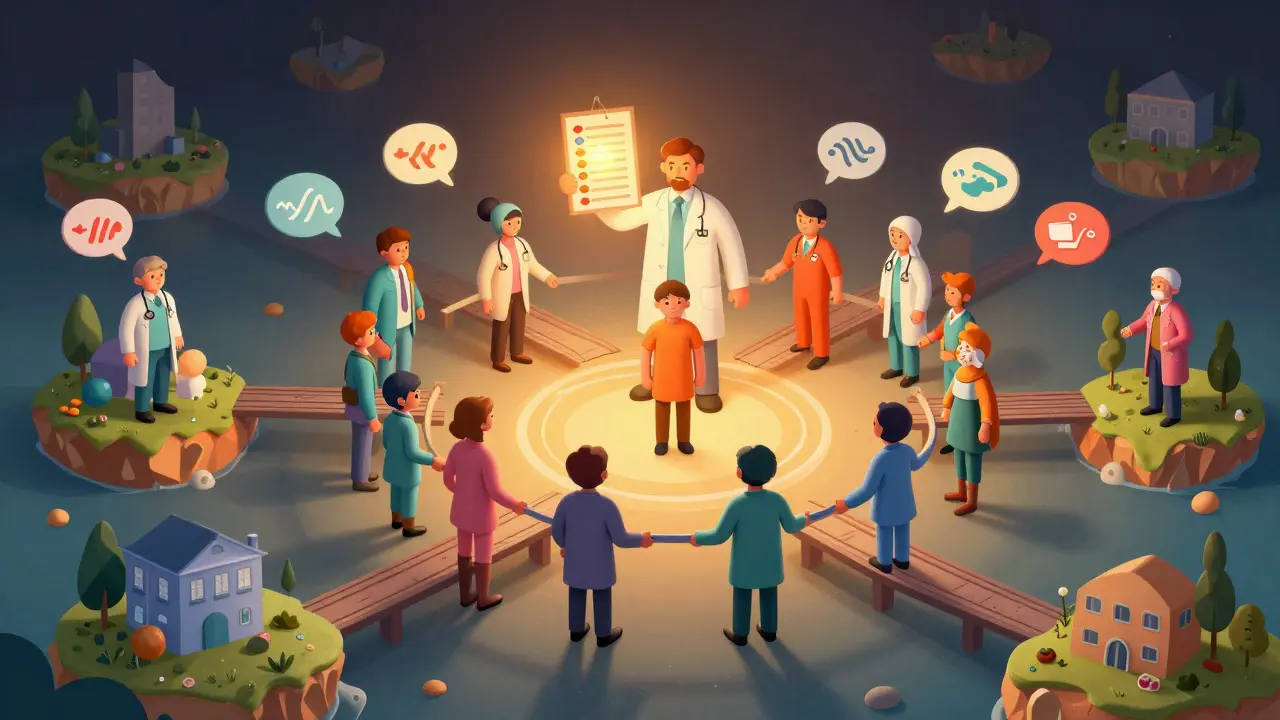
The Human Factor: Roles and Responsibilities
Software helps, but people execute. Who takes responsibility? Often, the burden falls on nurses who are already stretched thin. A resident at Massachusetts General Hospital recently noted that their EHR reconciliation module adds 12 to 15 minutes per patient admission. That extra time compounds quickly, leading to workarounds that compromise accuracy.
Pharmacists are uniquely positioned to bridge these gaps. A 2023 study in the Journal of the American Pharmacists Association found that pharmacist-led reconciliation reduced post-discharge errors by 57%. They bring specific expertise in pharmacology that general practitioners might lack. Having a dedicated pharmacist review discharge plans cuts 30-day readmissions by almost 40%.
Patients themselves are often overlooked. About 85% of patients feel more confident when they participate in building their own medication list. Yet, less than 30% of facilities consistently involve them. Simple strategies work better than complex charts. Asking a patient to bring their bottles or photos of their prescriptions ensures the starting data is correct.
Implementing Change Without Burnout
You cannot simply mandate a policy and expect perfection. The MATCH toolkit from the Agency for Healthcare Research and Quality (AHRQ) suggests a comprehensive 159-recommendation plan, but organizations often find that overwhelming. Successful implementation requires integrating reconciliation into existing workflows rather than treating it as an extra task.
Training matters. Simply hiring more staff without defining roles increased harmful discrepancies by 15% in one major study. Everyone needs to know exactly who verifies the list, who documents it, and who communicates the change. Clear roles reduce ambiguity.
We are looking at future solutions too. AI-powered tools are beginning to emerge to assist with the heavy lifting. Recent pilots suggest automated tools can cut discrepancies further, but human oversight remains non-negotiable. As we move toward the next phase of global patient safety, the goal is to normalize these practices until they are invisible-seamless parts of daily care.
Why do medication errors happen most during transitions?
Errors occur due to information loss. As a patient moves settings (e.g., ER to Ward, or Hospital to Home), the medication history is often transferred manually or verbally, leading to omissions, duplications, or incorrect doses.
What is the best way to verify a patient's medication list?
The best method involves cross-checking three sources: the patient's report, their home medication bottles/photos, and the electronic records. The AHRQ recommends obtaining the most accurate history possible before the first dose is given.
Do electronic health records prevent all errors?
No. While EHRs reduce errors by about 32% generally, poor interoperability between hospitals and pharmacies means data doesn't always sync. Manual verification is still required.
How long does medication reconciliation typically take?
Comprehensive reconciliation ideally takes 15 to 20 minutes per patient. In busy environments, this is often compressed to 8-10 minutes, which increases the risk of missing subtle discrepancies.
Can pharmacists prevent readmissions?
Yes. Research shows that involving clinical pharmacists in discharge planning reduces hospital readmissions by approximately 38% within 30 days due to better management of complex medication regimens.





9 Comments
It is really good to see that we are finally addressing how much information gets lost when patients move between care levels.
/p>I have seen too many families struggle with conflicting discharge papers.
The statistic about sixty percent of errors happening right there really puts it into perspective.
We need to focus on smoothing out those handovers instead of blaming individuals.
Collaboration between hospitals and home pharmacies is clearly the bottleneck here.
Exactly!
/p>And honestly,
it doesn't help that the EHR systems still cannot talk to one another efficiently!
You would think
after years of investment
that interoperability would be solved already!!
The Joint Commission goals have been active since 2005 yet we still operate in islands.
This is frustrating for everyone involved!!!
nice article glad people are talking about this :).
/p>I hate seeing people brush off safety like this is normal 🤮.
/p>You cannot be lazy with lives on the line 👎.
Patients deserve full transparency from their providers always! 💉👩⚕️
I work on the ward side and the pressure to get through reconciliations is intense 😔.
/p>Sometimes we just run out of minutes before the next admission comes in 🙂.
Tools are great but staffing is the real issue here.
the narrative pushed by big pharma ignores the fact that alert fatigue stems from software designed to sell products.
/p>clinicians know the system is flawed but are forced to click through compliance loops.
electronic health records are merely surveillance tools wrapped in clinical utility.
interoperability is stalled deliberately to maintain proprietary silos for billing purposes.
real change requires dismantling the current billing infrastructure rather than tweaking EHR interfaces.
most data shared is sanitized version meant to appease regulators.
actual care gaps persist in shadows.
we need radical transparency not polished reports from joint commission.
the forty eight percent reduction claims are cherry picked statistics.
most data masks systemic rot.
pharmacists are caught in the middle playing whack-a-mole.
algorithmic noise dominates clinical judgment now.
until ownership models shift patient safety remains secondary to revenue protection.
in private sector facilities it is structural negligence.
trust no one who benefits from fragmented care ecosystems.
stay vigilant against the promise of digital saviors.
keep your own bottle records because institutions do not care.
This entire situation is a bloated mess of bureaucratic incompetence draped in safety rhetoric.
/p>Hospitals scream about quality initiatives while quietly slashing nurse staffing ratios to death.
It is pathetic to watch institutions claim zero tolerance while fostering environments that breed these specific failures.
The data is clear but leadership treats it like white noise in a hurricane.
We need to stop pretending that a checklist fixes broken culture.
Your analysis highlights the fundamental moral failing embedded within our modern healthcare infrastructure.
/p>We treat efficiency as a virtue while sacrificing the bedrock of patient welfare.
This is not merely a logistical issue but a crisis of ethical stewardship.
Every transition point represents a failure of trust that must be systematically addressed.
We cannot simply rely on technology to patch what is fundamentally a human oversight.
The reliance on algorithms creates a false sense of security among practitioners.
True safety emerges from rigorous verification processes led by accountable professionals.
It is arrogant to assume that software alone can prevent harm without cultural shifts.
Leadership must step up and allocate resources towards genuine reconciliation efforts.
Staff burnout is directly correlated with these recurring medication discrepancies.
Ignoring the psychological toll on caregivers ensures that errors will persist indefinitely.
We must demand accountability from administrative bodies regarding these preventable tragedies.
Patient advocacy groups are right to call out the systemic negligence observed daily.
It is time to prioritize safety over profitability in every single decision made.
We stand at a precipice where complacency will lead to catastrophe.
I hope you understand the gravity of this position firmly.
I coudn't agrue more wth you abt this!!!
/p>Its sad how maney peolpe gesss back home and die becaus of mistkaes.
We ned chang NOW before someone elses familey gets hurt :( .
Stuck in limbo all the time.