RSABE: What It Is and Why It Matters in Generic Drug Approval
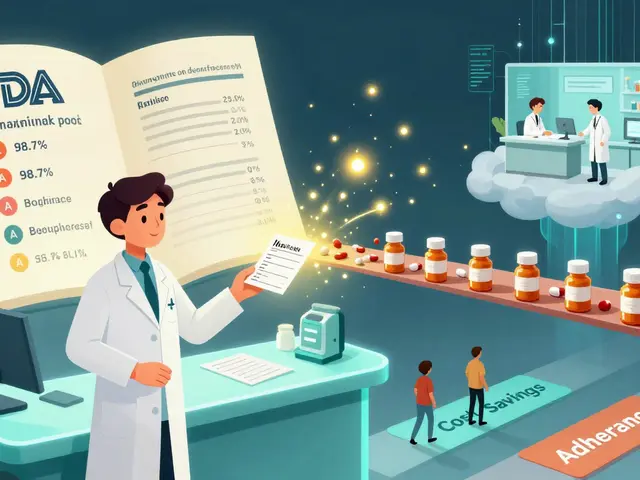
When a generic drug enters the market, it must prove it works like the brand-name version. But for some medicines—especially those with narrow therapeutic windows or highly variable absorption—the standard bioequivalence rules just don’t cut it. That’s where RSABE, or Reference-Scaled Average Bioequivalence, reference-scaled average bioequivalence comes in. It’s not a new drug or a special formulation. It’s a smarter way to measure if a generic version behaves the same way in your body as the original, even when the original itself behaves unpredictably from person to person.
RSABE isn’t used for every drug. It’s reserved for those where normal bioequivalence testing would unfairly block good generics. Think of drugs like warfarin, clopidogrel, or certain antiepileptics—small changes in how they’re absorbed can mean big differences in safety or effectiveness. The FDA allows RSABE because it recognizes that variability in the original drug doesn’t mean the generic is inferior. Instead, it lets regulators compare the generic to the original using a flexible scale that adjusts for how much the brand-name drug varies across people. This means more affordable options reach patients without lowering safety standards. It’s a balance between science and access.
RSABE doesn’t work in isolation. It’s tied to other key concepts like bioequivalence, the measure of how similarly two drug products perform in the body, and pharmacokinetics, how the body absorbs, distributes, metabolizes, and excretes a drug. These aren’t just lab terms—they’re the backbone of every generic approval. When a company applies for RSABE, they must show their drug’s absorption curve matches the brand’s within a scaled range, not a fixed one. This requires detailed clinical data, often from multiple studies with hundreds of participants. It’s expensive and complex, which is why only certain high-risk, high-value drugs qualify.
What does this mean for you? If you take a generic version of a drug like Plavix or Coumadin, RSABE might be why it’s on the shelf at all. Without it, many generics would never get approved, leaving patients with fewer choices and higher costs. It also explains why some generics look different or have different fillers—even if the active ingredient is identical, the way it’s released in your system can vary, and RSABE helps ensure those variations are safe. You won’t see RSABE listed on your pill bottle, but it’s quietly shaping the medicines you rely on every day.
Behind every approved generic is a chain of science, regulation, and real-world testing. RSABE is one of the most sophisticated tools in that chain. It doesn’t replace standard bioequivalence—it completes it. And while it’s mostly used by regulators and manufacturers, understanding it helps you ask better questions. Is this generic really as reliable as the brand? Why does this one cost less but work just as well? The answers often lie in methods like RSABE. Below, you’ll find real-world posts that dig into the drugs affected by these rules, how excipients impact safety, what happens when kidney function changes, and how even small dosing errors can ripple through treatment. These aren’t abstract concepts. They’re the quiet forces behind every pill you swallow.

Replicate Study Designs: Advanced Methods for Bioequivalence Assessment
Replicate study designs are essential for assessing bioequivalence of highly variable drugs, reducing sample sizes and improving success rates. Learn how FDA and EMA guidelines, statistical methods, and operational strategies impact BE study outcomes.