
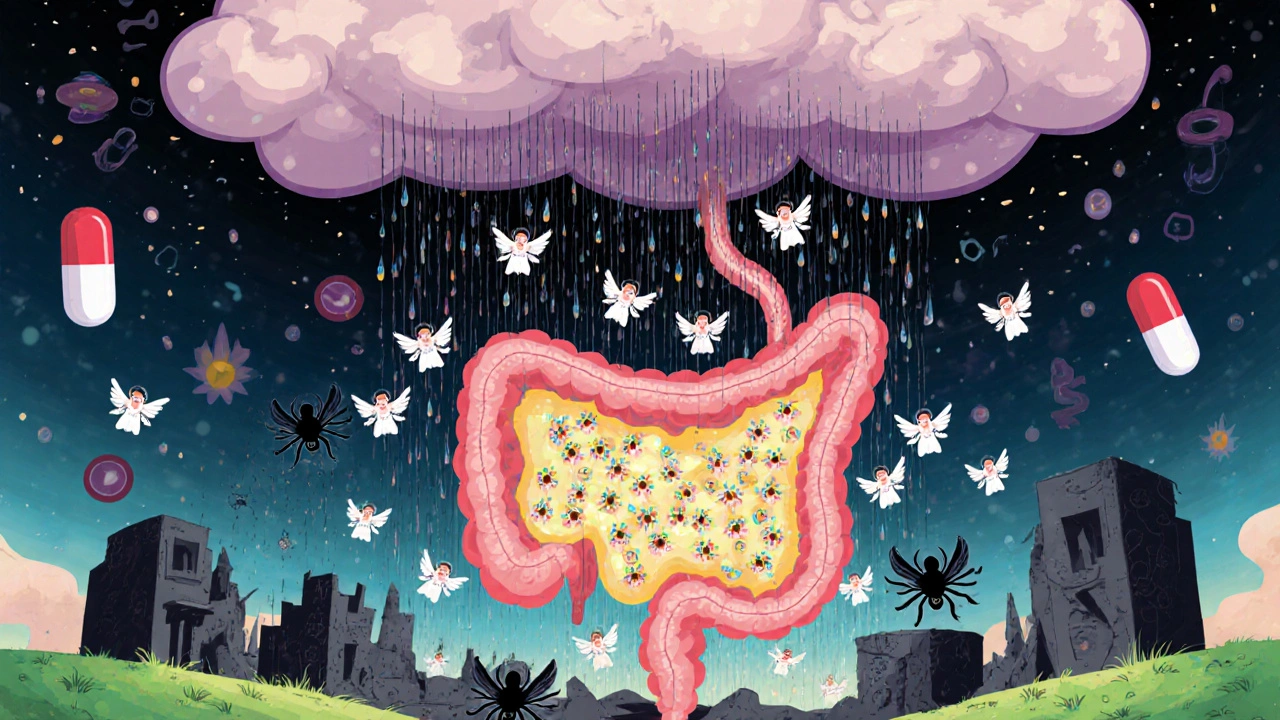
Every time you take an antibiotic, you’re not just fighting an infection-you’re also changing the ecosystem inside your gut. Billions of good bacteria get wiped out, leaving space for harmful ones to take over. This isn’t just a side effect. It’s a direct result of how we’ve been using antibiotics for decades: too often, too broadly, and for too long. Antibiotic stewardship isn’t a buzzword. It’s the practical, proven way to stop this cycle before it breaks medicine as we know it-and protects your digestive health in the process.
What Antibiotic Stewardship Really Means
Antibiotic stewardship is simple in theory but powerful in practice: use antibiotics only when they’re truly needed, and when they are, use the right one, at the right dose, for the right length of time. It’s not about avoiding antibiotics altogether. It’s about using them wisely.
The Centers for Disease Control and Prevention (CDC) defines it as the effort to measure and improve how antibiotics are prescribed and used. That means doctors don’t just guess what’s causing an infection-they test when possible, wait when appropriate, and avoid prescribing for viral illnesses like colds or flu. In hospitals, teams of infectious disease doctors and pharmacists work together to review every antibiotic order. In clinics, simple tools like clinical decision support systems and peer comparison reports help doctors see how their prescribing stacks up against their peers.
And it works. Hospitals that put real stewardship programs in place have seen inappropriate antibiotic use drop by 20% to 40% in the first year. That’s not theory-it’s data from over 800 U.S. hospitals. The goal isn’t to cut prescriptions in half. It’s to cut the wrong ones.
Why Antibiotic Resistance Is a Silent Crisis
Antibiotics used to be miracles. A single pill could save a life from a simple infection. Today, more than 2.8 million antibiotic-resistant infections happen every year in the U.S. alone. Over 35,000 people die from them. These aren’t rare cases. They’re the result of decades of overuse.
When antibiotics are used unnecessarily, the bacteria that survive become stronger. They mutate. They share resistance genes. Soon, the drugs that once worked no longer do. That’s how we get superbugs like MRSA and drug-resistant E. coli. And once a bacteria becomes resistant, it doesn’t just stay in one person-it spreads to families, hospitals, and communities.
The CDC calls antimicrobial resistance one of the top 18 public health threats in the country. It’s not a future problem. It’s happening now. And the worst part? We’re running out of options. Few new antibiotics are being developed, and those that are often come with serious side effects. Stewardship is the only tool we have right now to protect the ones we still have.
How Antibiotics Damage Your Gut Health
Your gut is home to trillions of bacteria-most of them good. They help digest food, make vitamins, train your immune system, and keep harmful microbes in check. Antibiotics don’t know the difference. They hit everything.
One of the most dangerous consequences is Clostridioides difficile (C. diff) infection. It’s not just diarrhea. It’s severe, sometimes fatal inflammation of the colon. And antibiotics are the #1 risk factor. About 20% of people who take antibiotics develop C. diff. That’s 223,900 cases and 12,800 deaths in the U.S. each year.
It happens because antibiotics kill off the protective bacteria in your gut. C. diff spores, which were already there but kept under control, wake up and multiply. Without the right bacteria to compete with them, they take over. The result? Hospital stays, surgery, even death.
And it’s not just C. diff. Studies show antibiotic use is linked to long-term changes in gut microbiome diversity-changes that can last for months or even years. This is tied to higher risks of allergies, obesity, and inflammatory bowel disease. Protecting your gut isn’t just about avoiding discomfort. It’s about protecting your long-term health.
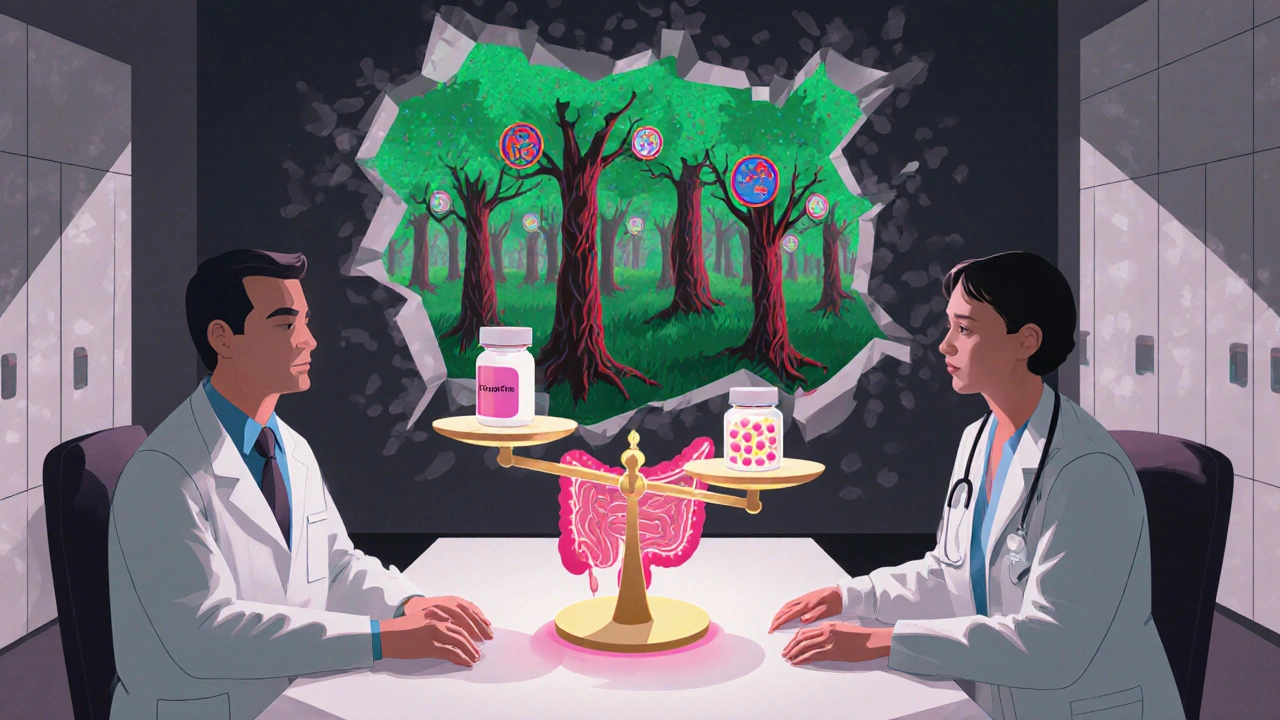
How Stewardship Programs Work in Real Settings
Effective stewardship doesn’t rely on rules alone. It relies on people working together.
In hospitals, the CDC’s Core Elements framework requires: leadership commitment, accountability, drug expertise, action plans, tracking, reporting, and education. That means a hospital must have at least one infectious disease doctor and one pharmacist dedicated to reviewing antibiotic prescriptions daily.
One proven method is called “handshake stewardship.” Instead of blocking prescriptions, a pharmacist or doctor walks into a nurse’s station or doctor’s office and says, “I saw you prescribed amoxicillin for that cough. Have you considered it might be viral?” It’s a conversation, not a command. And it works. Hospitals using this approach saw more consults-not fewer-because doctors trusted the feedback.
In outpatient clinics, simple changes make a big difference. A study in JAMA Internal Medicine found that placing commitment posters in exam rooms-like “I promise to only prescribe antibiotics when needed”-reduced inappropriate prescribing by 5.6%. That’s not magic. It’s behavioral nudges working.
Even small clinics without full-time specialists can use digital tools. Apps that suggest alternatives, remind doctors of guidelines, or flag high-risk prescriptions are now widely available and integrated into electronic health records.
What You Can Do as a Patient
You don’t have to wait for a hospital program to change. You can be part of the solution.
- Ask: “Is this antibiotic really necessary?” If you have a sore throat, ear infection, or cough, ask if a test is needed. Strep throat needs antibiotics. A cold doesn’t.
- Don’t pressure your doctor. If you’ve had antibiotics before and felt better, you might assume they’ll work again. But that’s not how resistance works. Each unnecessary use makes the next one less effective.
- Take exactly as prescribed. Don’t stop early because you feel better. Don’t save leftovers for next time. Both habits breed resistant bacteria.
- Ask about alternatives. For some infections, watchful waiting or pain relief alone is the best first step.
- Protect your gut. If you must take antibiotics, consider probiotics (like Lactobacillus or Saccharomyces boulardii) during and after treatment. Studies show they can reduce C. diff risk by up to 60%.
And remember: antibiotics are not painkillers. They’re not anti-inflammatories. They’re targeted weapons against specific bacteria. Using them like vitamins is like using a flamethrower to light a candle.
The Bigger Picture: Why This Matters for Everyone
This isn’t just about your next cold. It’s about whether your child will be able to have a safe surgery in 10 years. Whether your parent can survive a hip replacement without a deadly infection. Whether we’ll still have antibiotics when we need them most.
The economic cost is staggering. In U.S. hospitals alone, better antibiotic use could save $1.1 billion a year and prevent 30,000 C. diff cases. In outpatient settings, inappropriate prescribing costs another $1.1 billion annually.
And the global picture is even more urgent. The World Health Organization reports that 127 countries now have national plans to fight antimicrobial resistance. Australia, where this is being written, has its own national strategy. But progress depends on every doctor, every pharmacist, and every patient making smarter choices.
By 2025, the CDC projects that widespread stewardship could prevent 130,000 C. diff infections and save 10,000 lives. That’s not a guess. That’s a forecast based on real data from hospitals that have already done it.
What’s Next for Antibiotic Stewardship
The field is evolving fast. New tools are emerging:
- Rapid diagnostics that can identify bacteria and their resistance patterns in hours, not days.
- AI-driven decision tools that analyze patient history, lab results, and local resistance patterns to recommend the best antibiotic in real time.
- Expanded programs in nursing homes and pharmacies, where antibiotics are often overused in elderly patients.
- Medical school training that now requires all doctors to learn stewardship principles before graduation.
One of the most exciting developments is the rise of precision stewardship. Instead of giving broad-spectrum antibiotics like amoxicillin or ciprofloxacin as a default, doctors are learning to target specific bugs with narrower drugs. That means fewer good bacteria killed, fewer side effects, and less resistance.
It’s not perfect yet. Rural clinics still struggle with resources. Some doctors still feel pressured by patients. But the momentum is real. And it’s growing.
Antibiotic stewardship isn’t about fear. It’s about responsibility. It’s about recognizing that these drugs are precious, finite, and shared. Every pill you take affects someone else’s future.
Are antibiotics always necessary for infections?
No. Many common infections-like colds, flu, most sore throats, and sinus infections-are caused by viruses, not bacteria. Antibiotics don’t work on viruses. Taking them in these cases doesn’t help you recover faster and only increases your risk of side effects and antibiotic resistance. Doctors are now trained to wait, test, or use symptom relief first before prescribing.
Can I take probiotics while on antibiotics?
Yes, and it’s often recommended. Certain probiotics, especially Saccharomyces boulardii and Lactobacillus strains, have been shown in multiple studies to reduce the risk of antibiotic-associated diarrhea and C. diff infection by up to 60%. Take them a few hours apart from your antibiotic to avoid killing the probiotics. Don’t rely on yogurt alone-it doesn’t contain enough live cultures to make a difference.
What happens if I stop antibiotics early?
Stopping early doesn’t make you immune to side effects-it makes resistance more likely. The strongest bacteria survive and multiply. Even if you feel better, some bacteria are still alive. Completing the full course ensures they’re all wiped out. The only exception is if you have a severe allergic reaction or side effect-then contact your doctor immediately.
Are natural remedies a good alternative to antibiotics?
For mild, self-limiting infections like colds or minor ear infections, yes-rest, fluids, and pain relief are often the best approach. But for serious bacterial infections like pneumonia, urinary tract infections, or strep throat, natural remedies won’t work. Delaying antibiotics in these cases can lead to complications, hospitalization, or even death. Always let a doctor decide when antibiotics are needed.
How do I know if my doctor is practicing antibiotic stewardship?
Look for these signs: they ask about symptoms before prescribing, suggest testing (like a rapid strep test), explain why antibiotics aren’t needed in some cases, and don’t automatically reach for a script. They may say, “Let’s wait 48 hours and see if it improves,” or “This looks viral, but if it gets worse, we’ll reassess.” That’s stewardship in action.
Final Thought: Your Choices Matter
Antibiotic stewardship isn’t just a hospital policy or a government mandate. It’s a shared responsibility. Every time you choose not to demand an antibiotic for a viral infection, you’re helping preserve these drugs for someone who truly needs them. Every time you finish your prescription as directed, you’re preventing the next superbug from emerging. Every time you ask a question, you’re pushing the system toward better care.
Protecting your gut health and stopping resistance aren’t separate goals. They’re the same fight. And it starts with one simple question: Do I really need this?




14 Comments
antibiotics are just big pharma's way to keep us hooked lol/p>
The microbiome is a complex ecological system whose perturbation via broad-spectrum antimicrobials induces dysbiosis with downstream immunological consequences. Resistance selection pressure is not merely clinical-it's evolutionary./p>
I knew someone who got C. diff after a simple tooth extraction. They almost died. Doctors don't care. They just want to write prescriptions. This is criminal negligence./p>
You can DO this. Every time you ask your doctor if it's really needed, you're saving lives. Probiotics? YES. Finish your script? YES. Say no to pressure? ABSOLUTELY. We got this!/p>
The notion that stewardship is merely a matter of individual patient choice is profoundly misguided. Systemic reform requires institutional accountability, regulatory oversight, and financial disincentives for inappropriate prescribing. Patient education alone is insufficient to address structural failure./p>
i took amoxicillin for a cold once and felt awful. never again. probiotics helped a lot./p>
America's healthcare system is broken. We're being manipulated by pharmaceutical giants who profit from overprescribing. Meanwhile, China and India are developing better alternatives. We're falling behind because we're too lazy to think for ourselves./p>
I'm so done with doctors pushing antibiotics like candy 😔 I asked for a test for my kid's ear infection and the nurse rolled her eyes. 🤦♀️ We need to wake up! #AntibioticAwareness/p>
probiotics dont work for everyone. i tried them after antibiotics and got worse. its just hype/p>
The data is compelling, yet the underlying assumption-that physicians are rational actors responding to evidence-is dangerously naive. The real drivers are liability culture, time constraints, and patient expectations. No algorithm will fix that./p>
This whole post reads like a CDC press release written by someone who’s never met a real patient. ‘Ask your doctor’? Yeah, right. My doctor doesn’t have time to explain anything. He just hands out scripts like they’re free candy. And now I’m stuck paying for probiotics on top of it./p>
So we're supposed to trust doctors more now? After everything? No thanks. I've had antibiotics for sinus infections that turned out to be allergies. They don't know anything. I'll take my chances with garlic and steam./p>
Precision stewardship is an elegant theoretical construct, but operationalizing it at scale requires infrastructure investment that most community hospitals cannot afford. The gap between ideal and actual remains a chasm./p>
This isn't just about health. It's about control. The government, the WHO, Big Pharma-they all want you to believe you need their approval to be healthy. But what if the real solution is to stop trusting them? What if the antibiotics are the problem, not the misuse? What if the entire system is designed to keep you dependent?/p>