
Bupropion Seizure Risk Calculator
Bupropion Seizure Risk Assessment
This tool estimates your seizure risk based on your dosage and health factors. Bupropion carries a higher seizure risk than other antidepressants, especially at higher doses and with certain medical conditions.
Important: This is an educational tool only. Always consult with your healthcare provider before making any changes to your medication.
Your Seizure Risk Assessment
This is an estimate based on current medical guidelines. Consult your doctor for personalized advice.
Key Recommendations:
- For doses above 450mg: Seizure risk increases significantly. This is above the recommended maximum dose.
- For doses above 600mg: Risk jumps to 2-5%, which means 1 in 20-50 people could experience a seizure.
- With risk factors: Seizure risk is substantially higher. Your doctor should be aware of these factors.
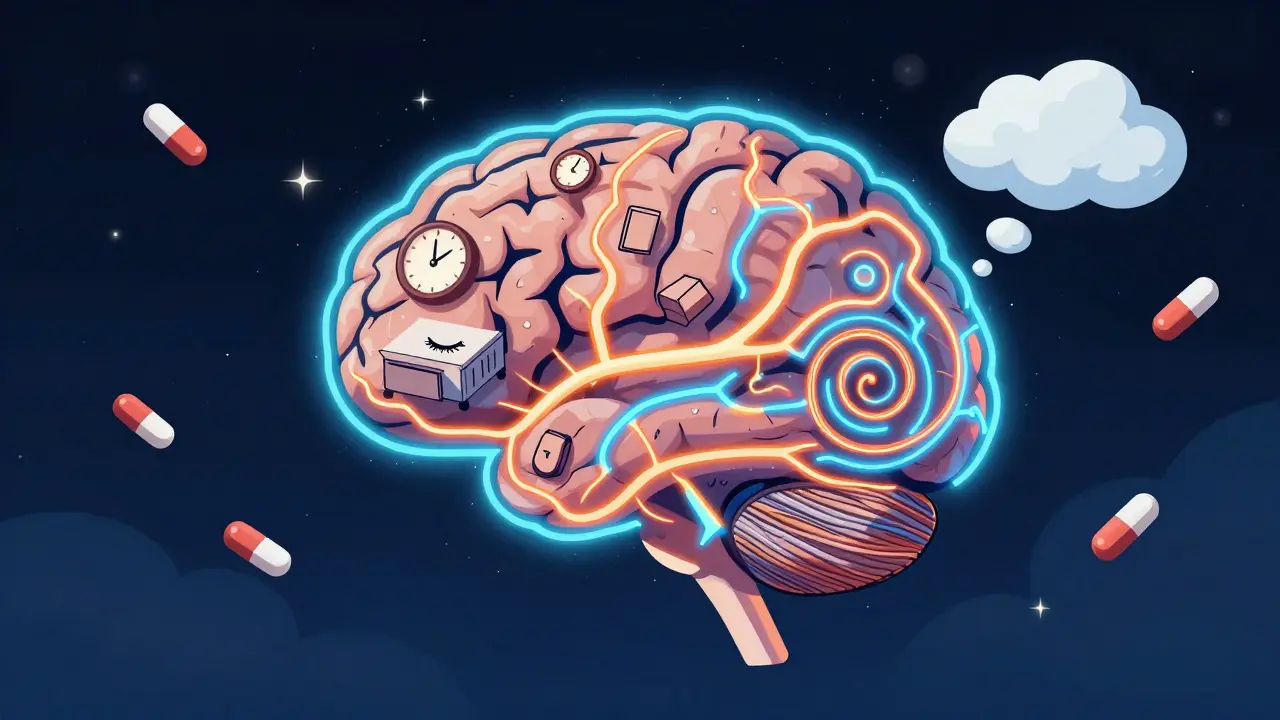
When you’re trying to find an antidepressant that doesn’t wreck your sex life or make you gain weight, bupropion (sold as Wellbutrin, Zyban, or Aplenzin) often comes up as a top choice. It’s one of the most prescribed antidepressants in the U.S., with nearly 18 million prescriptions filled in 2022. But behind its reputation for being "sex-friendly" and "weight-neutral" are three serious side effects that can turn a good treatment into a bad experience: insomnia, anxiety, and a raised seizure threshold. These aren’t rare quirks-they’re well-documented, dose-dependent risks that can change how you live, sleep, and even survive.
Why Bupropion Causes Insomnia
Insomnia isn’t just a side effect of bupropion-it’s one of the most common. Clinical trials show about 19% of people taking it struggle with sleep, making it the third most frequent complaint after agitation and headaches. Unlike SSRIs like sertraline or fluoxetine, which often cause drowsiness, bupropion stimulates the brain. It blocks the reuptake of dopamine and norepinephrine, two neurotransmitters linked to alertness and energy. That’s great if you’re feeling sluggish, but terrible if you’re trying to fall asleep at 11 p.m.Most people who experience sleep problems report they can’t shut off their minds. Racing thoughts, restlessness, or simply feeling wired despite being exhausted. The timing matters. Taking bupropion too late in the day-especially the immediate-release or sustained-release versions-can keep you awake for hours. Studies show that shifting the dose to the morning reduces insomnia in 68% of cases. The extended-release version (XL) is slightly better because it releases the drug more slowly, but even then, taking it after noon can still interfere with sleep.
Patients on Reddit’s r/antidepressants frequently post threads like "Wellbutrin insomnia nightmare," with users describing nights spent staring at the ceiling, counting ceiling tiles, or scrolling through their phones until 3 a.m. One user wrote, "I took 150mg SR at 8 a.m. and still couldn’t sleep until 2 a.m. I thought I was going crazy." The good news? For many, the insomnia improves after the first two weeks as the body adjusts. But for others, it sticks around-and that’s when you need to talk to your doctor about lowering the dose or switching timing.
Does Bupropion Cause Anxiety?
It’s ironic: you start bupropion to ease depression, and suddenly you feel more anxious than ever. About 20-25% of users report increased nervousness, restlessness, or panic-like symptoms within the first week or two. This isn’t "bad vibes"-it’s a pharmacological reaction. Bupropion boosts norepinephrine, which activates the body’s fight-or-flight system. In people already prone to anxiety, this can feel like being stuck on high alert.Unlike SSRIs, which can cause emotional blunting or apathy, bupropion often makes emotions feel more intense. That includes fear, irritability, and panic. Some patients mistake this for their depression getting worse. But in most cases, it’s a temporary surge. A 2023 Mayo Clinic review noted that anxiety symptoms typically improve after 7-14 days of consistent dosing. Still, that first week can be brutal. One GoodRx reviewer wrote, "I had panic attacks every night after starting 150mg. I thought I was having a heart attack. I stopped after 10 days."
Doctors sometimes manage this by starting low-150mg once daily-and waiting 4-6 weeks before increasing. If anxiety is severe, a short-term benzodiazepine like lorazepam may be prescribed for the first 10-14 days. But if anxiety doesn’t improve after two weeks, or if it gets worse, bupropion may not be the right fit. People with pre-existing anxiety disorders (like GAD or panic disorder) are at higher risk. In these cases, SSRIs or SNRIs might be safer, even if they come with sexual side effects.
The Seizure Risk You Can’t Ignore
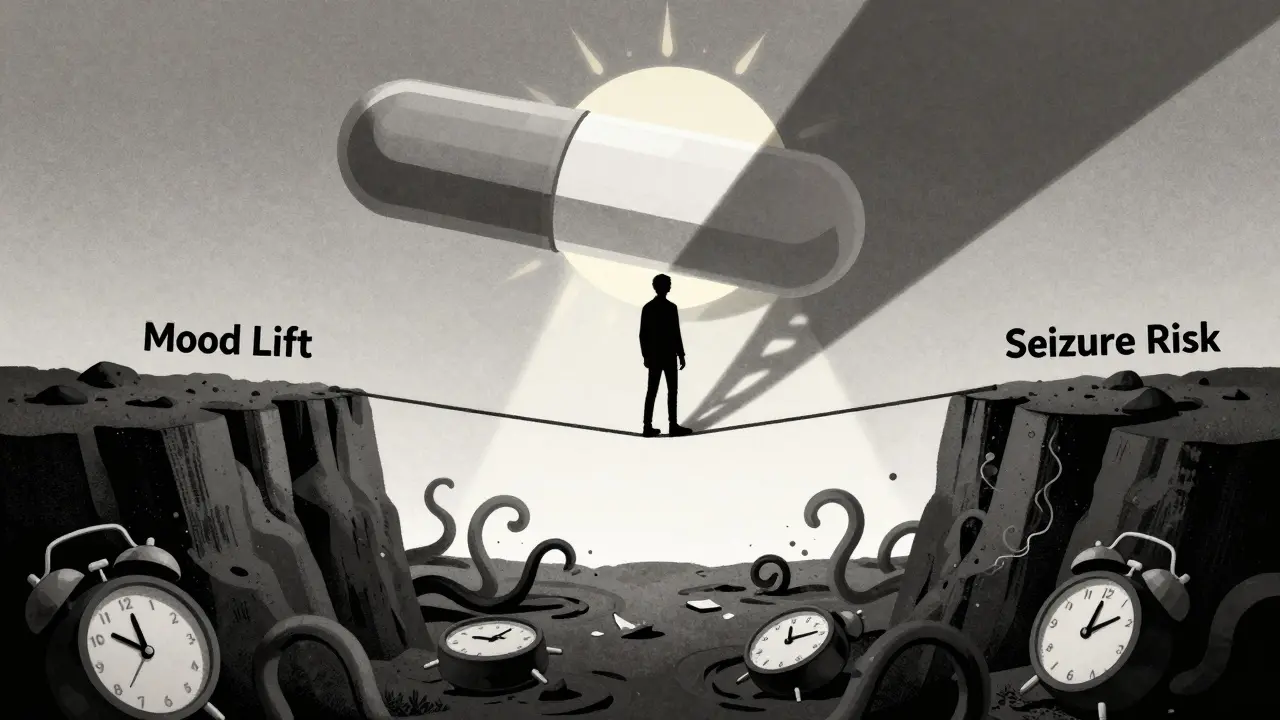
This is where bupropion stands apart from every other antidepressant. It carries a real, measurable risk of seizures-something SSRIs, SNRIs, and tricyclics don’t do at therapeutic doses. At the maximum recommended dose of 450mg per day (for SR), the seizure risk is about 0.4%. That’s still low, but it’s 40 times higher than the general population’s risk of 0.01%. And if you go over 600mg a day? Risk jumps to 2-5%. That’s not a typo. Five percent means one in every 20 people could have a seizure.Why does this happen? Bupropion lowers the seizure threshold by increasing dopamine and norepinephrine in the brainstem and hypothalamus. This overstimulates neural circuits, making them more likely to fire uncontrollably. The risk spikes if you have any of these factors:
- History of seizures or head trauma
- Eating disorders (anorexia or bulimia)
- Severe liver disease
- Alcohol or drug withdrawal
- Using other medications that lower seizure threshold (like antipsychotics or stimulants)
One case report from 2023 described a 35-year-old woman who had her first seizure after increasing her Wellbutrin SR dose to 300mg. She had no prior history-just a normal brain MRI and no family history of epilepsy. She was taking it at night. The seizure happened at 2 a.m. She woke up confused, with a bitten tongue and muscle soreness. Her doctor told her she’d never be able to take bupropion again.
The extended-release version (XL) has a lower seizure risk than the sustained-release (SR) because it avoids sharp spikes in blood levels. But even XL isn’t risk-free. Overdoses-whether accidental or intentional-are dangerous. Doses over 2.7 grams can cause seizures, coma, or cardiac arrhythmias. Emergency rooms see bupropion overdoses regularly, and they’re among the most life-threatening of all antidepressant overdoses.
How Bupropion Compares to Other Antidepressants
If you’re choosing between antidepressants, bupropion’s trade-offs are clear:| Side Effect | Bupropion | SSRIs (e.g., Zoloft, Prozac) |
|---|---|---|
| Sexual Dysfunction | 1-6% | 30-70% |
| Weight Change | 23% lose weight | Most gain weight |
| Insomnia | 19% | 10-15% |
| Anxiety/Agitation | 20-25% | 10-20% |
| Seizure Risk | 0.4% at max dose | Negligible |
Bupropion wins on sexual function and weight. It loses on sleep, anxiety, and safety. For someone who’s gained 30 pounds on fluoxetine and can’t stand the idea of more weight gain, bupropion might be worth the trade-off. For someone with a history of seizures, a past eating disorder, or who works night shifts, it’s a dangerous gamble.
Who Should Avoid Bupropion Altogether?
Not everyone is a candidate. The FDA and major medical guidelines say avoid bupropion if you:- Have ever had a seizure
- Have an eating disorder (anorexia or bulimia)
- Are withdrawing from alcohol or sedatives
- Have liver disease (Child-Pugh Class C)
- Are taking monoamine oxidase inhibitors (MAOIs)
- Are under 18 (not FDA-approved for this age group)
Even if you don’t have these conditions, you should still be cautious. If you’ve ever had a head injury, even years ago, or if you drink heavily on weekends, your seizure risk is higher than average. Doctors now routinely screen for these factors before prescribing. A 2023 survey by the American Psychiatric Association found that 78% of psychiatrists now check for seizure risk factors before writing a bupropion prescription-up from 45% just five years ago.
What to Do If Side Effects Start
If you’re already on bupropion and you notice:- Difficulty falling asleep after 10 p.m.
- Increased heart rate, jitteriness, or panic attacks
- Muscle twitching, unusual jerking, or strange sensations in your limbs
Don’t ignore it. Talk to your prescriber. For insomnia, move your dose to the morning. For anxiety, give it two weeks-but if it’s unbearable, ask about a short-term anti-anxiety med. For any physical signs of seizure risk, stop taking it and get evaluated immediately. Don’t wait. A seizure isn’t something you recover from with rest.
Many people who stop bupropion due to side effects say they wish they’d known sooner. One patient wrote on SingleCare: "I loved how it helped my mood and made me want to go outside again. But the anxiety and insomnia were worse than my depression. I didn’t know it could cause seizures until I Googled it after my first panic attack. I wish someone had warned me."
Alternatives If Bupropion Doesn’t Work for You
If bupropion’s side effects are too much, there are other options:- Mirtazapine (Remeron): Helps with sleep and appetite, low sexual side effects, but can cause weight gain.
- Vortioxetine (Trintellix): Targets multiple serotonin receptors, low sexual side effects, less insomnia than bupropion.
- SSRIs with lower sexual side effects: Escitalopram (Lexapro) has less sexual dysfunction than other SSRIs.
- Therapy + lifestyle: CBT, exercise, and sleep hygiene can be as effective as medication for mild to moderate depression.
The goal isn’t to find the "best" antidepressant-it’s to find the one that works for you without breaking your sleep, your nerves, or your health.
Can bupropion cause seizures even if I’ve never had one before?
Yes. While most seizures linked to bupropion happen in people with risk factors like eating disorders or prior head injuries, they can occur in anyone-even those with no history of seizures. The risk increases with higher doses, especially above 450mg per day. Cases have been reported in otherwise healthy adults taking the recommended dose. Never ignore muscle twitching, jerking, or sudden confusion.
Will insomnia from bupropion go away on its own?
For about half of users, insomnia improves after 1-2 weeks as the body adjusts. But for others, it persists. If you’re still having trouble sleeping after two weeks, talk to your doctor. Moving your dose to the morning helps in 68% of cases. If that doesn’t work, lowering the dose or switching medications may be necessary.
Is bupropion safe for people with anxiety disorders?
It’s risky. Bupropion can worsen anxiety, especially in the first week. People with generalized anxiety disorder, panic disorder, or PTSD often report increased panic attacks or restlessness. While some patients tolerate it well, SSRIs or SNRIs are generally safer first choices for those with primary anxiety disorders. Always disclose your full mental health history before starting bupropion.
How do I know if my dose is too high?
Signs your dose might be too high include: constant jitteriness, heart palpitations, severe insomnia, frequent headaches, or muscle twitches. The maximum safe daily dose is 450mg for sustained-release and 400mg for extended-release. Going above this dramatically increases seizure risk. Never increase your dose without your doctor’s approval.
Can I take bupropion with alcohol?
No. Alcohol lowers your seizure threshold and can interact with bupropion to increase the risk of seizures, especially if you drink regularly or recently stopped drinking. Even moderate drinking (like 2-3 drinks a few times a week) can be dangerous. Doctors strongly advise avoiding alcohol entirely while on bupropion.





13 Comments
Bupropion? More like bupro-why-am-I-staring-at-the-ceiling-at-3am.
Also seizures? Cool./p>
I’ve been on Wellbutrin for 3 years. Insomnia was brutal at first, but moving my dose to 8 a.m. saved me. Still wake up at 5 a.m. sometimes, but at least I’m not hallucinating ceiling cracks anymore.
Seizure risk scared me too-until I read the fine print. No history of epilepsy, no eating disorders, no alcohol abuse. So I stayed. Worth it./p>
Oh wow, so you’re telling me a drug that makes you feel like a caffeinated raccoon on a treadmill is the ‘sex-friendly’ option?
Great. So now I’m anxious, sleep-deprived, and still can’t get laid. Thanks, Big Pharma./p>
If you’re considering bupropion, please talk to your doctor before starting. Don’t just Google it at 2 a.m. like I did.
I started at 150mg SR, had panic attacks for 10 days, and nearly quit. My psychiatrist said to hold on-two weeks later, it calmed down. Now I’m sleeping 7 hours and actually smiling again. It’s not perfect, but it’s mine./p>
Americans think they can just pop pills like candy. In Nigeria we fix depression with prayer, yam, and discipline. This drug sounds like a Western scam to sell more meds. Seizures? For what? To feel ‘energized’? We don’t need your pharmacology nonsense./p>
The data is clear. 0.4% seizure risk at max dose. But you ignore the dose escalation curve. Most cases occur during titration. Also, 23% weight loss? That’s not a feature-it’s a red flag for disordered eating. Bupropion is anorexia’s wingman./p>
I took it for anxiety. Got worse. Stopped. Didn’t regret it. Sleep improved immediately. Anxiety didn’t vanish, but it didn’t scream anymore. Sometimes the best treatment is just… stopping something that’s hurting you more than helping./p>
Hey if you’re struggling with sleep on bupropion, try this: no screens after 9, cold shower before bed, and take it at 7 a.m. sharp. I did it. Slept like a baby. Don’t give up. Your brain can adjust. You got this./p>
I was SO excited about bupropion-no weight gain, no sex dead zone! Then I got anxiety so bad I called 911 thinking I was dying. Turned out it was just the drug. I cried for three days. Now I’m on Lexapro. My libido’s kinda meh, but I can breathe again. Don’t be like me. Listen to your body./p>
The statistical risk of seizure associated with therapeutic dosing of bupropion, while quantitatively low, remains clinically significant due to its dose-dependent nature and the irreversible neurological consequences of seizure activity. Furthermore, the concomitant use of alcohol constitutes a pharmacodynamic synergism that substantially elevates the probability of adverse central nervous system excitation. Clinical caution is therefore not merely advisable-it is imperative./p>
To everyone saying ‘it got better’-YES. It does. It’s not magic, but it’s real. I was on 300mg SR, couldn’t sleep, felt like my nerves were frayed wires. Moved to 150mg XL in the morning. Took 3 weeks. Now I’m running marathons and not crying in the shower. You’re not broken. You’re just on the wrong version of the drug. Talk to your doc. Don’t quit cold. Adjust. Try again./p>
The pharmacokinetic profile of bupropion SR versus XL is critical. The Cmax of SR is 30% higher and occurs 1.5x faster than XL, resulting in greater GABAergic suppression and cortical hyperexcitability. This is why seizure incidence is disproportionately elevated in SR formulations. Always request XL. Never accept SR unless you’re in a resource-limited setting with no alternatives./p>
I was skeptical at first. Thought it was just another pill. But it helped me get out of bed for the first time in months. Yeah, I had insomnia. Yeah, I felt jittery. But I didn’t feel numb. I didn’t feel like a zombie. That’s worth something. I’m not saying it’s perfect. But it gave me back my life. Just take it slow. And don’t drink./p>