
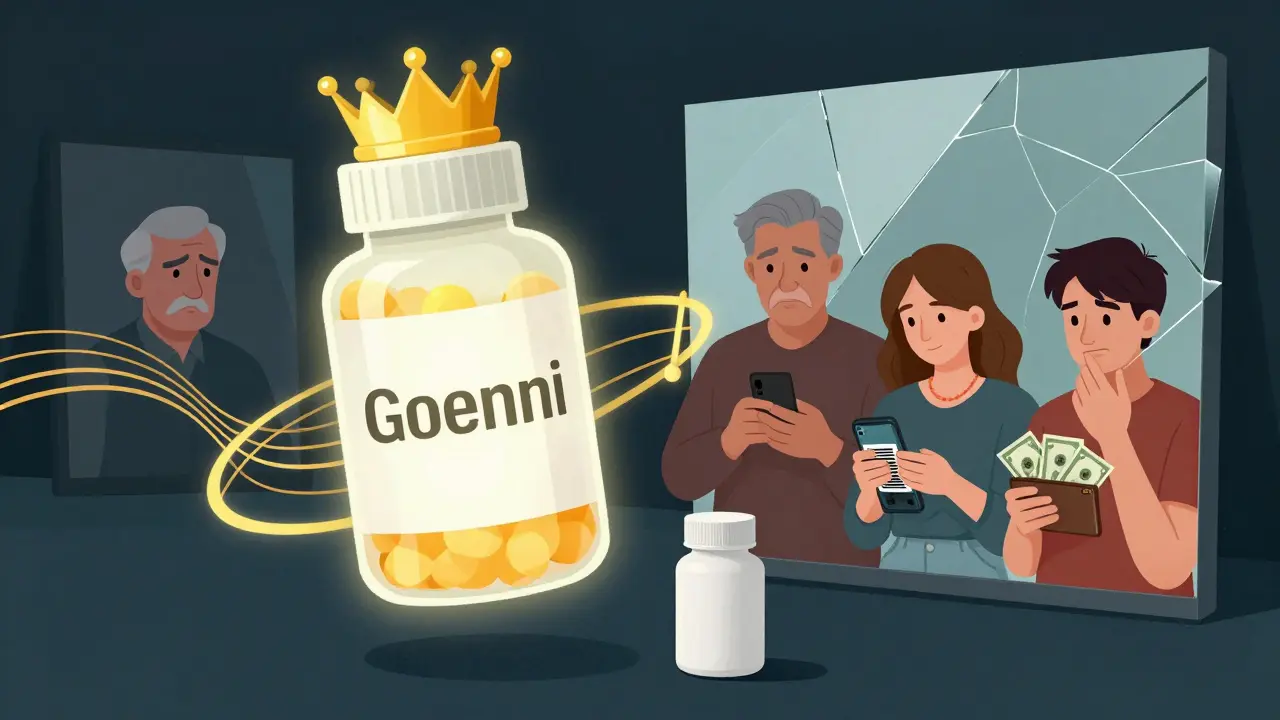
When you walk into a pharmacy and the pharmacist hands you a pill in a plain white bottle instead of the familiar blue box you’ve been taking for years, what’s your first thought? For some, it’s relief - generic medications save money. For others, it’s doubt: Is this really the same thing? The truth is, generics are chemically identical to brand-name drugs. They contain the same active ingredients, work the same way, and are held to the same safety standards. But perception doesn’t always follow science - and that gap changes dramatically depending on how old you are.
Why Generics Are the Silent Hero of Healthcare
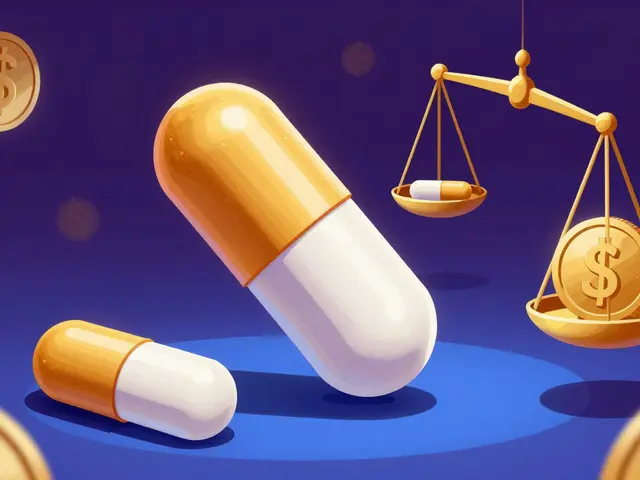
Let’s start with the facts. In the United States, 90% of all prescriptions filled are for generic drugs. Yet they make up only 23% of total drug spending. Why? Because they cost 80-85% less than their brand-name equivalents. A month’s supply of a brand-name blood pressure pill might run $150. The generic? $12. That’s not a small difference - it’s the difference between taking your medicine and skipping doses because you can’t afford it.
These aren’t cheap knockoffs. The FDA requires generics to prove they’re bioequivalent: meaning they deliver the same amount of active ingredient into your bloodstream at the same rate as the brand. If a brand-name drug lowers your cholesterol by 30%, so does the generic. No wiggle room. No exceptions. But here’s the catch - knowing this doesn’t change how people feel about it.
Boomers: Trusting the Brand, Not the Bottle
If you’re a Baby Boomer (born 1946-1964), you grew up in an era where drug ads were rare, and doctors were gods. You were told, "This is the one." And you believed it. Many still do.
Studies show older adults are more likely to believe branded drugs are stronger, safer, or more effective - even when they’ve been taking the generic version for years. Why? It’s not ignorance. It’s experience. They remember when generics were harder to find. They remember stories of pills that didn’t work. And they remember the sleek packaging, the catchy jingles, the doctor’s reassuring nod.
One 68-year-old from Melbourne told a local pharmacist, "I’ve been on this heart med for 15 years. The box changed. The pill changed. I don’t trust it anymore." He wasn’t wrong about the pill changing - the shape, color, and imprint did. But the active ingredient? Same. The effect? Identical. Yet his trust was tied to the brand, not the chemistry.
Gen X and Millennials: The Skeptical Middle
Gen X (born 1965-1980) and Millennials (born 1981-1996) fall somewhere in between. They’ve seen the rise of direct-to-consumer drug ads. They’ve Googled side effects. They’ve compared prices on apps. They know generics are cheaper. But they also remember when a friend’s generic thyroid med didn’t work - or so they thought.
Here’s the twist: these groups are more likely to have correct knowledge about generics than Boomers. They’ve read articles. They’ve talked to pharmacists. But knowledge doesn’t erase emotion. A 2023 study found that 42% of Millennials still believed branded drugs caused fewer side effects - even after reading the FDA’s bioequivalence guidelines.
Why? Because they’ve been conditioned by marketing. Brand-name drugs spend billions on TV ads, sleek packaging, and patient support programs. Generics? They advertise nothing. They don’t have mascots. No commercials. Just a label that says "generic" and a price tag that’s too good to be true. And that makes people suspicious.
Gen Z: The Price-First Generation
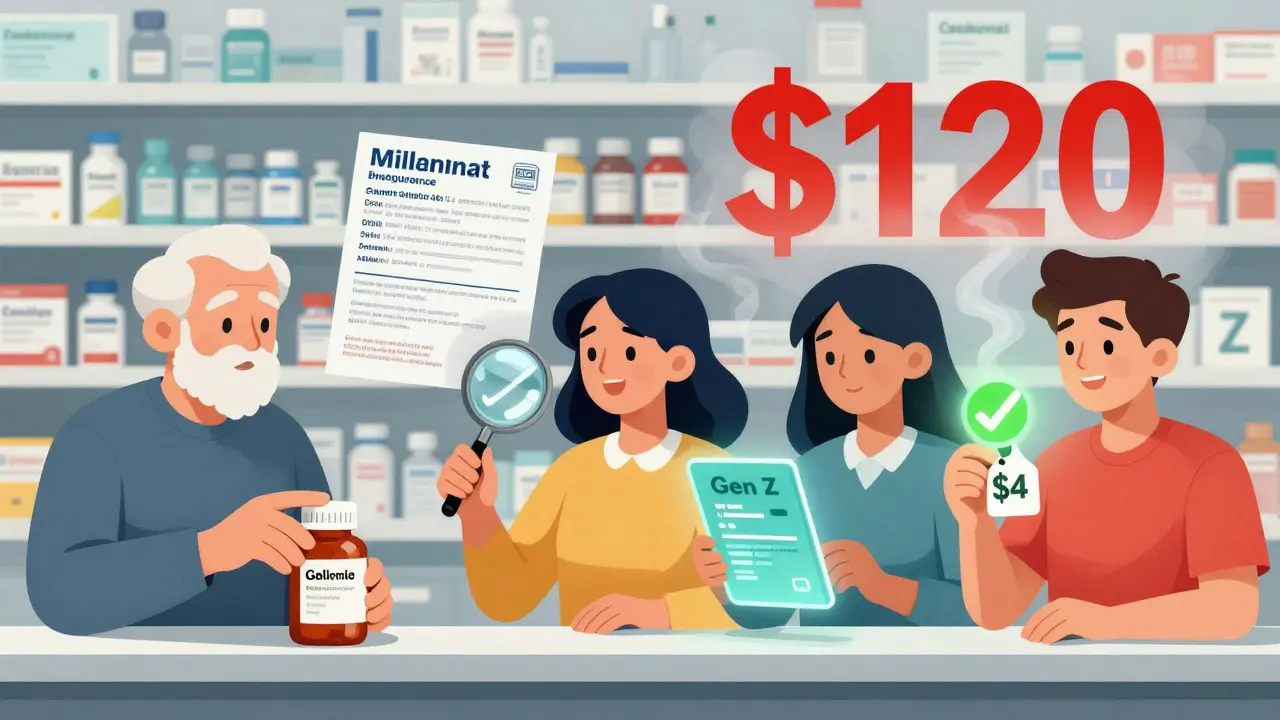
Gen Z (born 1997-2012) is the first generation to grow up with price comparison apps, pharmacy loyalty programs, and $4 prescriptions at Walmart. They don’t care about logos. They care about cost, speed, and convenience.
For them, the idea of paying $120 for a pill when the generic costs $4 isn’t just irrational - it’s unethical. Surveys show Gen Z is 3x more likely than Boomers to switch to a generic without hesitation. They’re also more likely to trust online health information, including peer reviews and pharmacy blogs.
But here’s the blind spot: Gen Z has the lowest health literacy of any generation. They know generics are cheaper. They don’t always understand what "bioequivalent" means. They assume if it’s on the shelf, it’s safe. That’s a risk. Because not all generics are created equal - and if you don’t know how to read a label or ask your pharmacist the right questions, you might miss subtle differences in inactive ingredients that affect absorption.
The Real Problem Isn’t Science - It’s Framing
Here’s the thing: no one wakes up thinking, "I want to be unhealthy." People avoid generics not because they’re stupid - but because they’ve been told, subtly, that branded drugs are better.
Pharmaceutical companies spend $7 billion a year on direct-to-consumer advertising. Almost all of it is for brand-name drugs. Generics? They’re invisible. No ads. No billboards. No celebrity endorsements. Just silence.
That silence speaks volumes. When you see a drug on TV every night, you assume it’s better. When you see a generic in the back of the pharmacy aisle, you assume it’s second-rate. That’s not logic. That’s psychology.
Studies show that when people are told, "This generic is made by the same company that makes the brand-name version," acceptance jumps by 40%. When they’re told, "This generic is FDA-approved and has the same active ingredient," acceptance goes up too - but not as much. The key isn’t just facts. It’s context.
What’s Missing? Age-Specific Communication
Right now, most public health messages about generics are one-size-fits-all. "Generics are safe. Generics save money. Take them." That doesn’t work.
Boomers need reassurance. They need to know the pharmacy didn’t switch them out for a cheaper version - that the drug is identical. They need to hear from their doctor, not a pamphlet.
Millennials and Gen X need transparency. Show them the data. Let them compare the pill’s imprint to the brand. Show them the FDA’s bioequivalence reports. They’ll trust evidence more than emotion.
Gen Z needs simplicity. They don’t want a lecture. They want a barcode scan. A price comparison. A quick checkmark: "Same drug. 85% cheaper. Approved."
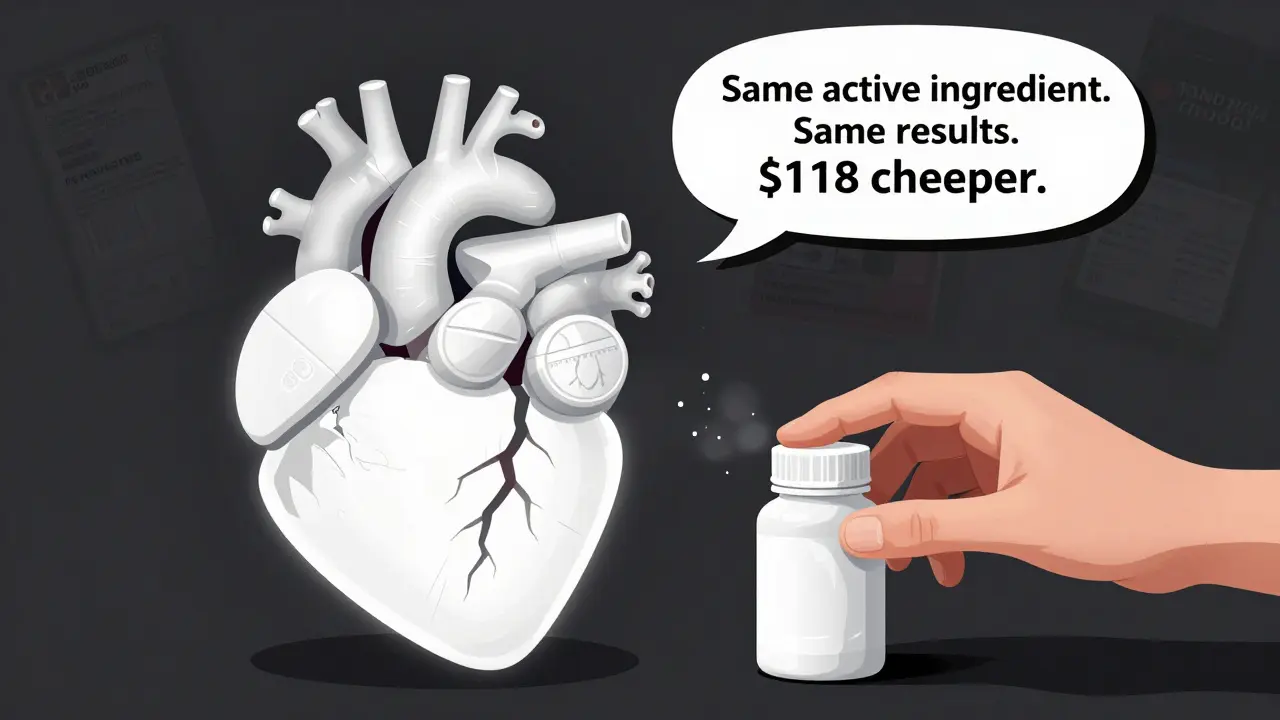
One pharmacy in Melbourne started doing this last year. They put a small sticker on generic bottles: "Same active ingredient. Same results. $118 cheaper." Within six months, refill rates for generics jumped 31%. No one was forced. No one was scolded. They just saw the truth - clearly, simply, and personally.
It’s Not About Being Right - It’s About Being Understood
Generational attitudes toward generics aren’t about ignorance. They’re about experience, exposure, and emotion. Boomers trust what they’ve known. Gen Z trusts what’s affordable. Gen X and Millennials are caught in between - smart enough to know better, but still influenced by decades of branding.
Fixing this isn’t about more science. It’s about better communication. It’s about tailoring the message to the person holding the bottle.
Because in the end, a pill doesn’t care if it’s in a branded box or a plain one. But the person taking it? They care a lot.
Are generic medications really as effective as brand-name drugs?
Yes. Generic medications must meet the same strict standards as brand-name drugs set by the FDA (or equivalent agencies like Australia’s TGA). They contain the same active ingredient, in the same strength, and must deliver the same therapeutic effect. Bioequivalence testing ensures the drug enters your bloodstream at the same rate and amount. If a brand-name drug lowers your blood pressure by 20%, the generic will too.
Why do some people feel generics don’t work as well?
It’s mostly psychological. People associate brand names with quality because of decades of advertising, packaging, and doctor recommendations. Even when they know generics are identical, the brain still links the familiar brand with reliability. Some also notice differences in pill shape, color, or size - which are harmless inactive ingredients - and mistake them for changes in effectiveness. A 2015 study found 35.6% of people believe generics are less effective, even after being told they’re bioequivalent.
Do older adults have more trouble accepting generics?
Yes. Older adults, especially Baby Boomers, are more likely to distrust generics because they grew up in a time when branded drugs were the only option. They’ve built trust around specific brand names over decades. Changing the packaging or switching to a generic can trigger anxiety, even if the medicine is chemically identical. This isn’t about intelligence - it’s about emotional attachment to familiar brands.
Can switching to a generic cause side effects?
Rarely. The active ingredient is identical, so side effects should be the same. However, some people are sensitive to inactive ingredients - like dyes, fillers, or coatings - which can differ between brands and generics. If you notice new side effects after switching, talk to your pharmacist or doctor. It’s not the drug failing - it’s your body reacting to something different in the pill’s makeup. These cases are uncommon and usually fixable by switching to a different generic version.
Why don’t generic drugs have ads?
Because they don’t need to. Generic manufacturers don’t own the patent, so they can’t market the drug like a brand. They compete on price, not branding. That means no TV commercials, no billboards, no celebrity endorsements. The result? Consumers rarely hear about generics - which makes them seem less trustworthy, even though they’re just as effective.
Is it safe to switch from a brand-name drug to a generic?
Yes - and it’s often recommended. Switching to a generic is safe, legal, and cost-effective. Most doctors and pharmacists encourage it unless there’s a specific medical reason not to (which is rare). If you’re concerned, ask your pharmacist: "Can you show me the FDA bioequivalence data?" Most can. You’ll see the numbers prove it’s the same drug.
Do pharmacists prefer generics?
Yes - and for good reason. Pharmacists see the financial impact daily. They know patients skip doses because they can’t afford brand-name drugs. They’ve watched people choose between insulin and groceries. Generics make treatment possible. Studies show pharmacists are 40% more likely than physicians to recommend generics because they’re on the front lines of cost barriers and patient adherence.
What Should You Do?
If you’re on a brand-name drug and wondering whether to switch:
- Ask your pharmacist: "Is there a generic version?" They know the current options.
- Ask your doctor: "Can we switch?" Most will say yes - unless you’re on a narrow-therapeutic-index drug (like warfarin or levothyroxine), where even tiny differences matter.
- Check the pill. Generic pills often have different shapes or colors. That’s normal. Look up the imprint code online - you’ll find it matches the active ingredient.
- Give it time. If you feel different after switching, wait a week. Your body may need to adjust. If symptoms persist, talk to your provider - but don’t assume the generic is to blame.
Remember: the goal isn’t to convince you generics are better. It’s to help you understand they’re not worse. And in a world where medicine costs more than rent, that’s worth knowing.


13 Comments
Wow. So we’re just supposed to believe that a pill that looks like a neon green rock with a weird imprint is chemically identical to the one my grandma took for 20 years? 😂
/p>Let me just say - I’m a 32-year-old who once cried over a $12 bottle of lisinopril because it looked ‘wrong.’ I didn’t know it was the same until my pharmacist showed me the FDA database. Now I’m basically a generic evangelist. Also, the pill imprint thing? It’s wild how much we attach to aesthetics. I used to think the blue pill was ‘stronger.’ Turns out, I was just emotionally attached to the logo. 🤦♀️
/p>Okay, but let’s be real - the FDA doesn’t actually test every single batch of generic, they just audit the manufacturers… and let’s not forget the 2018 valsartan recall that affected BOTH brand and generic… so… maybe ‘bioequivalent’ doesn’t mean ‘identical in every microscopic way’? 🤔 Also - who’s making these generics? China? India? Are we sure they’re not using the same factory as that fake weight-loss tea that gave someone liver failure? 🚨
/p>They’re hiding something. I know it. The same company that makes the brand-name drug also makes the generic? That’s not a coincidence - that’s a monopoly. The FDA is in bed with Big Pharma. They want you to think it’s the same so you’ll stop complaining about your $300 insulin bills. The color change? The shape? That’s a trick. They’re slowly conditioning us to accept inferior medicine. Wake up, sheeple. 💊👁️
/p>You got this!! 💪 Switching to generic was the best decision I ever made - saved me $110 a month! My blood pressure’s never been better. If you’re nervous, talk to your pharmacist - they’re the real MVPs. And hey, if you feel weird for a few days? Give it time. Your body’s just adjusting. You’re doing great! ❤️
/p>I think the real tragedy here isn’t the lack of trust in generics - it’s that we’ve let advertising dictate our health choices. We’ve been trained to equate price with quality, and silence with inferiority. We need a cultural reset. Not more science. Not more ads. Just… honesty. And maybe a billboard that says: ‘This pill saved your neighbor’s life. It’s cheaper. It’s real.’
/p>As someone who’s worked in community pharmacy for 18 years, I’ve seen patients refuse generics because they ‘felt different.’ Then they’d come back a month later, broke, and say, ‘I skipped my meds.’ The truth? The generic saved them. The brand? It broke them. Stop letting marketing make your health decisions. Ask for the data. Look up the imprint. Compare the pill. You’ll be shocked - it’s the same. And your wallet will thank you.
/p>It’s fascinating how generational trauma around pharmaceuticals manifests - Boomers remember when generics were literally just crushed aspirin in a paper bag, and now they’re stuck in a cognitive loop where ‘different packaging = different drug.’ Meanwhile, Gen Z sees a $4 pill and assumes it’s a government experiment. Both are wrong. But the real issue? No one ever taught us how to read a drug label. We were supposed to trust doctors, then we were supposed to trust ads, then we were supposed to trust Instagram influencers. Nobody taught us to look at the active ingredient. It’s not a conspiracy - it’s a failure of public health education.
/p>India makes most generics. But India also has bad quality control. I know a man who took generic metformin and got sick. He switched back to brand. He is fine now. So maybe not all generics are same. Maybe we should not trust them blindly. People die from bad pills. Not all countries have FDA.
/p>They’re poisoning us. Slowly. Quietly. Under the guise of ‘affordability.’ Do you know how many inactive ingredients are in those little white pills? Hundreds. And they’re not regulated the same way. The dye? The binder? The coating? Those are the real toxins. The active ingredient? It’s just the Trojan horse. They want you to think it’s the same - so you’ll take it. But your body knows. It screams in silent ways - fatigue, rashes, anxiety. And they call it ‘psychological.’ No. It’s chemical. And they don’t want you to know.
/p>Interesting take. But honestly? I don’t care about the science. I care about my bank account. I take the generic. It works. I’m not overthinking it. If it lowers my blood pressure and doesn’t cost me a week’s groceries, I’m not touching the brand. Simple.
/p>Just wanted to say - this post gave me chills. Seriously. The part about the Melbourne pharmacy with the sticker? That’s genius. We don’t need lectures. We need clarity. A simple sticker. A barcode. A price difference. That’s all it takes. And you know what? I’m gonna suggest that to my local pharmacy tomorrow. Because if we can make the truth visible, we don’t need to convince anyone. They’ll see it for themselves. 🌟
/p>Did you know the FDA allows generics to vary by up to 20% in absorption? That’s not bioequivalent - that’s a gamble. And the companies that make them? They’re the same ones who made the brand. It’s all one big system. They profit either way. You think you’re saving money? You’re just feeding the machine. I only take brand. Always have. Always will. 💊🩸
/p>