
By the time you reach 70, your body doesn’t process medicine the same way it did at 30. That’s not just a guess-it’s science. Around 90% of adults over 65 take at least one prescription drug daily. Nearly half take five or more. And yet, most of those medications were originally tested on people under 65. That mismatch is why so many older adults end up in the hospital-not because they took too much, but because their bodies handle drugs differently now.
Why Your Body Processes Drugs Slower as You Age
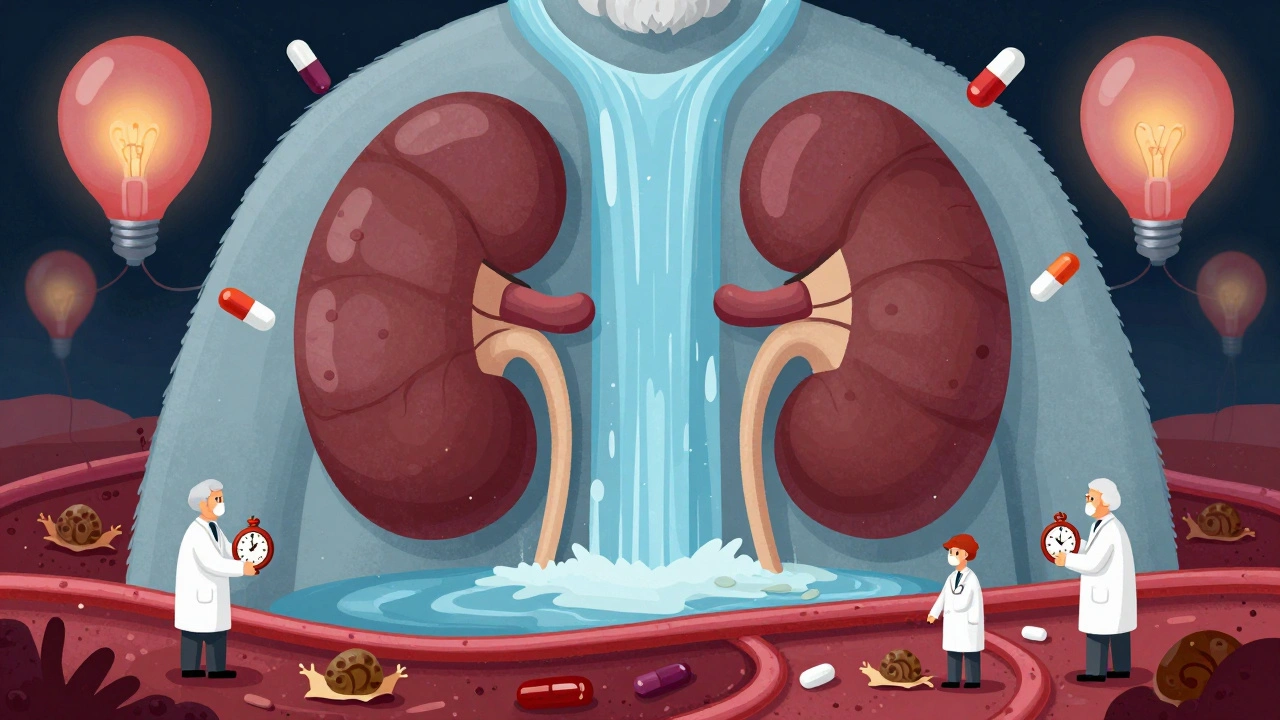
Your kidneys start to slow down after 40. By 80, they’re clearing drugs 30 to 50% slower than they did in your 30s. That means medicines like digoxin, warfarin, and certain antibiotics stay in your system longer. If your dose hasn’t changed since you were younger, you’re effectively taking more than you should. That’s why kidney function, not just age, is the real key to dosing. Doctors used to rely on blood creatinine levels alone-but that’s misleading. Muscle mass drops as you age, so creatinine can look normal even when your kidneys are failing. The right way to check? The Cockcroft-Gault equation, which factors in age, weight, and sex. If your creatinine clearance falls below 60 mL/min, about 40% of common medications need a lower dose.Your Liver Isn’t Working Like It Used To
Your liver also changes. Blood flow to it drops by 30 to 40% after 70. That affects drugs that rely on liver blood flow to be broken down-like propranolol, lidocaine, and some antidepressants. These drugs build up in your bloodstream because your liver can’t clear them fast enough. The result? Drowsiness, dizziness, even falls. It’s not always obvious. You might think you’re just getting older, but it could be a drug stacking up because your liver can’t keep up.Fat Changes How Drugs Spread Through Your Body
As you age, your body composition shifts. You lose muscle and gain fat. That’s normal. But it changes how drugs move around. Fat-soluble drugs-like diazepam (Valium), amitriptyline, and some sleep aids-get stored in fat tissue. That means they hang around longer. Instead of being cleared in hours, they stick around for days. That’s why a single 5mg dose of diazepam at 75 can cause confusion and unsteadiness that lasts 48 hours, while the same dose at 40 might only cause drowsiness for 6 hours. The half-life of these drugs can double or even triple.Protein Binding: The Hidden Risk in Blood
Many drugs, like warfarin and phenytoin, bind to proteins in your blood so they don’t act right away. As you age, your body makes less albumin-the main protein that holds these drugs in place. That means more of the drug floats around freely, active and ready to hit your cells. Even if your dose hasn’t changed, you’re getting a stronger effect. That’s why older adults often need lower warfarin doses-sometimes 20 to 30% less-to get the same blood-thinning effect. A standard 7mg dose might be too much, pushing your INR too high and raising your risk of bleeding.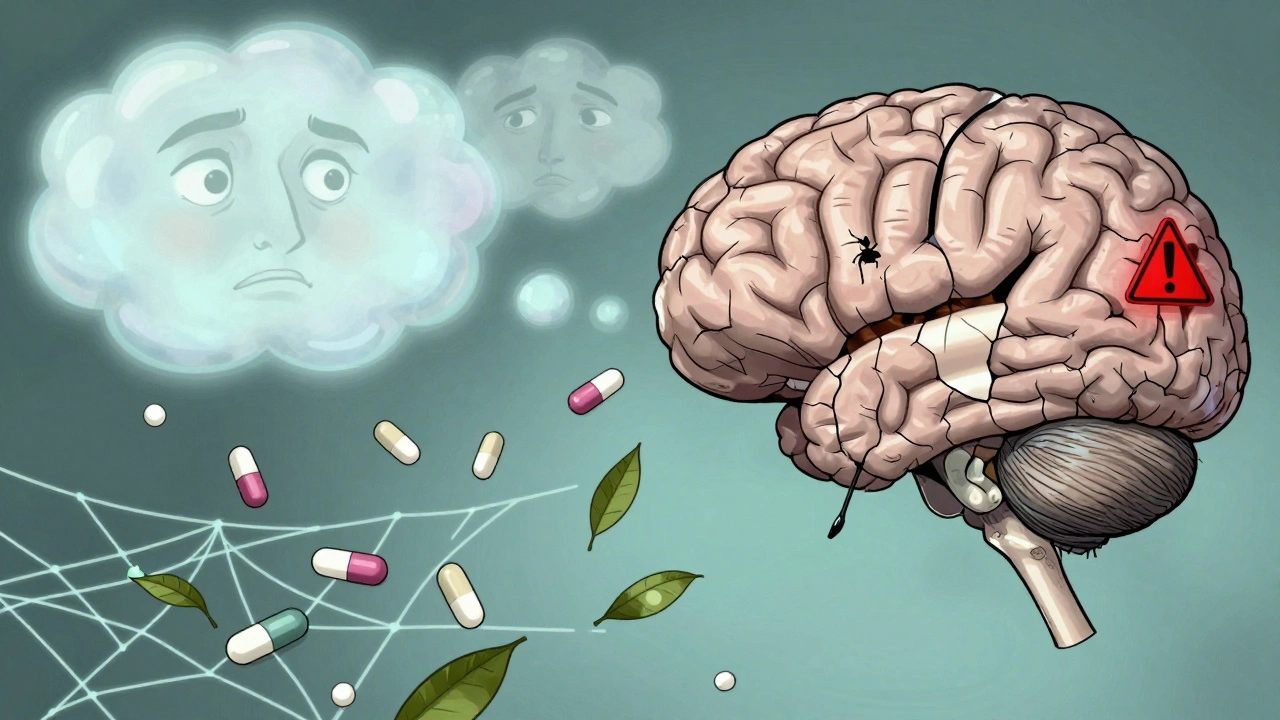
Your Brain Gets More Sensitive to Certain Drugs
This is where things get dangerous. Your brain becomes more sensitive to drugs that affect the nervous system. Benzodiazepines (like lorazepam), sleep pills, and antihistamines (like diphenhydramine in Benadryl) can cause severe confusion, memory loss, and falls in older adults-even at low doses. Why? The blood-brain barrier becomes more permeable, and you lose neurons that help regulate these drugs. Studies show older adults are 2 to 3 times more likely to have delirium from these medications than younger people. One Reddit user shared: “My 82-year-old mom got confused on 25mg of hydroxyzine. We cut it to 10mg and she was herself again in 3 days.” That’s not rare. It’s common.Why Beta-Blockers Don’t Work the Same
Your heart changes too. Beta-receptors in your heart become less responsive as you age. That means drugs like metoprolol or atenolol won’t slow your heart as much as they used to. But here’s the twist: your blood vessels still respond normally to alpha-receptors. So you might still get low blood pressure from these drugs, but your heart won’t slow down the way doctors expect. This mismatch is why some older patients on beta-blockers still have high heart rates during stress, yet feel dizzy from low BP. Dosing isn’t just about lowering numbers-it’s about matching the body’s real response.Anticholinergic Drugs: A Silent Threat
Many common medications-cold pills, bladder meds, antidepressants, even some Parkinson’s drugs-have anticholinergic effects. These block acetylcholine, a brain chemical vital for memory and muscle control. In older adults, even small doses can cause confusion, dry mouth, constipation, urinary retention, and blurred vision. Studies show adults over 75 are 3 to 5 times more likely to experience these side effects than those under 60. The American Geriatrics Society warns that taking just three anticholinergic drugs together can raise dementia risk by 50% over seven years. Tools like the Anticholinergic Cognitive Burden Scale help doctors spot risky combinations. If you’re on more than one of these, ask if there’s a safer alternative.What Doctors Should Do (But Often Don’t)
The solution isn’t to stop meds-it’s to adjust them. The Beers Criteria, updated in 2023, lists 30 drug classes that should be avoided or reduced in older adults. But most doctors don’t use it. Why? Time. Training. Lack of tools. The good news? Pharmacists are stepping in. A 2022 survey found 68% of community pharmacists now start seniors on 25 to 50% of the standard dose for kidney-cleared drugs. They call it “start low, go slow.” And it works. Patients report fewer falls, clearer thinking, and fewer ER visits.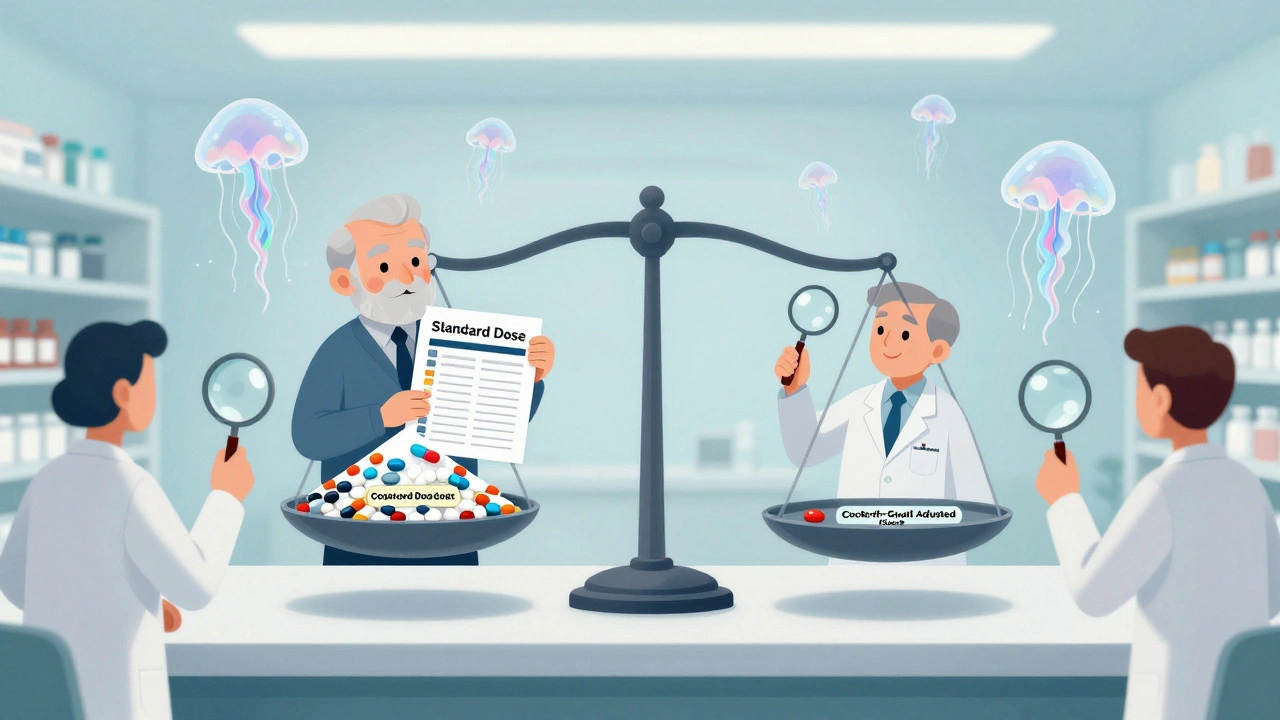
Real-World Examples: What Works
Take apixaban (Eliquis). A 78-year-old with atrial fibrillation was on 2.5mg twice daily because of low kidney function. His INR was fine, but he kept getting blood clots. His doctor checked his creatinine clearance again-after he started dialysis, it improved. They increased the dose to 5mg twice daily. His clots stopped. No bleeding. Perfect balance. Another case: an 84-year-old woman on warfarin had a major bleed after her dose was increased to 8mg. Her INR was 7.5. She had no history of bleeding. Turns out, her albumin was low, and her liver was slow. They dropped the dose to 5mg and added regular INR checks. She’s been stable for two years.What You Can Do Right Now
You don’t need to be a doctor to protect yourself. Here’s what to ask:- “Is this medication on the Beers Criteria list for older adults?”
- “Have you checked my kidney function with the Cockcroft-Gault equation, not just my creatinine?”
- “Could this drug be contributing to my dizziness, confusion, or constipation?”
- “Can we try lowering the dose and see how I feel?”
- “Am I taking any anticholinergic drugs? How many?”
Keep a list of every pill, supplement, and over-the-counter drug you take. Bring it to every appointment. Don’t assume your doctor knows what you’re on. Most don’t.
The Future Is Personalized
New tools are emerging. DosemeRx uses your age, kidney function, and genetics to calculate your perfect dose. The FDA now requires new drugs to include data from people over 65. And researchers are testing drugs that target aging itself-senolytics that clear out “zombie cells” that mess with drug responses. One trial showed these drugs restored beta-receptor function in older tissue. That could mean future meds will work better because the body’s environment is healthier.But here’s the hard truth: only 12% of clinical trial participants are over 75. That means most dosing rules are based on incomplete data. Until that changes, you’re your own best advocate. Don’t accept “it’s just age” as an excuse for side effects. Your body has changed. Your meds should too.
Why do older adults need lower doses of medication?
Older adults need lower doses because their bodies process drugs differently. Kidneys and liver work slower, fat increases while muscle decreases, and protein levels drop. This means drugs stay in the body longer, spread more widely, and become more active. Even standard doses can lead to side effects like confusion, falls, or bleeding. Lower doses prevent this.
What medications should seniors avoid?
The American Geriatrics Society Beers Criteria lists 30 drug classes to avoid or use with caution in seniors. These include benzodiazepines (like Valium), anticholinergics (like Benadryl), nonsteroidal anti-inflammatories (like ibuprofen), and certain antipsychotics. Even common OTC sleep aids and cold medicines can be risky. Always check with a pharmacist or geriatrician before starting any new drug.
How do I know if my medication dose is too high?
Signs your dose may be too high include dizziness, confusion, memory problems, unsteadiness, constipation, urinary retention, or frequent falls. If you notice these after starting or changing a medication, don’t wait. Talk to your doctor. Check your kidney function with the Cockcroft-Gault equation. Ask if your meds are on the Beers Criteria list. Many side effects aren’t normal aging-they’re medication reactions.
Can I stop a medication if I think it’s causing problems?
Never stop a prescription drug without talking to your doctor. Some medications, like blood pressure or seizure drugs, can cause dangerous rebound effects if stopped suddenly. But you can ask: “Could this be causing my symptoms? Can we try lowering the dose first?” Most doctors will agree to a cautious taper. Keep a symptom journal to show patterns.
What tools can help me manage my meds safely?
Use the Beers Criteria app (free, from AGS), the Anticholinergic Burden Calculator (used in VA hospitals), or DosemeRx if your provider uses it. Keep a printed or digital list of all your meds, including doses and why you take them. Bring it to every appointment. Ask your pharmacist for a med review-they’re trained to spot dangerous combinations. Many pharmacies offer free consultations for seniors.
Is it safe to take supplements with prescription drugs as I age?
Not always. Supplements like St. John’s Wort, ginkgo, garlic, and vitamin E can interfere with blood thinners, blood pressure meds, and antidepressants. Even common ones like calcium or magnesium can affect absorption of antibiotics or thyroid meds. Many seniors take supplements thinking they’re harmless, but they’re not regulated like drugs. Always tell your doctor what you’re taking-even if you think it’s “just a vitamin.”

15 Comments
Ugh. Another 'old people are broken' article. Can we just stop pretending aging is a disease? 🙄/p>
The body isn't failing it's evolving the question is are we evolving our medicine fast enough to meet it or are we still treating 80 year olds like 40 year olds with wrinkles/p>
If you're taking five meds you're already doing it wrong. Stop being a pharmacy customer and start being a human being/p>
This is why I love science 😍 My grandma's dose got cut in half and she stopped falling. Like literally stopped. 🤯/p>
It's not just the kidneys or the liver or the protein binding it's the entire system that's been optimized for youth and we're just patching it with pills. We're not fixing the architecture we're just increasing the buffer size on a broken OS. And nobody wants to admit the OS is outdated./p>
In india we have a saying that medicine is not for age but for condition but i think here in usa we treat age like a diagnosis and not a stage of life. This article is good but it misses the cultural part of why we overmedicate elders/p>
This is why America is dying. Too many pills too many doctors too little common sense. We used to just rest and eat soup. Now we need a pharmacologist to tell us how to breathe/p>
I love that you included the Beers Criteria and Cockcroft-Gault! So many people don't know these exist. I always tell my clients to ask their pharmacist for a med review - it's free and they're the real MVPs 🙌/p>
Interesting. But have you considered that the real issue is not aging but the industrialization of healthcare? We treat elders like data points not people. The science is fine. The system is the disease./p>
I cried reading this. My dad was on Benadryl for 'sleep' for 8 years. We cut it and he started telling jokes again. Like actual jokes. Like he used to. I'll never forgive the doctor who prescribed it. 💔/p>
i just read this and im like wow my grandmas been on that one med for 15 years and never got her kidneys checked lol/p>
Cockcroft-Gault is outdated. We should be using CKD-EPI or even better MDRD. Also most geriatricians still use creatinine alone. The system is broken. The data is there. Nobody uses it. #MedEdFail/p>
Let me guess - this was written by a 30-year-old researcher who’s never met a real senior. You talk about 'dosing' like it’s math. But real people don’t have perfect labs. They’re on 12 meds, can’t read the labels, and their daughter’s the one who fills the pill organizer. This article is beautiful. And useless. Until we fix the system. Not just the math./p>
YESSSSSS this is the energy we need! 💪 My mom’s on 7 meds and we just got her down to 3. She’s walking without a cane now. You are NOT too old to feel good. Don’t let anyone tell you otherwise 🌈/p>
I'm a nurse. I see this every day. The system is rigged. Doctors get paid to prescribe. Pharmacists get paid to dispense. Nobody gets paid to stop. That's the real problem./p>