
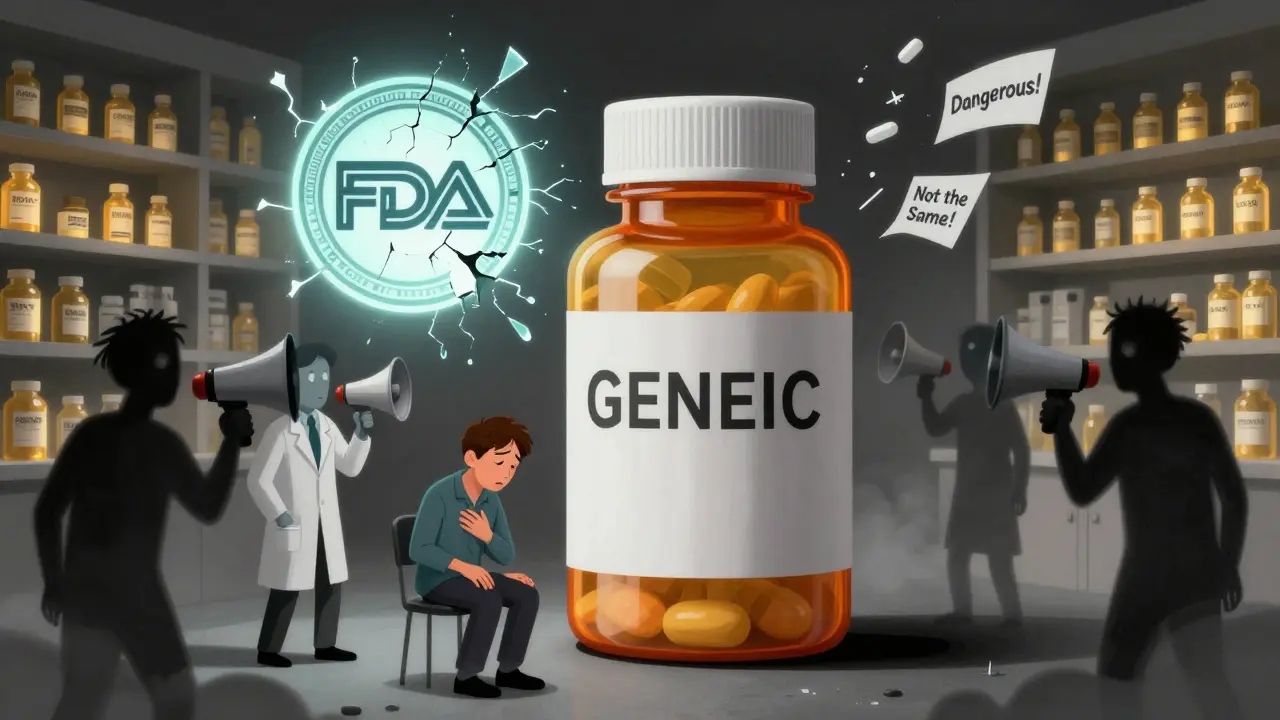
When you pick up a generic pill at the pharmacy, you expect it to work just like the brand-name version. You’re not buying a bargain because it’s cheaper-you’re buying it because it’s equivalent. But what if that assumption is built on a lie? False advertising in generic drugs isn’t just a marketing glitch-it’s a legal minefield with real health consequences.
What Counts as False Advertising in Generics?
False advertising in generic pharmaceuticals happens when companies mislead patients and doctors about how their drugs compare to brand-name versions. It’s not just about lying. It’s about implying things that aren’t true. For example:- Claiming a generic drug is "just as good" without FDA-confirmed therapeutic equivalence
- Using visuals or language that makes the generic look identical to the brand-name drug
- Saying "FDA Approved" when the product only has "FDA Clearance"-a critical difference
- Implying that a generic is unsafe or less effective to push patients toward more expensive brands
The FDA doesn’t allow generic manufacturers to say their drug is "better" or "more effective" unless they’ve run head-to-head clinical trials. But some ads slip through by using emotional language: "Why risk your health with a knockoff?" or "Doctors trust the original." These aren’t facts-they’re psychological tricks.
Legal Framework: What Laws Are Being Broken?
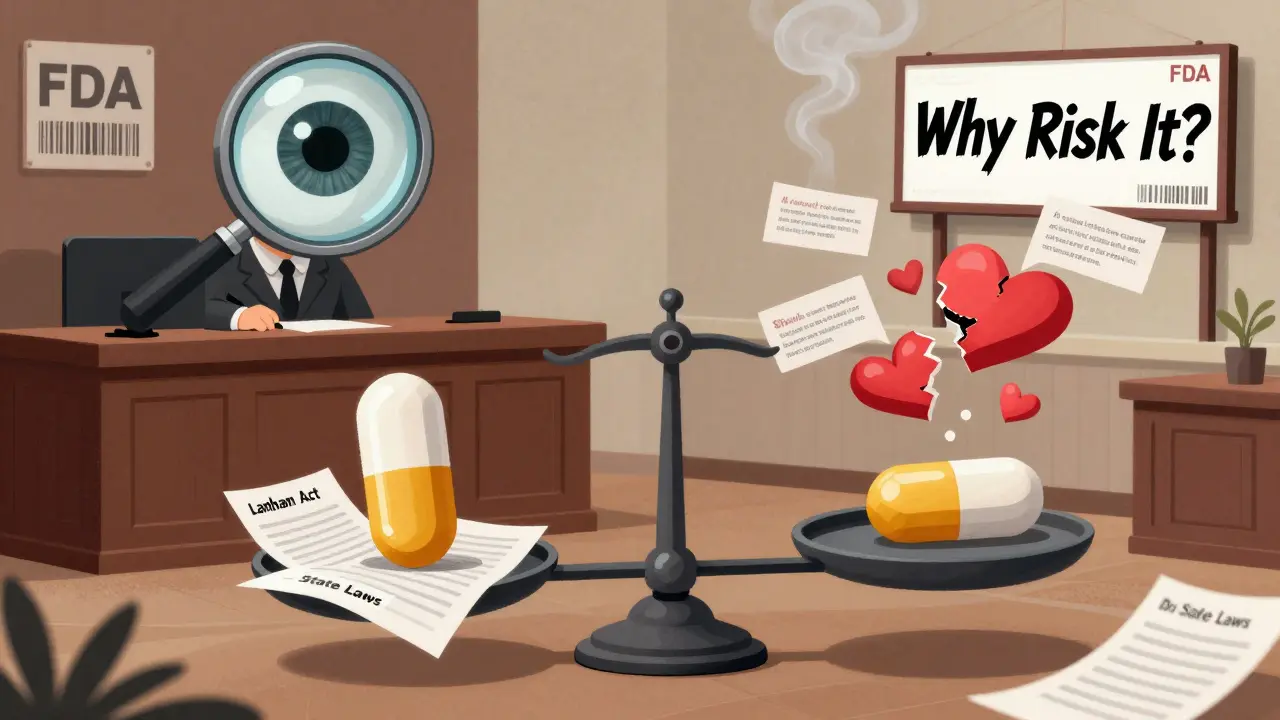
Three major laws govern this space in the U.S.:- The Federal Food, Drug, and Cosmetic Act (FD&C Act) - The core law that says drug ads must be truthful and not misleading. It’s enforced by the FDA.
- The Lanham Act - This is where competitors sue each other. If a generic company falsely claims its drug is equivalent to a brand-name product, the brand-name maker can sue for lost sales.
- State consumer protection laws - Places like New York and California have their own rules. New York’s General Business Law § 349 lets courts award triple damages and up to $1,000 per violation.
In September 2025, the White House issued a presidential memorandum directing the Department of Health and Human Services to crack down on deceptive ads that "advantage expensive drugs over cheaper generics." That’s not a suggestion-it’s a mandate. The FDA has since sent out 100 cease-and-desist letters targeting misleading comparisons between brand and generic drugs.
How Generics Are Approved: Bioequivalence Isn’t a Marketing Term
Here’s the technical truth: A generic drug must prove it’s bioequivalent to the brand-name drug. That means:- It delivers the same active ingredient
- It absorbs into the bloodstream at the same rate and amount
- Its concentration stays within 80%-125% of the brand-name drug’s levels
This isn’t a guess. It’s measured through blood tests in healthy volunteers. If a drug falls outside that range, it doesn’t get approved. But here’s the catch: bioequivalence doesn’t always mean therapeutic equivalence. For drugs with a narrow therapeutic index-like levothyroxine (thyroid), warfarin (blood thinner), or phenytoin (seizure)-small differences can cause real harm. That’s why doctors sometimes prefer to keep patients on the same brand.
Yet, some ads imply that all generics are interchangeable. That’s misleading. The FDA requires manufacturers to clearly state: "This is a generic drug" and name the reference listed drug. Skip that, and you’re breaking the rules.
What Happens When Ads Go Wrong?
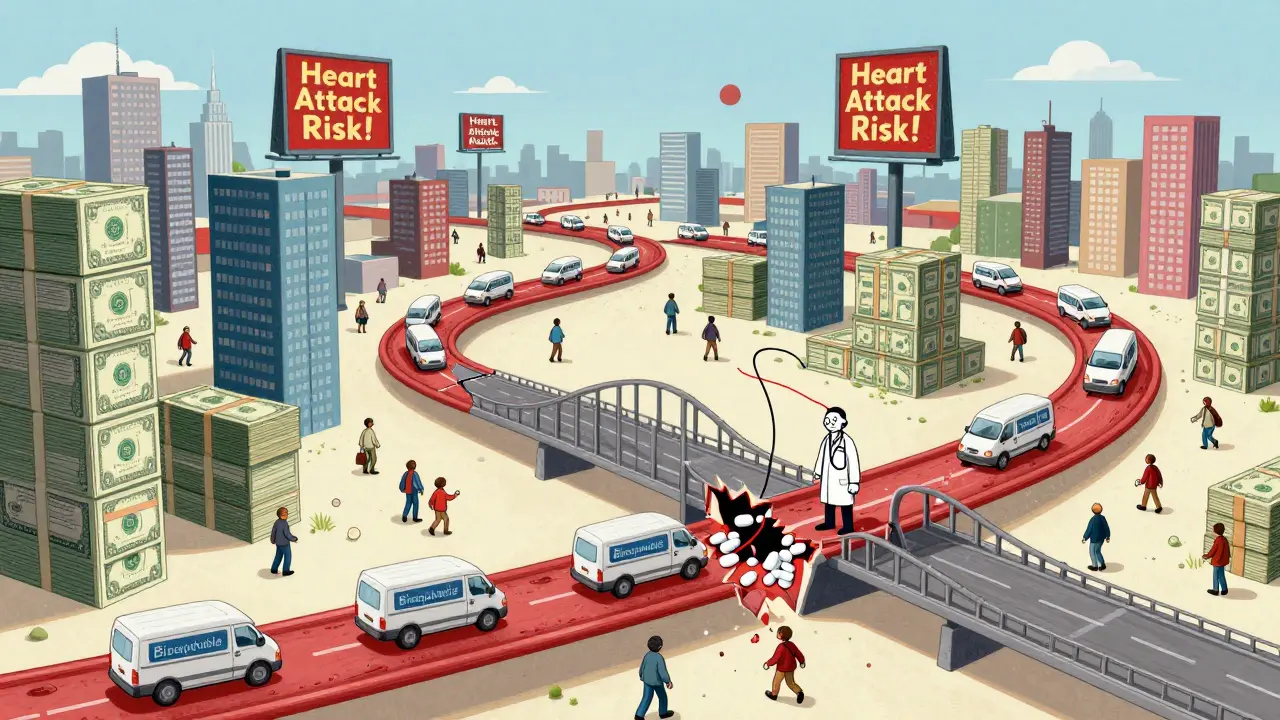
The consequences aren’t just legal-they’re medical.In 2024, the FDA reviewed 1,247 patient complaints. Of those, 32% came from people who stopped taking their medication after seeing ads that falsely claimed generics were dangerous. One Reddit thread from March 2025 showed patients refusing levothyroxine generics because of an ad that said, "Generic thyroid meds cause heart attacks." The FDA has confirmed these generics are safe and bioequivalent. But fear doesn’t care about data.
Patients who stopped their meds ended up with uncontrolled thyroid levels, hospital visits, and even heart complications. Meanwhile, the same ads were pushing them toward more expensive brand-name versions-often at three or four times the cost.
Consumer surveys by the National Community Pharmacists Association found that 41% of patients are confused about whether generics are truly equivalent. That confusion isn’t accidental-it’s engineered.
How Companies Stay Compliant
Big generic manufacturers like Teva, Sandoz, and Mylan have entire teams just for compliance. These teams include:- Regulatory affairs specialists (minimum 5 years FDA experience)
- Legal counsel familiar with Lanham Act cases
- Medical writers who know exactly what words are allowed
- Marketing reviewers who check every visual and tone
They follow strict guidelines like the FDA’s 2023 Guidance for Industry: "Disclosures in Drug Advertising and Labeling." That document says risk information must be presented in at least 14-point font with 50% contrast. In digital ads, that’s harder than it sounds. Many platforms auto-resize text. If your warning disappears on a mobile screen, you’re non-compliant.
Compliance costs average $2.1 million per year for major generic makers. Smaller companies? Many don’t have the budget. That’s why 83% of the top 25 generic manufacturers are compliant-but only 47% of smaller ones are.
Where the System Is Still Broken
The biggest loophole? The "adequate provision" rule from 1997. It let companies say: "For complete risk information, visit [website]." That meant TV and radio ads could air without ever mentioning side effects. In September 2025, the FDA announced it was closing this loophole. Now, every ad-digital, TV, radio-must include all major risks right in the message.Another issue: inconsistent state laws. Florida bans ads from using government logos or terms like "health alert." California requires proof for every cost-saving claim. If you’re running a national campaign, you need 50 different versions. Most companies don’t bother. They gamble. And when they lose, they get sued.
What You Should Do as a Patient
If you’re on a generic drug:- Don’t stop taking it because of an ad. Talk to your pharmacist or doctor first.
- Ask: "Is this generic approved as bioequivalent to the brand?"
- Check the FDA’s Drugs@FDA database. Type in your drug’s name. Look for "ANDA" approval-it means it’s a generic.
- If you see an ad that seems misleading, report it to the FDA at fda.gov/reportadverseevent.
For seniors on fixed incomes, generic drugs save an average of 78% on medication costs. That’s not hype. That’s real savings. But it only works if the ads telling you about them are honest.
What’s Next?
The FDA and FTC are moving toward tighter coordination. Draft legislation called H.R. 4582, the "Transparency in Drug Advertising Act," proposes standardized risk disclosure rules across all media. By 2027, enforcement actions are expected to rise 35% annually.Companies that invest in compliance-like Pfizer’s $45 million advertising review system-are building long-term trust. Those cutting corners? They’re just delaying a lawsuit. GlaxoSmithKline paid $3 billion in 2012 for misleading ads. History shows it’s cheaper to get it right the first time.
Can a generic drug be sued for false advertising?
Yes. Under the Lanham Act, brand-name drug manufacturers can sue generic companies if they believe misleading ads caused consumers to switch away from their product. In 2025, multiple lawsuits were filed over ads that implied generics were less safe or less effective without clinical proof.
Are all generic drugs FDA-approved?
Yes-if they’ve gone through the Abbreviated New Drug Application (ANDA) process. The FDA requires them to prove bioequivalence before approval. But some products are sold as "over-the-counter" or "dietary supplements" and never go through this process. Always check the FDA’s Drugs@FDA database to confirm approval status.
Can I trust a generic drug for a narrow therapeutic index medication?
Generally, yes. The FDA requires strict bioequivalence standards for drugs like levothyroxine, warfarin, and phenytoin. But because small differences matter, your doctor may prefer you stay on the same version-brand or generic-once you’ve stabilized. Never switch without medical advice.
What should I do if I see a misleading generic drug ad?
Report it to the FDA through their MedWatch portal at fda.gov/reportadverseevent. You can also file a complaint with the FTC at reportfraud.ftc.gov. Include the ad’s name, where you saw it, and what made you think it was misleading.
Do state laws differ from federal rules on generic drug ads?
Yes. California, New York, and Florida have stricter rules than federal law. For example, California requires proof for every cost-saving claim, while Florida bans ads from using government logos. Companies running national campaigns must comply with all 50 sets of rules-or risk lawsuits.
False advertising in generics isn’t just about money-it’s about trust. When patients are misled, they stop taking life-saving meds. When companies cut corners, they risk lawsuits, fines, and public backlash. The system is designed to protect you. But only if you know how to spot the lies.



10 Comments
Bro this is wild. I saw an ad for a generic thyroid med that looked like it was made in a basement. Said "FDA approved" but the logo was blurry. I called my pharmacist and they said it was legit but the ad was sketchy as hell. People are getting scared off cheap meds because of fake fear tactics. We need to shut this down./p>
You think this is bad? Wait till you find out the FDA lets companies use the same pill shape as brand names to trick people into thinking they're identical. It's not false advertising-it's psychological warfare. They're exploiting trust. And don't even get me started on how the government *lets* this happen because Big Pharma owns Congress. You think this is about safety? Nah. It's about profit. The system is rigged. Wake up./p>
Y'all need to chill. Generics save lives. I'm on a generic blood thinner and I'm alive. The FDA doesn't approve junk. If your doctor says it's good, take it. Stop scrolling and start living. Also-report the shady ads, don't just rage about them. #TakeYourMedication/p>
so like... bioequivalence is 80-125% right? but like... what if your body is just... sensitive? like i had a friend who went into seizures after switching generics. not because the drug was bad. but because his brain is a snowflake. so maybe the system is technically correct... but human bodies aren't math. we're messy. and that's why we need more nuance. not just 'it's approved' and move on./p>
As someone who has worked in public health across three continents, I must emphasize: access to affordable medication is a fundamental human right. Misleading advertising not only violates legal norms but erodes the social contract between patients and the pharmaceutical system. The ethical imperative here transcends regulatory compliance-it demands cultural accountability. We must educate, not alarm./p>
I just want to say-this whole thing makes me so sad. I have an elderly neighbor who stopped taking her generic levothyroxine because of an ad that said "don't gamble with your thyroid." She ended up in the hospital. She didn't even know what bioequivalence meant. She just trusted the system. And then someone used her fear to sell her a $200 pill. That's not capitalism. That's cruelty. And it's happening every single day. We need to stop pretending this is just about law. It's about dignity./p>
i just take what my dr prescribes and dont overthink it lol. if it works dont fix it. also i report sketchy ads cause why not. its free. and i dont trust anything that says "doctors trust the original" like bro you're a pill with a logo not a medical expert/p>
You know what's funny? The FDA says generics are equivalent, but they never mention that the inactive ingredients can vary wildly-like dyes, fillers, binders. Some people are allergic to cornstarch. Some have lactose intolerance. But no one talks about that. They just say "bioequivalent" like it's magic. It's not. It's chemistry. And chemistry doesn't care about your feelings. So yeah, trust the system? Nah. Trust your body. And if you're on a narrow index drug? Stay on one brand. Period./p>
I love how we treat pharmaceuticals like they're immune to marketing psychology. Of course they're using color psychology, font weight, and emotional triggers. That's advertising 101. But here's the twist: if the *system* is designed to protect us, why are we the ones who have to be vigilant? Why isn't there a standardized, government-run ad transparency portal? We shouldn't have to Google FDA databases just to not die. This isn't freedom. It's a burden./p>
people who take generics are just lazy. if you cant afford the real thing you shouldnt be taking meds at all. and if you do then you deserve what happens. also the FDA is full of corruption. they approve junk because they get bribes. i know this for a fact. my cousin works at a lab and he says they change the data. so yeah. dont trust anyone. not even your doctor. youre on your own/p>