
Transferring a prescription shouldn’t feel like a game of telephone. One wrong digit on a label, one missed refill, one truncated data field-and you could be giving someone the wrong dose of a powerful drug. This isn’t hypothetical. In the U.S., medication errors linked to poor labeling or transfer mistakes contribute to 7,000 deaths every year. And it’s not just about human error. Outdated systems, mismatched state rules, and confusing labels are making this problem worse.
Why Prescription Transfers Are Risky
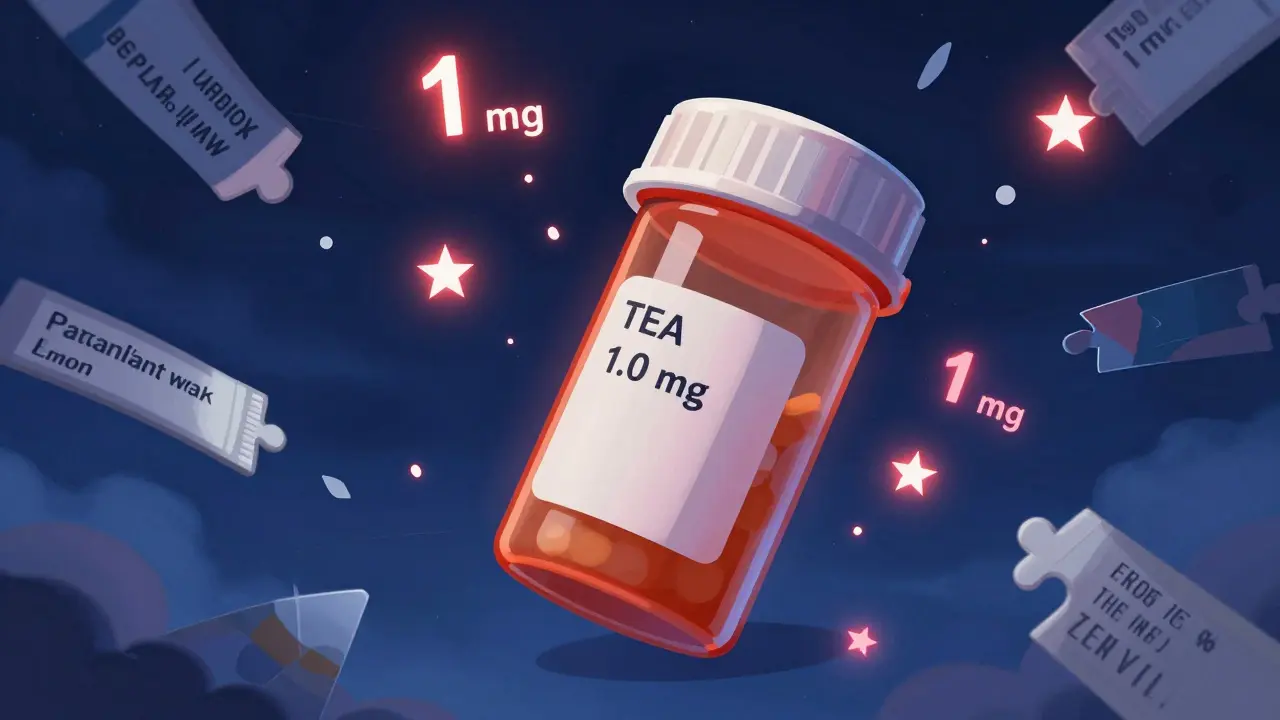
When you move a prescription from one pharmacy to another, you’re not just moving a piece of paper. You’re moving a legal document with strict rules. The DEA’s August 2023 rule changed everything for controlled substances. Before that, Schedule II prescriptions-like oxycodone or fentanyl-could never be transferred between pharmacies. Now, they can be transferred once, but only electronically. No faxes. No phone calls. No handwritten notes. That sounds like progress. But here’s the catch: if even one piece of data is missing or wrong during the transfer, the entire prescription becomes invalid. No refills. No fill. Nothing. And if the label on the bottle says “1.0 mg” instead of “1 mg”? That’s a red flag. Trailing zeros like that have caused tenfold dosing errors in the past. The FDA has documented 327 such errors between 2018 and 2022.What Must Be on Every Prescription Label
The label on your pill bottle isn’t just a suggestion. It’s legally required to include these exact details:- Patient’s full name
- Drug name (no abbreviations like “HCTZ” or “MOM”)
- Strength in metric units (e.g., “5 mg,” not “5 mg” or “.005 g”)
- Dosage form (tablet, capsule, liquid)
- Quantity dispensed
- Directions for use (e.g., “Take one tablet by mouth twice daily”)
- Prescriber’s name
- Prescription number
- Date issued
- Number of refills allowed
- Pharmacy name, address, and phone number
Electronic Transfers Are the Only Safe Way for Controlled Substances
If you’re transferring a Schedule II drug, you have one shot. And it has to be electronic. The DEA requires the transfer to happen through systems that follow the NCPDP SCRIPT 2017071 standard. These systems keep every piece of data intact: original prescription date, refill history, remaining refills, and the names and DEA numbers of both pharmacists involved. Why does this matter? Because fax transfers have only 82.3% accuracy. Phone transfers? Just 76.1%. Electronic transfers? 98.7%. That’s not a small difference-it’s the difference between safety and disaster. For Schedule III-V drugs (like codeine or anabolic steroids), you can transfer multiple times, as long as refills remain. But even then, electronic is still the best option. Paper or phone transfers increase the risk of miscommunication. One pharmacist says “two refills left.” Another hears “three.” Now someone’s running out of pain meds-or worse, getting too much.
What Happens When Systems Don’t Talk to Each Other
Here’s the ugly truth: not all pharmacy software plays nice. A 2022 survey by the National Community Pharmacists Association found that 18% of pharmacies reported data truncation during transfers. That means names get cut off. Dosages disappear. Refill counts vanish. Independent pharmacies, especially in rural areas, are hit hardest. Only 41% of rural pharmacies use certified electronic transfer systems, compared to 87% of big chains. That’s why patients in small towns often face 3-5 day gaps in their medication. They request a transfer, but the system can’t handle it. They wait. They get sick. They skip doses. And it’s not just tech. Staff turnover is a silent killer. Pharmacists and techs need about 8.5 hours of training just to get compliant with the 2023 DEA rules. But if someone leaves and a new person steps in? That training resets. A 2023 study found pharmacies need retraining every 6.2 months on average just to keep up with system updates.What Patients Can Do to Avoid Mistakes
You’re not powerless in this process. In fact, you’re the first line of defense.- Don’t just ask for a transfer-confirm the new pharmacy can fill it. Especially for Schedule II drugs. They can only be filled once. If the pharmacy doesn’t have it in stock, you’re stuck.
- Check the label when you pick it up. Does the drug name match what your doctor prescribed? Is the strength written clearly? Are there any trailing zeros? If something looks off, ask.
- Ask for a printed copy of the label. Even if you get it electronically, ask for a paper version. You can compare it to your old prescription.
- Don’t let your doctor use abbreviations. “HCTZ” for hydrochlorothiazide? “MOM” for magnesium oxide? Tell them to write it out. Full names prevent confusion.
The Future: Standardized Labels and Real-Time Checks
By 2025, the FDA’s new Patient Medication Information (PMI) rule will go into full effect. This means every prescription label will follow a standardized format-no more guessing what the doctor meant. Labels will be printed on paper by default (unless you ask for digital), and they’ll include warnings, side effects, and storage instructions in plain language. Pharmacies will also be required to use automated systems that scan the label before it leaves the counter. These systems check for:- Correct drug name and strength
- Proper use of metric units
- Presence of leading zeros, absence of trailing zeros
- Clear directions
- Matching patient and prescriber info
Bottom Line: Accuracy Isn’t Optional
Prescription transfers and label accuracy aren’t about paperwork. They’re about survival. A misplaced decimal. A missing refill count. A truncated name. These aren’t small oversights. They’re life-or-death errors. The rules are clear. The tech exists. The data proves it: electronic transfers with standardized labels save lives. But it only works if everyone plays their part-pharmacists, doctors, patients, and systems. Start today. When you transfer a prescription, ask: “Is this electronic?” “Are all the details intact?” “Can you show me the label before I leave?” Don’t assume it’s right. Check it. Speak up. Your life might depend on it.Can I transfer a Schedule II prescription more than once?
No. Under the DEA’s 2023 rule, Schedule II controlled substances (like oxycodone or fentanyl) can only be transferred once between pharmacies. After that, the prescription is considered filled and cannot be transferred again. You must get a new prescription from your prescriber if you need more.
Why can’t I use a fax to transfer my prescription?
Faxes are not allowed for Schedule II prescriptions because they’re prone to errors-missing info, smudged text, wrong numbers. Even for Schedule III-V drugs, faxes have only 82.3% accuracy compared to 98.7% for electronic transfers. The DEA requires electronic transfers to ensure all data stays intact and unaltered.
What happens if my prescription label says ‘1.0 mg’?
That’s a dangerous error. ‘1.0 mg’ implies precision to the tenth of a milligram, which can lead to a tenfold overdose if misread as ‘10 mg.’ The FDA and NCCMERP require doses to be written as ‘1 mg’ for whole numbers. Always ask the pharmacist to correct it before leaving the pharmacy.
Can I transfer my prescription to any pharmacy in another state?
Yes, but only if the pharmacy uses a DEA-compliant electronic system. The 2023 DEA rule standardized transfers across all 50 states for controlled substances. However, state rules may still require additional documentation on the label or record. Always confirm the receiving pharmacy can legally accept your transfer.
How do I know if my pharmacy uses safe transfer systems?
Ask them directly: ‘Do you use NCPDP SCRIPT 2017071 or later for electronic transfers?’ Chain pharmacies and most modern systems do. Independent pharmacies may vary. If they say they use fax or phone for controlled substances, that’s a red flag-especially for Schedule II drugs.
What should I do if I get the wrong medication after a transfer?
Stop taking it immediately. Call the pharmacy and ask them to verify the prescription details. If they confirm an error, contact your prescriber and report the incident to your state pharmacy board. Also, report it to the FDA’s MedWatch program. Document everything-labels, receipts, conversations.



14 Comments
lol so now i gotta be a pharmacist to fill my own meds? 🤦♀️
/p>Electronic transfers using NCPDP SCRIPT 2017071 are non-negotiable for Schedule II. The 98.7% accuracy rate isn’t a suggestion-it’s the baseline for clinical safety. Fax and phone transfers introduce unacceptable entropy into the medication chain. Every decimal point matters. Every refill count is a legal boundary. If your pharmacy still uses fax for oxycodone, you’re playing Russian roulette with pharmacokinetics.
/p>While the regulatory framework outlined is commendable from a theoretical standpoint, one must consider the epistemological limitations of algorithmic standardization in complex human systems. The imposition of rigid orthographic conventions-such as the prohibition of trailing zeros-presumes a uniformity of cognitive processing among healthcare providers and patients alike, which is demonstrably false. The real issue lies not in formatting, but in the ontological disjunction between bureaucratic mandates and lived clinical realities.
/p>This is actually super important. I’ve seen people skip doses because transfers got lost. Small pharmacies in rural India struggle with this too. Maybe tech companies should build simpler tools for places with spotty internet. Not everyone’s in a big city with Epic systems.
/p>If we’re talking about saving lives, then this isn’t just policy-it’s a moral imperative. Standardized labels, electronic transfers, zero tolerance for sloppy decimals. We owe it to every patient who’s ever been scared to take their meds because they didn’t trust the label. Let’s push for this everywhere. Not just in the U.S.-globally.
/p>…and yet, the FDA’s PMI rule…? (sigh)… is, of course, merely the latest in a long line of performative regulatory gestures-designed not to improve safety, but to satisfy the bureaucratic aesthetic of ‘accountability’… while leaving the actual systemic rot-pharmaceutical monopolies, EHR vendor lock-in, and the commodification of care-completely untouched…
/p>so like… the gov’t says ‘no trailing zeros’ but then the apps still show ‘1.0 mg’?? and the pharmacists just shrug?? i think this whole thing is a scam. they want us to pay more for meds and then blame us when we mess up the dose. also… did you know they put tracking chips in pills now? just saying.
/p>Good info. I’ve been transferring my meds for years. Never checked the label until now. I’ll start asking next time. Thanks.
/p>Let’s be real: 7,000 deaths a year? That’s a rounding error compared to the 100,000+ killed by pharmaceutical companies’ marketing tactics. You’re blaming the pharmacy for a system designed to profit from dependency. Fix the incentives, not the decimal points. This is a Band-Aid on a hemorrhage.
/p>Western medicine is a colonial tool. Why must we follow American DEA rules? In India, we’ve been safely transferring prescriptions for generations using handwritten notes and trusted relationships. Now you want to force us into your digital surveillance state? This isn’t safety-it’s cultural erasure. Your ‘98.7% accuracy’ is just a statistic masking your arrogance. We don’t need your algorithms. We need our traditions.
/p>There is no excuse for the continued use of fax machines in healthcare. The failure to adopt electronic transfers is not merely negligent-it is criminally reckless. Every time a pharmacist relies on verbal communication for a controlled substance, they are complicit in a preventable public health failure. The fact that this is even a debate reveals a profound institutional decay.
/p>It is not sufficient to merely state that electronic transfers are superior; one must interrogate the underlying infrastructure that enables them. The NCPDP SCRIPT standard, while technically robust, is predicated upon proprietary software ecosystems that are neither interoperable nor transparent. The 98.7% accuracy rate is a cherry-picked metric derived from controlled pilot studies in urban chain pharmacies. The reality for independent and rural providers-particularly those lacking capital to upgrade legacy systems-is one of systemic exclusion. The regulatory framework, while well-intentioned, functions as a de facto barrier to entry, privileging corporate pharmacy chains and further marginalizing community providers. The solution is not more rules, but equitable investment in open-source, interoperable pharmacy infrastructure.
/p>they’re just trying to scare us so we’ll buy more apps and pay for ‘premium’ pharmacy services. i got my pain meds transferred via fax last week. no one died. chill out.
/p>Thank you for the comprehensive overview. It is imperative that public health policy be grounded in empirical data, as this post demonstrates. The statistical disparity between electronic (98.7%) and fax (82.3%) transfer accuracy is not merely significant-it is ethically indefensible. I urge all healthcare institutions, particularly those serving vulnerable populations, to prioritize infrastructure investment in certified electronic systems. The dignity of patient safety is not a privilege-it is a right.
/p>