
Antidepressant Treatment Tracker
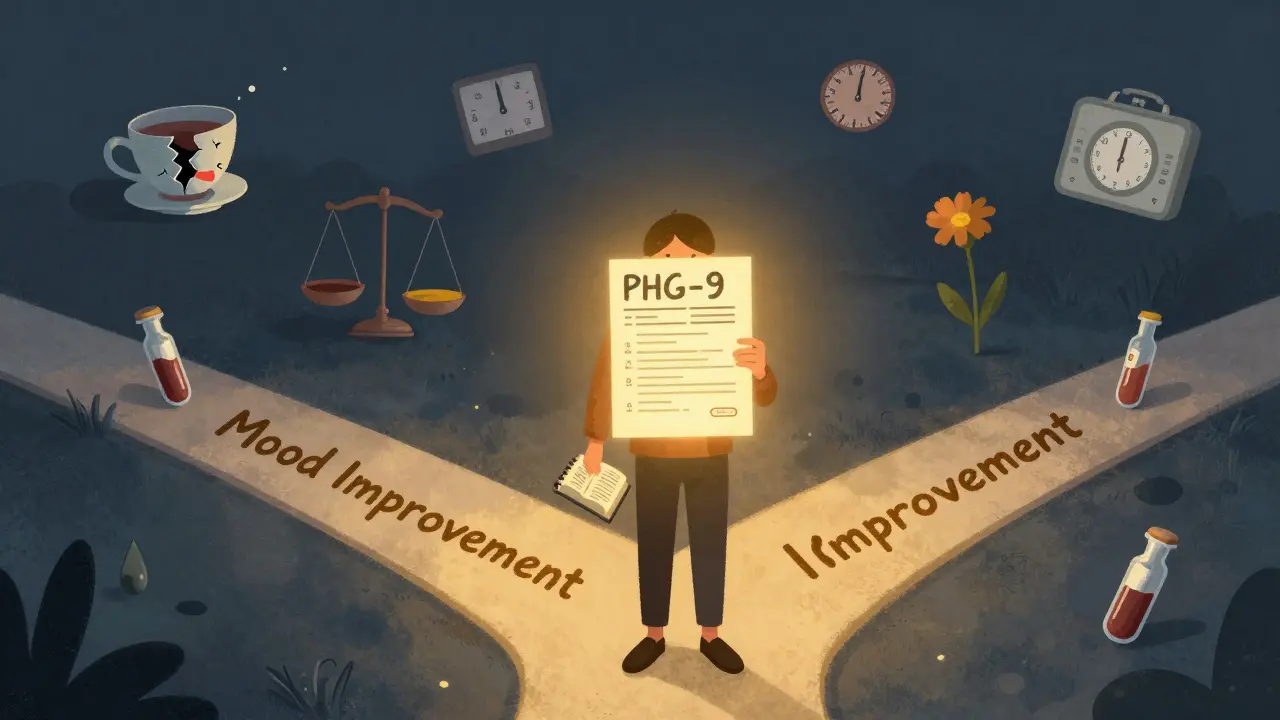
PHQ-9 Depression Tracking
Track your depression symptoms using the PHQ-9 (9-question survey)
Side Effect Tracker
Track your side effects to monitor treatment impact
When you start an antidepressant, you’re not just taking a pill-you’re entering a balancing act. On one side, you hope for relief: better sleep, less crying, the return of motivation. On the other, you brace for side effects-dry mouth, weight gain, sexual dysfunction, nausea, or worse. The real question isn’t whether the drug works, but whether it works well enough to outweigh what it takes from you.
Here’s the truth most doctors won’t tell you: if you’re not tracking both your mood and your side effects, you’re flying blind. A 2022 review found that 74% of people on antidepressants experience at least one side effect. And yet, nearly 70% of patients say their providers never use any formal tool to measure how they’re doing. That’s not care. That’s guesswork.
What Success Actually Looks Like
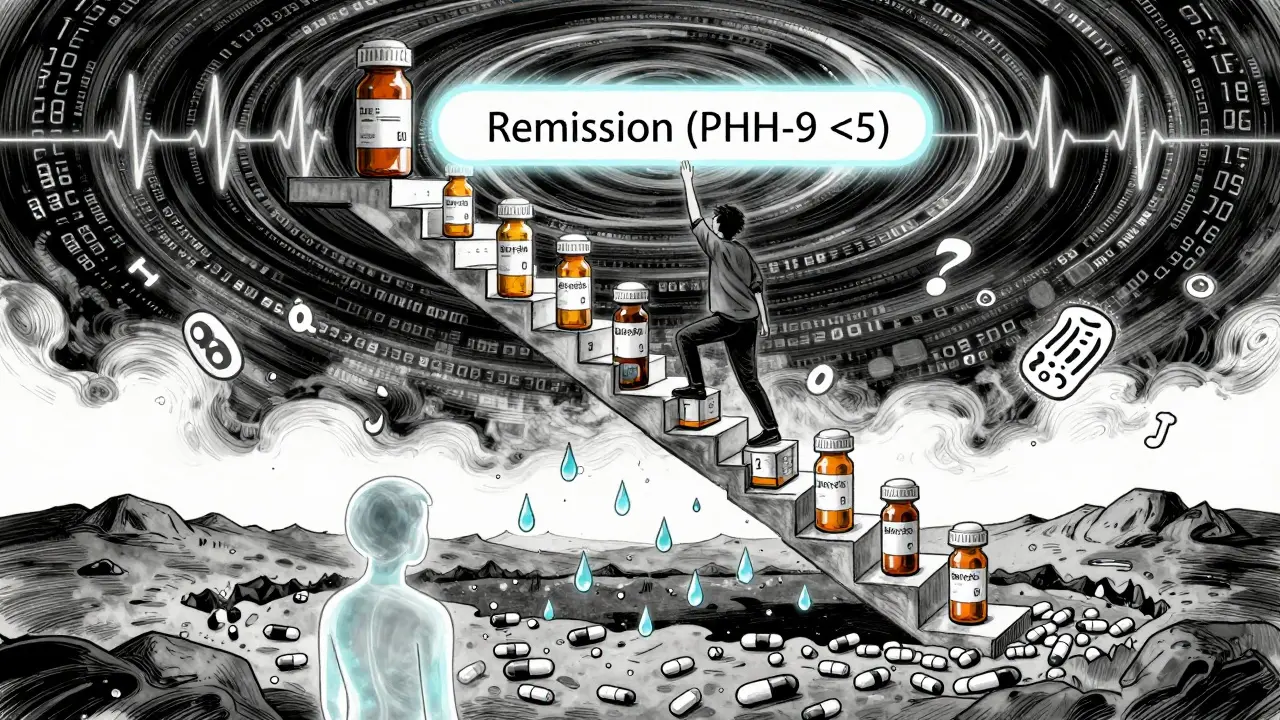
Success isn’t just feeling ‘a little better.’ It’s hitting specific targets. The PHQ-9, a simple 9-question survey, is the most widely used tool in clinics today. A score of 20 or higher means severe depression. A drop of 50% or more by week six? That’s a sign the drug is working. Remission? That’s a score below 5. It’s not vague-it’s measurable.
But here’s where people get stuck. Some feel ‘less sad’ but still can’t get out of bed. Others stop crying but can’t enjoy anything. That’s not remission-that’s partial response. And if your doctor only asks, ‘How are you feeling?’ once a month, they’re missing the real story. You need numbers. You need consistency. You need to track.
Side Effects Are Not Just ‘Normal’
‘It’s just the medication,’ they say. But that’s not an answer. It’s an excuse. Sexual dysfunction affects 61% of people on SSRIs. Weight gain? Common with mirtazapine and paroxetine. Insomnia? Fluoxetine can cause it. Nausea? Often hits in the first two weeks. These aren’t minor inconveniences-they’re reasons people quit.
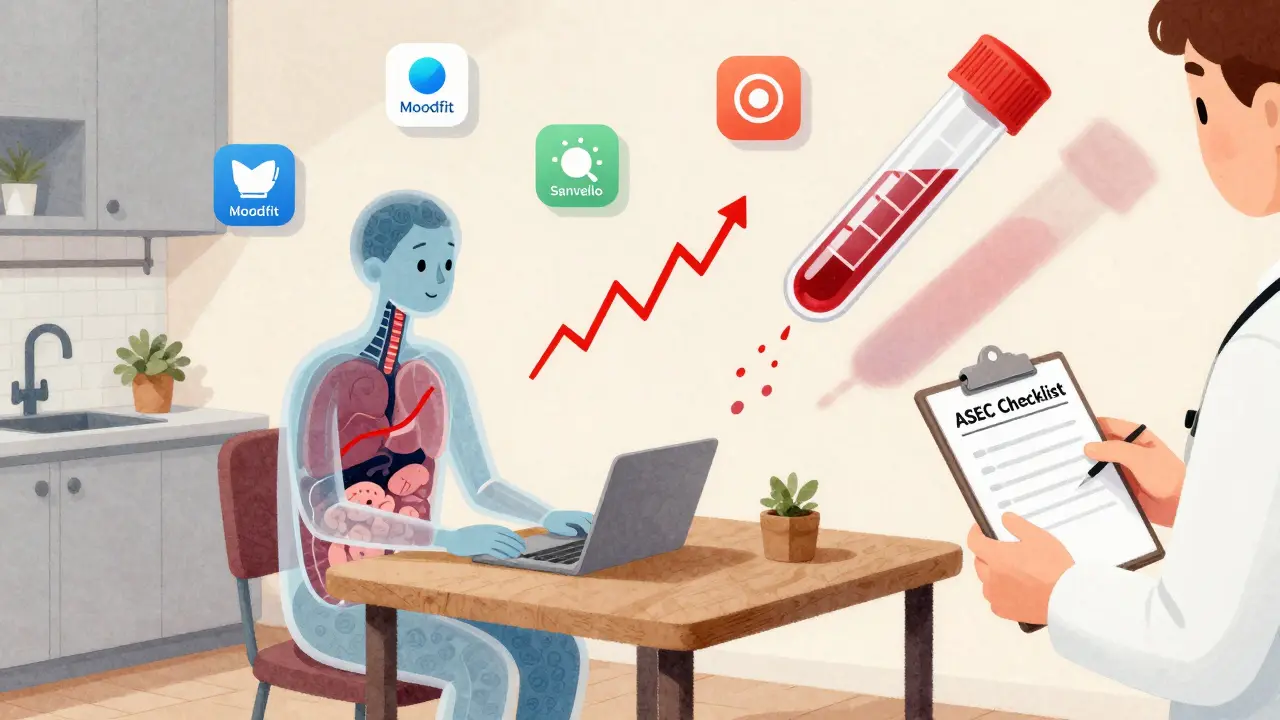
The Antidepressant Side-Effect Checklist (ASEC) tracks 15 key issues on a scale from 0 to 4. If your dry mouth is a 3, your tremor is a 2, and your libido is a 0-you’ve got a problem. But unless you write it down, your doctor might never know. Most patients don’t mention side effects unless asked directly. And even then, they often downplay them.
One patient on Reddit wrote: ‘I stopped sertraline because I couldn’t have sex for 11 months. My doctor said, ‘It’s common.’ No one offered alternatives. No one said, ‘Let’s try something else.’’ That’s the gap. Side effects aren’t just tolerated-they’re ignored.
How to Track Your Own Progress
You don’t need a PhD to monitor your treatment. You just need a notebook or a free app. Here’s how to do it right:
- Start with the PHQ-9-print it or use the free version in apps like Moodfit or Sanvello. Fill it out every Sunday. Don’t skip weeks.
- Track side effects daily-use a 1-10 scale for each: sleep, energy, appetite, sex drive, nausea, dizziness. Keep it simple.
- Record life changes-did you go to work 3 days this week? Call a friend? Take a shower? These matter more than scores sometimes.
- Bring your logs to every appointment-not just the pill bottle. Show your doctor the numbers. Say: ‘My PHQ-9 dropped from 21 to 14, but my libido is at 1. What do we do now?’
A 2021 JAMA Network Open study found patients who tracked their symptoms weekly were 43% more satisfied with treatment. Why? Because they had data. They weren’t guessing. They weren’t apologizing for not feeling ‘better.’ They had proof.
When the Numbers Don’t Match How You Feel
Some people feel better before their PHQ-9 score drops. Maybe they’re smiling again. Maybe they’re cooking dinner. Maybe they’re not crying every morning. That’s real progress. But if your doctor only sees a score of 16 and says, ‘Still moderate depression,’ they’re missing the human part.
That’s why experts like Dr. Andrew Nierenberg warn against over-relying on scales. Numbers are tools, not rules. If you’re functioning-working, connecting, sleeping-your score might lag. Tell your doctor that. Say: ‘I still score a 15, but I went to my sister’s wedding. That didn’t happen three months ago.’
Conversely, if your score dropped but you feel worse-more anxious, numb, detached-don’t ignore it. That’s a red flag. Some antidepressants reduce sadness but kill emotion. That’s not healing. That’s suppression.
Therapeutic Drug Monitoring: The Hidden Key
Did you know your blood level of sertraline could be half of what’s needed-even if you’re taking the right dose? That’s not your fault. It’s how your body processes the drug. Genetic differences, liver function, even what you eat can change how much medicine actually reaches your brain.
Therapeutic Drug Monitoring (TDM) measures exact drug levels in your blood. A 2022 study found that 50-70% of people who don’t respond to antidepressants have subtherapeutic levels. That means they’re taking the right pill, at the right dose-but their body isn’t absorbing it properly.
It’s not routine. Only 8-12% of prescriptions include TDM. But if you’ve tried two or more drugs without success, ask for it. A simple blood test-$50 to $150-can tell you if your dose is too low, too high, or just right. No more guessing. No more waiting six months to switch.
What to Do If Nothing’s Working
If you’ve been on the same antidepressant for 12 weeks and your PHQ-9 hasn’t dropped by 50%, it’s time to talk about change. Don’t wait. Don’t ‘give it more time.’ That’s not patience-it’s neglect.
Here’s your roadmap:
- Week 0-4: Assess side effects. If they’re unbearable, talk about switching or adding a medication to counter them.
- Week 6: Check PHQ-9. If reduction is less than 30%, your current drug is likely not working.
- Week 8-12: If no meaningful improvement, consider switching classes (e.g., from SSRI to SNRI) or adding therapy.
- After 12 weeks: If still no response, request TDM or pharmacogenetic testing (like GeneSight). One 2023 JAMA Psychiatry study showed these tests cut side effects by 30% and boosted response by 20%.
There’s no shame in trying another drug. Antidepressants aren’t one-size-fits-all. What works for your neighbor might make you feel worse. That’s biology, not failure.
The Bottom Line: You’re Not Just a Patient. You’re a Partner.
Antidepressants aren’t magic. They’re tools. And like any tool, they need feedback to work well. If you’re not tracking your mood and side effects, you’re leaving your recovery to chance.
Start today. Print the PHQ-9. Write down your side effects. Bring your notes to your next appointment. Ask: ‘Is my dose right? Are we measuring progress? What’s the plan if this doesn’t work?’
You don’t need to suffer in silence. You don’t need to accept side effects as ‘normal.’ You don’t need to wait six months to find out if this is working. You have the power to ask for data. To demand clarity. To insist on a plan that doesn’t just treat depression-but restores your life.
The science is clear. The tools exist. The only thing missing is your voice.
How often should I take the PHQ-9 when starting an antidepressant?
You should complete the PHQ-9 every two weeks during the first 8-12 weeks of treatment. This gives your doctor enough data to spot trends. After that, monthly checks are usually enough if you’re stable. But if you feel worse or side effects flare up, take it again immediately and share the results.
Can I use a phone app instead of paper scales?
Yes, apps like Moodfit and Sanvello are valid for tracking mood and side effects. They’re convenient and help you stay consistent. But don’t rely on them alone. Make sure your doctor reviews your data. Some apps don’t track side effects well, and their accuracy isn’t as high as paper-based scales. Use them as a helper-not a replacement-for clinical tools.
What if my doctor won’t use standardized scales?
Bring your own. Print the PHQ-9 and ASEC forms. Say: ‘I’ve been tracking my symptoms and side effects, and I’d like to use these to guide our decisions.’ Many doctors are open to it-they just never asked you to do it. If they refuse, consider finding a provider who uses Measurement-Based Care. Your recovery depends on it.
Is it normal to feel worse before feeling better?
Some people do. Especially in the first two weeks, antidepressants can increase anxiety, insomnia, or nausea before improving mood. That’s common-but not universal. If you feel severely worse-like having suicidal thoughts, panic attacks, or extreme agitation-call your doctor immediately. That’s not a normal side effect. That’s a medical red flag.
How long should I wait before switching antidepressants?
Wait at least 4-6 weeks to see if there’s any improvement. But if your PHQ-9 hasn’t dropped by at least 30% by week 6, or if side effects are unbearable, don’t wait. Switching early can save months of unnecessary suffering. Most guidelines say: if no response by week 8-12, change course. Don’t let pride or fear stop you from trying something else.
Can I stop taking my antidepressant if I’m not feeling better?
Never stop abruptly. Even if you’re not feeling better, stopping suddenly can cause withdrawal symptoms like dizziness, brain zaps, nausea, or rebound anxiety. Talk to your doctor first. They can help you taper safely or switch to another medication. Your safety matters more than speed.
What’s the difference between side effects and depression symptoms?
Side effects come from the drug. Depression symptoms come from the illness. For example: fatigue from sertraline is a side effect. Fatigue from depression is part of the illness. But they can feel the same. That’s why tracking both separately matters. Write down: ‘I feel tired because the pill makes me tired’ vs. ‘I feel tired because nothing matters anymore.’ That distinction guides treatment.
Is pharmacogenetic testing worth it?
If you’ve tried two or more antidepressants without success, yes. Testing like GeneSight looks at how your genes process drugs. A 2023 study showed it reduced side effects by 30% and improved response rates by 20% within eight weeks. It’s not a magic bullet-but it cuts through trial and error. Most insurance doesn’t cover it yet, but the cost ($300-$500) can save you months of ineffective treatment.



11 Comments
I tried sertraline for 8 months. Lost 15 lbs, couldn't sleep, and my libido vanished. My doctor just nodded and said 'it's common.' I quit. Now I'm on bupropion and actually feel human again. No magic, just data./p>
You people are too dependent on apps and scales. Depression isn't a math problem. It's a spiritual crisis. You can't measure soul fatigue with a PHQ-9. Just pray. Or meditate. Or get outside. Simple things./p>
OMG I'M SO GLAD YOU SAID THIS!! I was on Lexapro for 14 months and my sex drive was DEAD. Like, I cried during sex because I couldn't feel anything. My doctor said 'it's just the meds' and moved on. I almost gave up on life. 😭😭😭/p>
The real issue here isn't just measurement-it's the epistemological framework of psychiatric care itself. We reduce lived, embodied suffering to quantifiable metrics because the biomedical model demands objectivity, yet the phenomenology of depression resists reduction. The PHQ-9 is a useful heuristic, but when it becomes the sole arbiter of therapeutic success, we risk erasing the subjective terrain where healing actually occurs. What if the goal isn't remission but reintegration? What if the numbness you feel after a 50% score drop isn't failure-it's the price of recalibration?/p>
Track everything. Every. Single. Day. Write it down. Bring it to your appointment. If your doctor doesn't care about your numbers they're not your doctor. I went from 21 to 4 on PHQ-9 in 10 weeks. My libido was at 1. I said 'what now' and we switched to venlafaxine. Now I'm working out. I'm laughing. I'm alive. No magic. Just data and guts./p>
TDM is underrated. I had a blood test after 3 failed meds. Turns out my sertraline level was half of what it should be. Took a tiny dose bump and boom. 6 weeks later I was cooking again. No one told me this was even a thing. Why isn't this standard?/p>
People who use apps to track their mood are just performing recovery. It's not healing. It's surveillance. You're outsourcing your inner life to a smartphone. That's not empowerment. That's digital dependency./p>
I used to think tracking was obsessive. Then I started writing down my sleep, my energy, my nausea, even if it was just '3/10' on a sticky note. My therapist said 'this is the first time you've shown up with evidence.' I cried. Because for the first time, I wasn't just 'feeling bad.' I had proof I was trying. That changed everything./p>
I was on paroxetine for 11 months. Weight gain. Dry mouth. No sex. I didn't tell anyone. I thought it was my fault. Then I read this. I switched to escitalopram. My weight dropped. My skin cleared. I started texting my mom again. I didn't know I could feel this way. Thank you for saying this out loud/p>
The pharmacokinetic variability across CYP2D6/CYP2C19 polymorphisms is non-trivial-especially in populations with high allelic diversity-and yet, the clinical paradigm remains anchored in a one-size-fits-all dosing schema that ignores interindividual metabolic variance. TDM isn't 'experimental'-it's pharmacologically rational. The fact that it's not standard of care reflects systemic inertia, not scientific merit./p>
You don't need to be perfect. Just show up. Even if you only track two things this week. Even if you write 'felt numb' on a napkin. That's enough. Your voice matters. Your data matters. You're not broken. You're just waiting for someone to ask the right question./p>