
What Happens to Your Skin During Radiation Therapy?
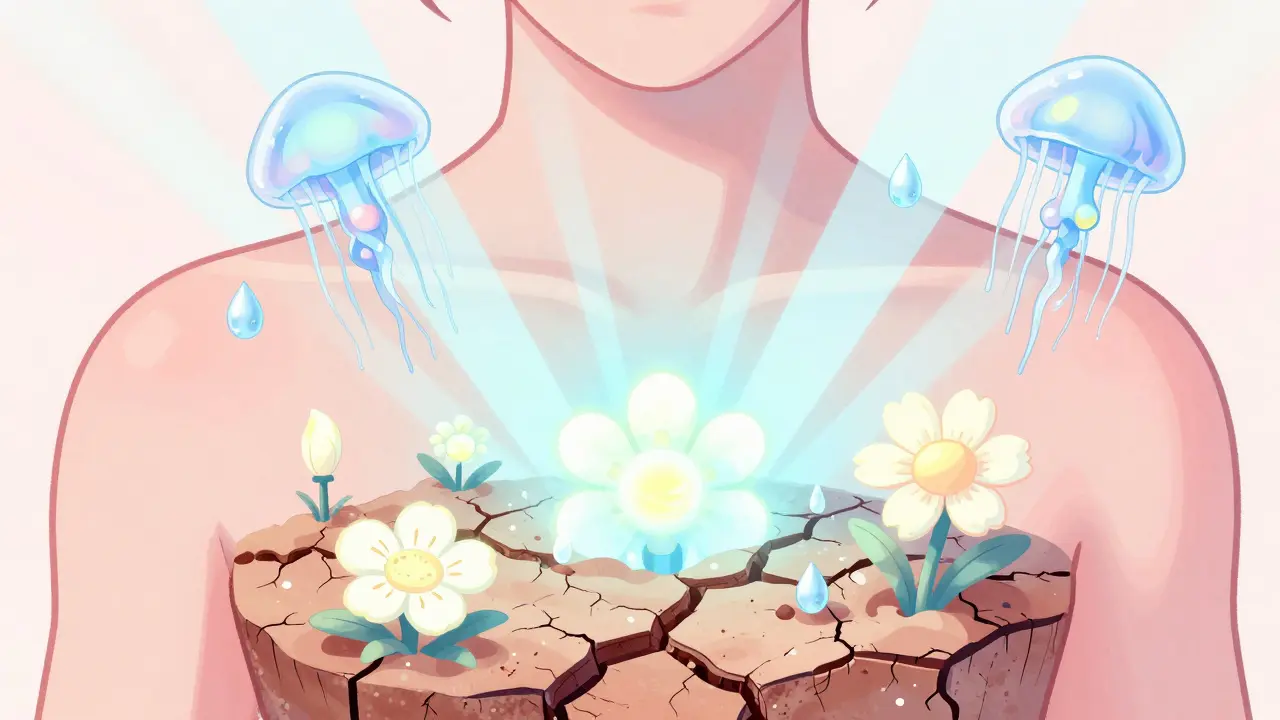
When you get radiation therapy, the beams don’t just target cancer cells-they also hit the skin along the way. About 95% of people who undergo external beam radiation will notice some kind of skin reaction. It doesn’t happen all at once. Usually, around day 7 to 10, your skin starts to feel warm, tender, or slightly red. It might look like a mild sunburn. By week 3 or 4, it can get worse: dry, flaky, itchy. For some, especially those getting treatment on the neck, chest, or breast, the skin breaks open, oozes fluid, and becomes painful-that’s called moist desquamation. It affects 15% to 30% of patients in those areas.
The good news? This isn’t random. It follows a pattern based on how much radiation your skin absorbs. At 15 to 20 gray (Gy), you’ll likely see dry peeling. At 25 to 30 Gy, moist sores can form. Modern techniques like IMRT and proton therapy can cut skin damage by 25% to 40% by focusing the beam more precisely. But even with the best tech, your skin still takes a hit.
After treatment ends, most skin reactions begin healing within 2 to 4 weeks. But some changes stick around. Permanent hair loss happens if you got more than 70 Gy to your scalp. Tiny red veins (telangiectasias) may show up years later in 30% to 50% of patients. Skin can thin out (atrophy) or stiffen (fibrosis), especially after head and neck radiation. These late effects don’t vanish overnight-they can take 6 to 12 months to stabilize.
How to Care for Your Skin During Radiation
Don’t wait until your skin is raw to start caring for it. Proactive care makes a big difference. Use a gentle, fragrance-free cleanser-Cetaphil or similar pH-balanced options work best. Wash with lukewarm water, never hot. Keep showers under 10 minutes. Pat your skin dry, don’t rub. Moisturize within three minutes after bathing. Look for creams with ceramides, glycerin, or hyaluronic acid. Avoid anything with alcohol, perfume, or menthol.
Some products have real clinical backing. RadiaPlex Rx and Biafine are used in many clinics because studies show they help reduce irritation. If your skin starts breaking down, your care team might recommend hydrogel dressings or silver sulfadiazine cream. These aren’t over-the-counter fixes-they’re medical-grade tools that cut healing time by up to 32% compared to basic ointments.
Stay away from harsh treatments. No exfoliating, no waxing, no shaving with a razor in the treated area. If you must shave, use an electric trimmer. Avoid sunlight on treated skin. Even on cloudy days, UV rays can make damage worse. Wear loose, soft clothing-cotton is ideal. No tight bras, no scratchy sweaters. And never apply ice packs or heating pads to the area.
One patient on Reddit shared that using Cavilon No Sting Barrier Film kept her skin from breaking open. It’s not a miracle cure, but it’s a shield. Talk to your radiation nurse before treatment starts. Get a written care plan. Most centers offer a 60- to 90-minute session just for this. Don’t skip it.
Why Radiation Makes You So Tired-And What You Can Do
Fatigue isn’t just being tired. It’s a deep, bone-aching exhaustion that sleep doesn’t fix. Around 75% to 95% of people on radiation feel it. It usually starts in week 2 or 3, gets worse through week 5 or 6, and can linger for weeks after treatment ends. People who get radiation to the pelvis or abdomen report the worst fatigue. Whole-brain radiation? Nearly half of patients hit severe fatigue levels.
It’s not just your body working hard to repair damage. Radiation triggers inflammation. Your immune system is on high alert. Your energy reserves get drained. And unlike chemo, there’s no clear timeline for when it’ll lift. Many patients expect fatigue to stay the same-but it doesn’t. It climbs. That’s why so many are caught off guard.
The best weapon? Movement. Not marathon runs. Just walking. Thirty minutes a day, five days a week. That’s the sweet spot. Studies show it cuts fatigue by 25% to 30%. Resistance training twice a week helps too. One breast cancer patient kept her energy levels near normal by walking daily and doing light weights. Her fatigue score was 22 points lower than others who didn’t move.
Sleep matters-but not how you think. Sleeping 16 hours a day won’t help. It throws off your rhythm. Stick to a schedule: same bedtime, same wake-up time, within 30 minutes. Limit naps to 20 to 30 minutes. No Netflix marathons in the afternoon. If you’re still drained, talk to your doctor. Modafinil, a medication used for narcolepsy, helped one patient drop their fatigue score from 72 to 58 in two weeks.
Many cancer centers now use digital tools like the PROMIS Fatigue Short Form to track your energy levels weekly. If your score spikes, your team can adjust your plan. Ask if your center uses this. If not, start tracking your own energy on a scale of 1 to 10. Write it down. It gives you power.
Recovery: What to Expect After Treatment Ends
When your last radiation session is done, you might think the worst is over. But recovery is a new phase. Skin reactions improve quickly-usually within a month. But your body is still healing from the inside. Fatigue can drag on for months. Don’t pressure yourself to bounce back fast.
For skin, keep moisturizing. Even after redness fades, your skin is more sensitive. Use sunscreen (SPF 30+) for life on treated areas. Avoid tanning beds. If you notice new lumps, thickening, or persistent sores after 6 months, get them checked. Fibrosis can develop slowly, making skin feel tight or hard.
Hair regrowth starts around 2 to 3 months after scalp radiation. Half of people see new growth by then. But if you got more than 50 Gy, 15% to 20% of you won’t get hair back. That’s permanent. Some people choose wigs, scarves, or hats. Others embrace the change. Either way, it’s okay to grieve the loss.
Fatigue recovery is slower. It’s not about waiting for energy to return-it’s about rebuilding it. Start small. Walk 10 minutes. Do a few stretches. Gradually increase. Talk to a physical therapist who specializes in cancer recovery. They’ll design a plan that fits your limits.
Some patients feel guilty for still being tired. You’re not lazy. You’re recovering from a medical assault. Give yourself grace. Recovery isn’t linear. Some days you’ll feel strong. Others, you’ll need to rest. That’s normal.
What’s New in Managing Radiation Side Effects
Things are changing fast. In 2023, researchers identified 12 genetic markers that predict who’s likely to get severe skin reactions. That means doctors can now tailor skin care before treatment even starts. If you’re high-risk, you might get extra protection-like special creams or more frequent check-ins.
There’s also a new app called Vitality, cleared by the FDA in 2022. It’s a digital therapy that guides you through breathing exercises, activity pacing, and sleep routines. In trials, it cut fatigue by 28%. It’s not a magic fix, but it’s a tool you can use at home.
Topical treatments are improving too. A drug called ON 01910.Na is in phase III trials and has shown a 40% drop in moderate-to-severe skin reactions. It’s not available yet, but it’s coming. Meanwhile, more clinics are using real-time symptom tracking. If your skin itches or your energy drops, you report it via a tablet or phone. Your team sees it the same day and adjusts your care.
The big shift? From reacting to preventing. We used to wait for damage to happen. Now we use data, genetics, and tech to stop it before it starts. It’s not perfect, but it’s progress.
What You Should Ask Your Care Team
Don’t wait until something goes wrong. Before treatment starts, ask:
- What skin care products do you recommend, and where can I get them?
- Will my treatment area affect my risk of skin reactions or fatigue?
- Do you use PROMIS or another tool to track fatigue during treatment?
- Can I meet with a physical therapist or oncology nurse for a recovery plan?
- Are there any clinical trials for new skin or fatigue treatments I might qualify for?
If your team doesn’t have answers, ask for a referral. You deserve to know what’s coming-and how to handle it.
Real Stories, Real Results
One woman in Minnesota, getting radiation for breast cancer, started walking 30 minutes every morning before treatment. She kept a journal of her energy levels. By week 5, she was still able to cook dinner for her family. Her fatigue score stayed low. She didn’t feel like a patient-she felt like herself.
A man in Florida, treated for head and neck cancer, used hydrogel dressings as soon as his skin turned red. He avoided open sores entirely. His nurse told him he was one of the few who didn’t need pain meds for skin damage.
These aren’t outliers. They’re people who took control. Not by being strong. By being informed.
Final Thoughts: You’re Not Alone in This
Radiation side effects are tough. But they’re not inevitable. Skin care, fatigue management, and recovery aren’t afterthoughts-they’re part of your treatment. The more you know, the less power these side effects have over you.
It’s okay to ask for help. It’s okay to rest. It’s okay to not feel okay. Your body is fighting two battles at once-cancer and recovery. Be patient with it. And remember: every small step you take-applying moisturizer, taking a walk, reporting your fatigue-is a win.
How long do radiation skin side effects last?
Acute skin reactions like redness and peeling usually improve within 2 to 4 weeks after treatment ends. But some changes, like skin thinning, permanent hair loss, or visible blood vessels, can appear months or years later and may be permanent. Late effects need ongoing monitoring.
Can I use regular lotion on my skin during radiation?
Avoid regular lotions with alcohol, fragrance, or heavy oils. They can irritate radiation-damaged skin. Use only fragrance-free, hypoallergenic moisturizers with ingredients like ceramides or glycerin. Products like Cetaphil, Biafine, or RadiaPlex Rx are often recommended by oncology teams.
Why does radiation make me so tired even if I rest?
Radiation triggers inflammation and forces your body to repair damaged healthy cells. This uses up a lot of energy. Rest alone doesn’t fix it because the fatigue comes from internal stress, not just lack of sleep. Light exercise, good sleep hygiene, and pacing your day help more than extra naps.
Is it safe to exercise while getting radiation?
Yes-moderate exercise like walking, light cycling, or resistance training is not only safe but proven to reduce fatigue by 25% to 30%. Start slow, listen to your body, and avoid overexertion. Many cancer centers have physical therapists who specialize in helping patients stay active during treatment.
Will my skin ever look normal again after radiation?
Your skin will heal, but it may not look exactly like it did before. It can be lighter, darker, thinner, or slightly stiff. Tiny red veins may appear over time. These are common late effects. Sun protection and moisturizing help minimize changes. If you’re concerned about appearance, talk to a dermatologist who works with cancer survivors.
What should I do if my skin starts to blister or open up?
Don’t pop blisters or peel skin. Contact your radiation team immediately. They may recommend hydrogel dressings, silver sulfadiazine cream, or specialized wound care. Keeping the area clean and moist helps it heal faster. Avoid tight clothing and friction. Pain management may be needed-ask for it.
How long does radiation fatigue last after treatment ends?
Most people feel better within 1 to 3 months after treatment ends, but some take 6 months or longer. Fatigue doesn’t disappear overnight. Gradual activity, good nutrition, and sleep routines help rebuild energy. If fatigue persists beyond 6 months, talk to your doctor-it could be linked to other factors like anemia, thyroid issues, or depression.
Can I use makeup on my face after radiation?
Wait until your skin is fully healed and no longer peeling or sensitive. Then use mineral-based, fragrance-free makeup. Avoid waterproof or long-wear formulas-they’re harder to remove and can irritate. Always remove makeup gently with a mild cleanser. Talk to your nurse before starting.






11 Comments
I wish I'd known about the Cavilon film before my treatment. My skin broke open worse than I expected. Now I'm using it on my next round and it's a game changer. Just talk to your nurse early - they have stuff you'd never think to ask for./p>
WALKING IS LIFE 🚶♀️💪 Seriously, I did 20 mins a day during chemo and radiation and it kept me from falling into a black hole. Don't wait until you feel like it - just put on your shoes and go./p>
I just wanted to say thank you for writing this. I was so scared going in and this made me feel like I wasn't crazy for feeling exhausted all the time. It's not laziness. It's biology./p>
Dude the fatigue thing is real. I thought rest would fix it but nope. Only walking helped. Even my doc was shocked when i said i did 30 min daily. Try it. No excuses./p>
I'm sorry, but calling Biafine 'clinically backed' is misleading. The study they cite? Small, industry-funded, and never replicated. Stick to plain ceramide creams - cheaper and just as effective./p>
Let me guess - they didn't tell you about the 2018 NIH memo about radiation-induced epigenetic changes that cause late fibrosis. The system hides this. They want you to think it's 'normal' so you don't sue. You're being used as a data point./p>
I've worked with cancer patients for 18 years and this is one of the clearest summaries I've seen. The part about pacing and sleep hygiene? Spot on. So many people think rest = sleep, but rhythm matters more than duration./p>
I just want to say: you're not weak for needing help. You're not broken for needing a wig. You're not failing for needing to nap. You're surviving. And that's enough. Seriously. Enough./p>
All this talk about 'progress' is just corporate fluff. They're still using the same damn radiation machines from the 90s. The only thing that changed? The price tag. Don't fall for the hype./p>
Actually, the claim that '75–95% of patients experience fatigue' is statistically inaccurate. The meta-analysis by Thompson et al. (2021) found a range of 58–79% depending on tumor site and comorbidities. Please cite properly./p>
I'm from the Philippines and we don't have access to RadiaPlex or hydrogel dressings. But we use coconut oil - cold-pressed, unrefined - and it works. Not perfect, but it's gentle, cheap, and keeps skin from cracking. I've seen it help my cousin. Sometimes the best medicine is what's already in your kitchen./p>