Allopurinol and Theophylline: Drug Interactions, Risks, and What to Watch For
When you take allopurinol, a medication used to lower uric acid levels in people with gout or kidney stones along with theophylline, a bronchodilator prescribed for asthma and COPD, you’re mixing two drugs that can seriously affect each other’s safety. This isn’t just a theoretical concern—studies show allopurinol can slow down how your body clears theophylline, causing it to build up to toxic levels. That means nausea, vomiting, rapid heartbeat, seizures, or even life-threatening heart rhythm problems. It’s not rare. It’s documented. And it’s avoidable if you know what to look for.
People who take both drugs are often managing chronic conditions: one for joint pain from gout, the other for breathing trouble. But the real danger isn’t the conditions themselves—it’s the hidden interaction. Allopurinol blocks an enzyme called xanthine oxidase, which your liver also uses to break down theophylline. When that enzyme is blocked, theophylline sticks around longer than it should. Your doctor might not catch it unless you tell them you’re taking both. Even worse, older adults, people with kidney problems, or those on other medications like ciprofloxacin or cimetidine are at higher risk. You can’t assume your pharmacist or doctor knows every pill you’re on unless you tell them clearly. That’s why questions like "What happens if I take this with my asthma med?" matter more than you think.
It’s not just about avoiding side effects—it’s about knowing what to do if you’ve already taken them together. If you start feeling jittery, your heart races, or you throw up after starting allopurinol while on theophylline, don’t wait. Call your provider. Blood tests can check theophylline levels, and a simple dose adjustment can prevent disaster. Some patients switch to febuxostat instead of allopurinol to avoid this exact issue. Others get their theophylline replaced with newer inhalers like salmeterol or formoterol, which don’t interact the same way. There are options. But you won’t find them unless you ask.
Below, you’ll find real-world stories and expert advice on how people have managed these interactions safely. You’ll learn what questions to ask your pharmacist, how to spot early warning signs, and what alternatives exist when these two drugs can’t be used together. This isn’t just about avoiding a bad reaction—it’s about taking control of your meds so they work for you, not against you.
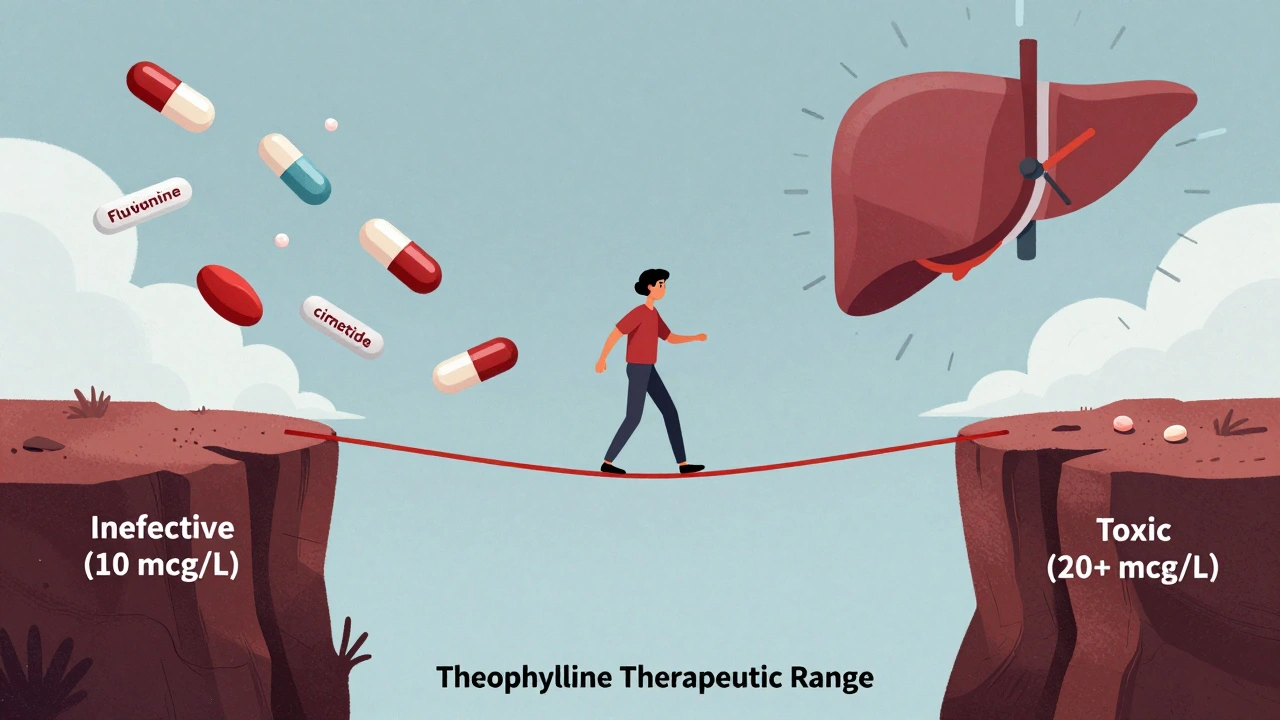
Theophylline Clearance: How Common Medications Can Trigger Dangerous Toxicity
Theophylline is a powerful but risky asthma and COPD medication. Certain common drugs can dangerously reduce its clearance, leading to toxic levels. Learn which medications to avoid and how to stay safe.