First Generic Approval: What It Means for Your Medication Choices
When a drug gets its first generic approval, the official green light from the FDA allowing a copy of a brand-name drug to be sold after its patent expires. Also known as generic drug approval, it’s the moment when cheaper versions of your prescription meds become available—sometimes saving you hundreds a year. But approval doesn’t mean identical. The FDA requires generics to have the same active ingredient, strength, and route of use as the brand, but the inactive ingredients—like fillers, dyes, and preservatives—can differ. That’s why some people notice changes in how a generic works for them, even when the label says it’s the same.
Behind every first generic approval, the official green light from the FDA allowing a copy of a brand-name drug to be sold after its patent expires. Also known as generic drug approval, it’s the moment when cheaper versions of your prescription meds become available—sometimes saving you hundreds a year. is a complex process called bioequivalence, the scientific proof that a generic drug performs the same way in the body as the brand-name version. This isn’t just about matching pill size or color. It’s about showing that the drug gets into your bloodstream at the same rate and amount. For some drugs—like blood thinners, thyroid meds, or epilepsy treatments—this is critical. A tiny difference can mean the difference between control and crisis. That’s why the FDA uses advanced study designs like replicate study designs, a method used to test highly variable drugs where standard tests aren’t reliable enough. These aren’t just lab tricks; they’re how regulators make sure your safety isn’t compromised just because the pill looks different.
And here’s the thing: not all generics are created equal, even after approval. Some manufacturers cut corners on excipients—like lactose or artificial dyes—that can trigger reactions in sensitive people. That’s why people with allergies or intolerances sometimes switch back to brand-name drugs, even at higher cost. The FDA excipients, the list of inactive ingredients allowed in FDA-approved medications. are regulated, but they’re not always disclosed clearly on the label. If you’ve ever felt worse after switching to a generic, you’re not imagining it. It might be the filler, not the medicine.
Understanding first generic approval helps you ask the right questions. Is this generic truly equivalent for my condition? Could the fillers be causing my side effects? Why did my doctor switch me—and did they check my history? The posts below dive into real cases: how excipients affect tolerance, why bioequivalence matters more for some drugs than others, and how to spot when a generic isn’t working like it should. You’ll find practical advice on talking to your pharmacist, reading labels, and knowing when to push back. This isn’t about avoiding generics—it’s about using them wisely, safely, and with full awareness of what’s inside the pill.
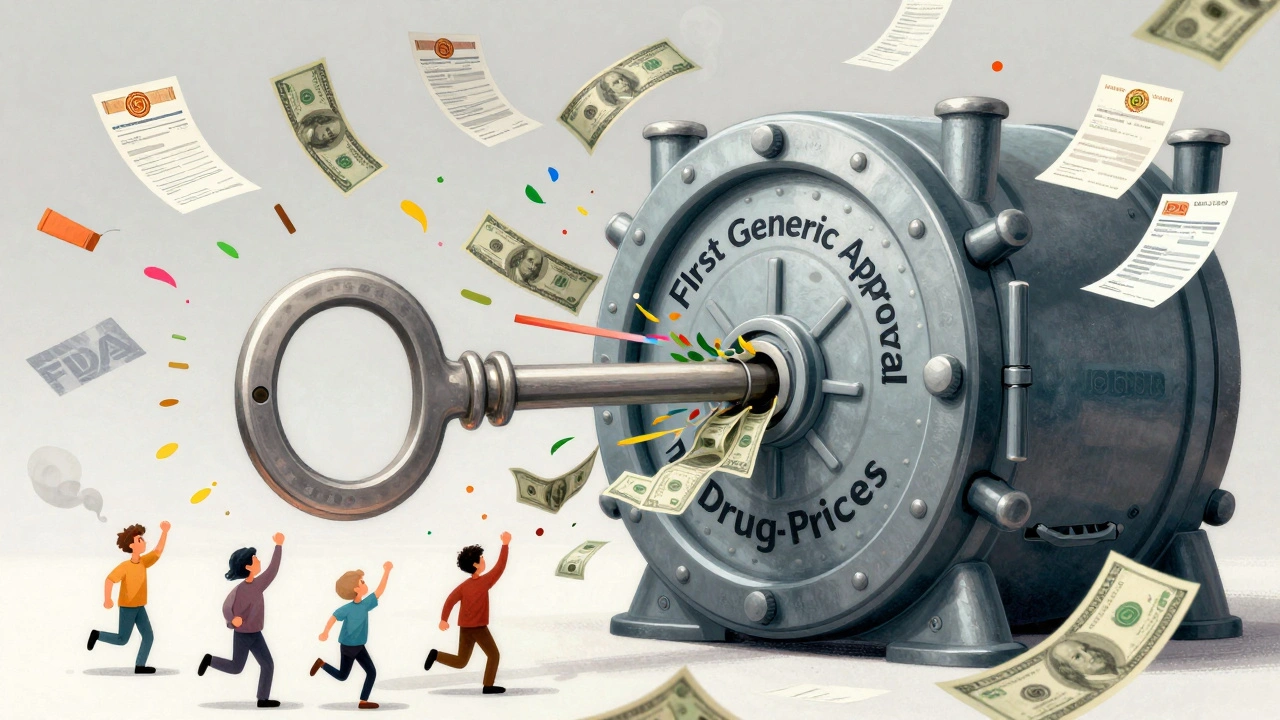
First Generic Approval: Why It Matters and What It Means for Your Prescription Costs
First generic approval is the key to lowering drug prices in the U.S. It gives the first company to launch a generic version of a brand-name drug 180 days of exclusive sales-leading to massive cost savings for patients and the healthcare system.