
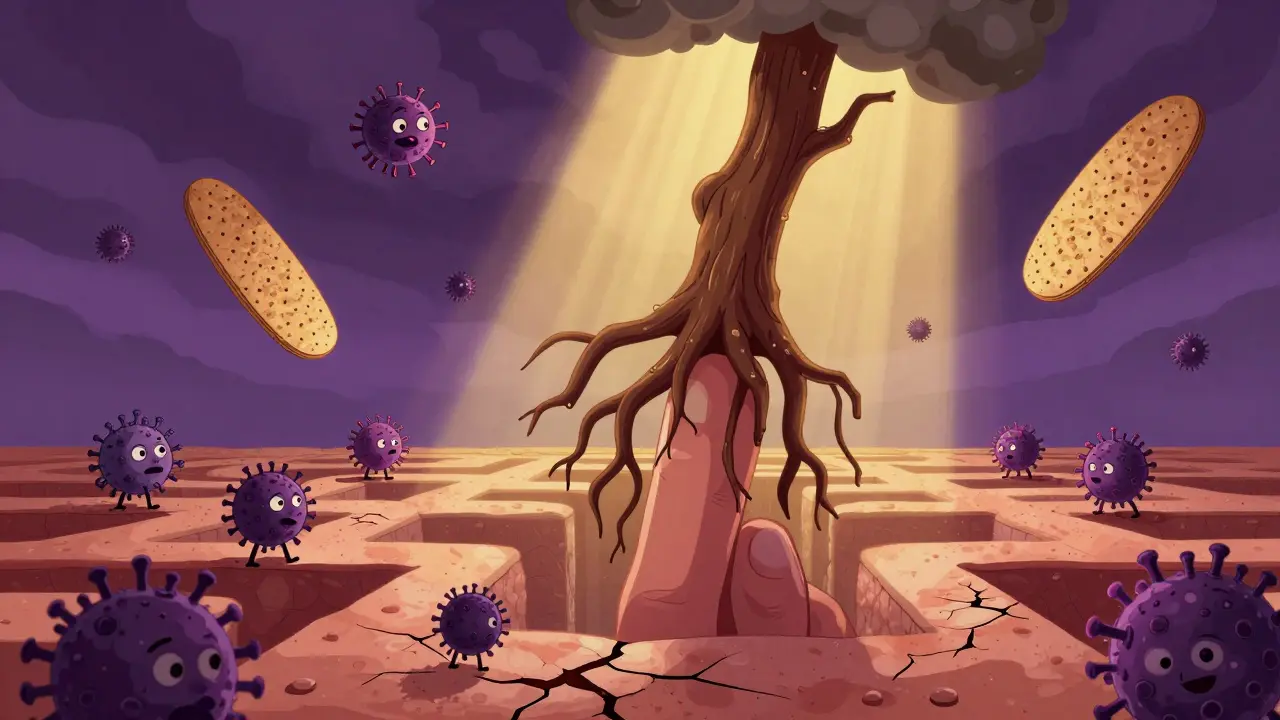
Warts aren’t just annoying-they can be painful, embarrassing, and stubborn. If you’ve ever stared at a rough bump on your finger or sole and wondered, “Why won’t this go away?”, you’re not alone. Viral warts are caused by the human papillomavirus (HPV), a common skin infection that affects up to 24% of children and 5% of adults in Australia. The good news? Most warts will disappear on their own within two years. The bad news? You probably don’t want to wait that long.
What Causes Viral Warts?
Not all warts are the same. Different strains of HPV cause different types of warts, and they show up in different places. HPV type 1, 2, and 4 are the usual suspects behind common warts-those rough, raised bumps you see on fingers and knuckles. Flat warts, often found on kids’ faces or legs, are linked to HPV types 3 and 10. And if you’ve got a painful, hard bump on the bottom of your foot? That’s a plantar wart, caused by HPV types 1, 2, 4, 60, or 63.HPV spreads through direct skin contact or by touching surfaces contaminated with the virus-like locker room floors, shared towels, or even your own nails if you pick at a wart. Once the virus enters a tiny cut or scrape, it tricks skin cells into multiplying rapidly, forming that thick, bumpy growth you see.
Do Warts Go Away on Their Own?
Yes, they often do. Studies show 60-70% of non-genital warts clear up without treatment within two years. But here’s the catch: while you’re waiting, you risk spreading them to other parts of your body or to other people. Kids are especially prone to autoinoculation-scratching a wart on their hand and then touching their face, leading to clusters of flat warts. Adults may avoid treatment because they think warts are harmless. But if it’s painful, growing, or in a visible spot, waiting isn’t always the smartest move.Topical Treatments: Salicylic Acid and More
The most widely used and well-studied home treatment is salicylic acid. You can buy it over the counter in liquids, gels, or patches with concentrations between 17% and 40%. The trick isn’t just applying it-it’s doing it right. You need to soak the wart in warm water for 5-10 minutes, gently file away the dead skin with an emery board or pumice stone (use a different one for healthy skin!), then apply the acid directly to the wart. Do this daily. It takes patience-most people see results in 6 to 12 weeks.A 1976 study of over 1,800 patients found salicylic acid cured 84% of plantar warts when used consistently. That’s impressive. But it’s not magic. If you skip days, don’t file the surface, or apply it to surrounding skin, you’ll get irritation without results. Side effects? Minor burning or redness. Rarely, it can cause scarring if misused.
Another option is trichloroacetic acid (TCA), which dermatologists use in-office. It works faster than salicylic acid by chemically burning the wart tissue. The doctor will scrape the wart first, sometimes prick it with a needle to let the acid sink in deeper. It’s effective for warts on hands, feet, and even flat warts on the face. But it hurts during application, and there’s a risk of hyperpigmentation or scarring if not done carefully.
Cryotherapy: Freezing Warts Off
If you’ve ever been to a dermatologist for a wart, you’ve probably seen this: a puff of cold mist, a sharp sting, and a blister forming. That’s cryotherapy-freezing the wart with liquid nitrogen. It’s one of the most common in-office treatments. The goal? Freeze the wart and a small border of healthy skin around it (2-3mm) to kill the virus deep down.A 2023 review of seven studies involving nearly 1,000 patients found cryotherapy worked just as well as salicylic acid for common warts after 12 weeks. But here’s what most people don’t know: timing matters. The same 1976 study showed that treating warts every 2-3 weeks gave a 75% cure rate. Wait 4 weeks between sessions? That number drops to 40%. Most patients need 3 to 6 treatments, spaced properly, to fully clear the wart.
Side effects? Pain during and after freezing, blisters, and sometimes a dark spot where the wart was. In rare cases, it can leave a scar, especially on darker skin tones. It’s not the best choice for warts on the face or very sensitive areas.
Immunotherapy: Training Your Body to Fight Back
When other treatments fail, doctors sometimes turn to imiquimod cream. It’s not a direct wart killer. Instead, it wakes up your immune system to recognize and attack the HPV-infected cells. You apply it a few times a week, usually for 6-16 weeks. It causes redness, swelling, and sometimes itching-signs it’s working.This method shines for stubborn warts that haven’t responded to acid or freezing. Dermatologists have documented cases where warts disappeared after imiquimod, even after multiple failed cryotherapy sessions. It’s slower than freezing, but it has a lower chance of scarring. It’s also used for flat warts and genital warts. The downside? It’s expensive, requires a prescription, and isn’t always covered by insurance.
More Aggressive Options: Lasers, Electrosurgery, and Surgery
If a wart has lasted years and ignored every treatment, your doctor might suggest something stronger. Electrosurgery uses a small electric needle to burn the wart tissue. It’s quick, usually done in one visit, and effective-but it leaves a small scar. Laser treatment, like the VBeam pulse dye laser, targets the blood vessels feeding the wart. The wart turns purple or black right after, then flakes off in a week or two. It’s precise, but costly and not always covered by insurance.Surgical removal? It’s rarely recommended. Cutting out a wart sounds logical, but the virus often hides under the surface. Removing just the visible part leads to high recurrence rates. Plus, you’re left with a scar that’s worse than the original wart.
What Doesn’t Work (And Why)
You’ve probably heard about silver nitrate, cantharidin, garlic, duct tape, or even apple cider vinegar. Some of these have tiny studies backing them, but none have strong, consistent evidence. The Royal Australian College of General Practitioners reviewed 15 different treatments-only salicylic acid and cryotherapy had solid data. Everything else? Anecdotes, small trials, or outdated practices.And while some people swear by duct tape, a 2023 meta-analysis found no significant difference between duct tape and placebo. It might help by gently exfoliating the skin, but it’s not a reliable method.
Combination Therapy: The Hidden Secret
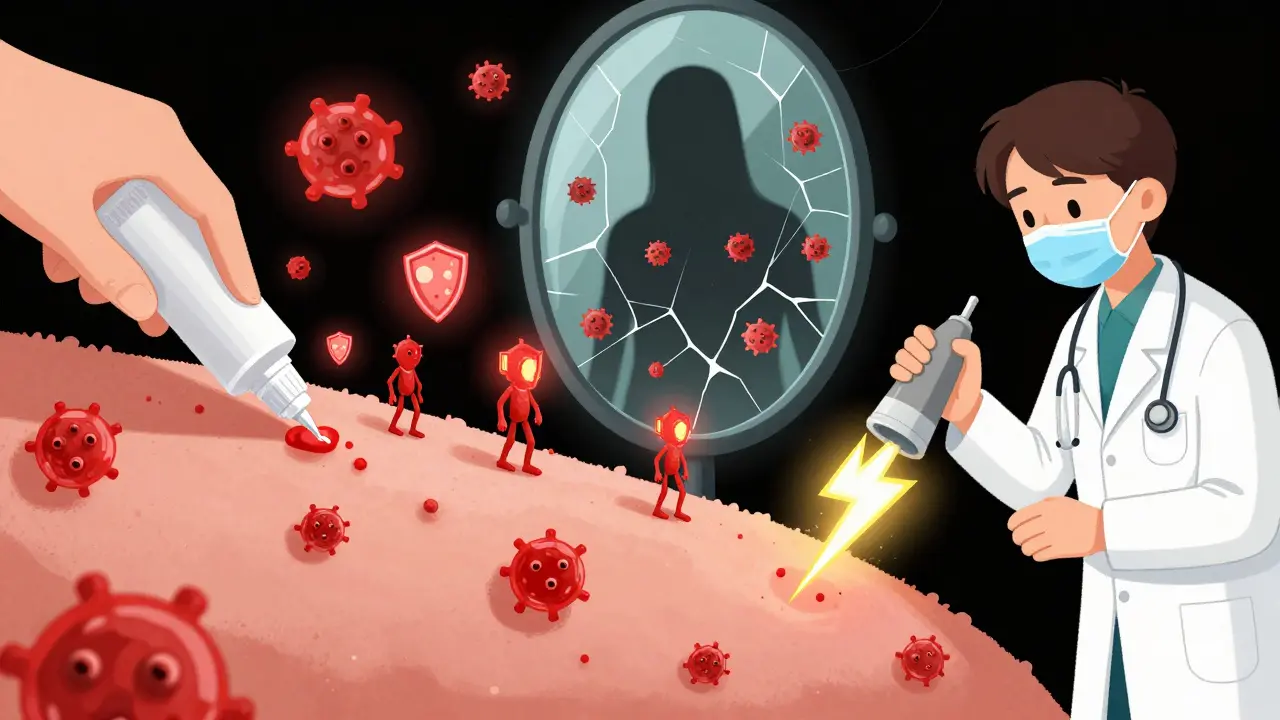
Here’s something most people don’t try: combining treatments. The 1976 Bunney study showed that using cryotherapy and salicylic acid together gave a 78% success rate-higher than either alone. That’s not a fluke. Think of it like this: acid softens and breaks down the wart, while freezing kills the deeper virus. Using both gives you a better shot.Many dermatologists now recommend starting with salicylic acid at home, then adding cryotherapy every 3 weeks if it’s not improving. It’s not standard practice everywhere, but it’s smart.
How to Prevent Warts from Coming Back
Treating the wart is only half the battle. HPV lives in your skin. If you don’t stop spreading it, new warts will pop up. Here’s what works:- Don’t pick, bite, or scratch warts. Use gloves or bandages if you’re prone to touching them.
- Change your socks daily if you have plantar warts. Wash them in hot water.
- Don’t share towels, razors, or shoes.
- Wear flip-flops in public showers and pools.
- Keep your skin moisturized. Dry, cracked skin is easier for HPV to enter.
- Wash your hands after touching a wart.
HPV can survive on surfaces for days. Even after the wart is gone, the virus may still be lurking. That’s why recurrence is so common-it’s not that the treatment failed. It’s that the environment wasn’t cleaned up.
When to See a Doctor
You don’t need to rush to a dermatologist for every wart. But if:- The wart is bleeding, changing color, or growing quickly
- It’s on your face, genitals, or anus
- It’s painful and interfering with walking or using your hands
- You’ve tried 3-4 treatments over 3 months with no progress
- You have diabetes or a weakened immune system
Then it’s time to get professional help. Self-treating a plantar wart with acid when you have poor circulation can lead to serious complications. And warts in sensitive areas? Always get them checked-some can look like warts but be something else entirely.
What’s New in Wart Treatment?
Research is moving toward smarter, gentler options. Scientists are testing new topical antivirals, immune-boosting gels, and even vaccines tailored to specific HPV strains. For now, though, the best tools are still the old ones-salicylic acid, cryotherapy, and immunotherapy-used wisely.What’s changing is how doctors use them. Instead of picking one treatment and sticking with it, they’re starting to combine them, personalize based on wart type and location, and focus more on patient adherence. The goal isn’t just to remove the wart-it’s to stop the virus from coming back.
Can I treat a wart at home safely?
Yes, but only with the right approach. Salicylic acid is safe for most people when used as directed. Soak the wart, file it gently, apply the acid only to the wart, and avoid healthy skin. Don’t use it if you have diabetes, poor circulation, or are treating a wart on your face or genitals. If you see blistering, severe pain, or signs of infection, stop and see a doctor.
How long does it take to get rid of a wart?
It depends on the treatment. Salicylic acid usually takes 6-12 weeks. Cryotherapy needs 3-6 sessions spaced 2-3 weeks apart, so 2-4 months total. Immunotherapy like imiquimod can take up to 16 weeks. Patience is key. Most people give up too early. Stick with it, even if you don’t see changes right away.
Are warts contagious?
Yes. HPV spreads through direct skin contact or touching contaminated surfaces like floors, towels, or shoes. You can spread warts to other parts of your body or to others. Wash your hands after touching a wart, don’t share personal items, and wear protective footwear in public showers.
Why do warts come back after treatment?
Warts come back because the virus isn’t always fully eradicated. Even if the visible part is gone, HPV can hide in nearby skin. Poor hygiene, not treating all warts at once, or skipping follow-up treatments increases the risk. That’s why combining methods and practicing good skin hygiene is so important.
Is cryotherapy better than salicylic acid?
They’re about equally effective for common warts, according to recent studies. Cryotherapy works faster in-office, but salicylic acid is cheaper and can be done at home. The real advantage? Using both together. Studies show combination therapy has a higher success rate than either alone.
Can HPV cause cancer from common warts?
No. The HPV strains that cause common, plantar, or flat warts (types 1, 2, 3, 4, 10, 60, etc.) are low-risk and don’t lead to cancer. Only certain high-risk types (like HPV 16 and 18) are linked to cervical, anal, or throat cancers-and these don’t cause skin warts. Don’t confuse common warts with genital warts, which are caused by different strains and require different care.





12 Comments
Wow, this is actually super helpful! I had a plantar wart that lasted like 18 months and I tried everything - duct tape, garlic, even that weird vinegar hack. Salicylic acid finally worked, but only after I started soaking and filing. So many people give up too early. 🙌
/p>It is, indeed, profoundly irresponsible to suggest that home remedies like duct tape are even remotely comparable to evidence-based dermatological interventions. The fact that this article even dignifies such pseudoscientific folklore is alarming. Salicylic acid and cryotherapy are the only two modalities with statistically significant, peer-reviewed efficacy - period. End of discussion.
/p>You know, I’ve seen people treat warts like they’re tiny, stubborn demons that just need to be exorcised with vinegar and prayer. Meanwhile, the real magic? Consistency. Not the ‘I’ll do it once a week when I remember’ kind - I mean the 3 a.m., barefoot-in-the-bathroom, filing away dead skin like a mad scientist with a pumice stone kind of commitment. That’s what kills HPV. Not magic. Not memes. Just grind.
/p>Y’all need to stop feeling guilty about warts! They’re annoying, not a moral failing. 😊 I used salicylic acid + cryo combo and it worked like a charm. Also - wear socks to bed if you’re treating plantar warts. No one needs to step on a wart in the middle of the night. 🧦🩹
/p>How quaint. An American blog post on warts, as if the rest of the world doesn’t have access to proper medical care. In India, we use neem paste and turmeric - centuries of Ayurveda, not some 1976 study. Salicylic acid? A Western crutch. The real solution is systemic immunity, not chemical burns.
/p>I tried everything. Nothing worked. Then I stopped touching it. Six months later, it was gone. Maybe the real treatment is just… not being a weirdo who picks at their skin.
/p>Let’s be real - this article is just a glorified advertisement for dermatologists. Cryotherapy? $200 per session. Imiquimod? $500/month. Meanwhile, the real solution is: don’t walk barefoot in gyms. Simple. Elegant. Free. But nobody wants to hear that. They want to buy something. 💸
/p>This article is dangerously misleading. It implies that warts are benign. They are not. They are a visible manifestation of a viral invasion - a failure of personal hygiene, a lapse in immune vigilance, and often, a sign of emotional repression. To treat them with acid or freezing is to treat symptoms, not the soul’s decay.
/p>It’s funny how we treat warts like enemies. What if they’re just… neighbors? Maybe the virus isn’t trying to hurt us - maybe it’s just trying to live. We’ve spent centuries trying to burn, freeze, or scrape away what doesn’t belong… but what if the real cure is learning to coexist? Not with the wart - with the fear of it.
/p>i read this whole thing and i think i might have a wart on my finger… i dont know though i think its just a bump? i might be overthinking. sorry if this is dumb.
/p>Just use the acid. File. Repeat. No drama. No magic. No YouTube gurus. It works. I did it. You can too.
/p>Man, I’ve been thinking about this a lot lately - how we treat our bodies like war zones. Warts, acne, stretch marks - we go to war with every little imperfection. But what if they’re just… signs? Signs we’re stressed, or tired, or not hydrating enough? I tried the acid thing, yeah - it worked. But I also started sleeping better. And the new warts? They stopped showing up. Maybe the real treatment isn’t in the bottle… it’s in the quiet.
Also, I cried when my wart finally fell off. 😅
/p>