CYP1A2 Inhibitors: What They Are, How They Affect Your Medications, and What to Watch For
When you take a medication, your body doesn’t just absorb it and call it a day—it breaks it down, mostly in the liver, using enzymes like CYP1A2, a key liver enzyme responsible for metabolizing many common drugs and caffeine. Also known as cytochrome P450 1A2, it’s one of the main players in how your body handles what you swallow. But when something blocks or slows down CYP1A2—like certain foods, herbs, or other meds—it can cause dangerous buildups of drugs in your system, or make them stop working altogether.
This isn’t just theory. CYP1A2 inhibitors like fluvoxamine, an antidepressant known to strongly interfere with this enzyme, can turn a normal dose of caffeine into a jittery, heart-racing nightmare. The same goes for clozapine, a psychiatric drug with a narrow safety window, or even theophylline, a breathing medication used for asthma and COPD. If you’re on any of these, and you start drinking large amounts of grapefruit juice, smoking less, or taking St. John’s wort, your body’s metabolism shifts—and so does your risk.
What makes CYP1A2 tricky is how common its triggers are. It’s not just about prescription drugs. Even CYP1A2 inhibitors like oral contraceptives, some antibiotics, and even charbroiled meat can interfere. And because this enzyme handles caffeine, the morning coffee you rely on might suddenly hit harder if you start a new med. People often don’t connect the dots—until they feel dizzy, nauseous, or their heart starts pounding for no reason.
That’s why knowing about CYP1A2 isn’t just for doctors. If you take any long-term meds—especially for mental health, heart conditions, or chronic pain—you need to understand what else might be changing how your body handles them. The posts below cover real cases: how kava and sedatives can overload your liver, why garlic supplements increase bleeding risk with blood thinners, and how hormone therapy can mess with epilepsy drugs by shifting enzyme activity. These aren’t abstract warnings. They’re daily risks people face because no one told them about enzyme interactions.
You won’t find a one-size-fits-all chart for CYP1A2. But you will find clear, practical advice on spotting hidden interactions, asking the right questions at the pharmacy, and recognizing when your body is sending you a red flag. Whether you’re managing a chronic condition, taking multiple meds, or just curious why your coffee suddenly feels stronger, this collection gives you the tools to stay in control—not just guess.
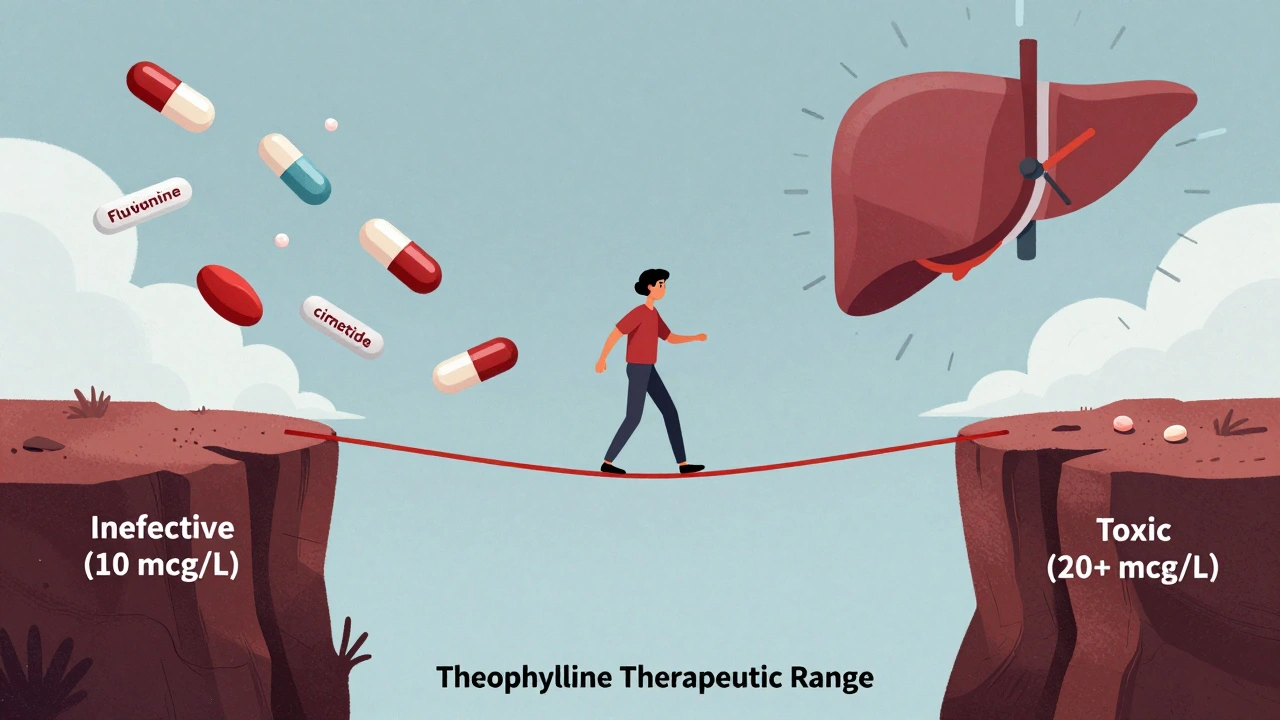
Theophylline Clearance: How Common Medications Can Trigger Dangerous Toxicity
Theophylline is a powerful but risky asthma and COPD medication. Certain common drugs can dangerously reduce its clearance, leading to toxic levels. Learn which medications to avoid and how to stay safe.