Drug Changes with Age: How Your Body Responds to Medications as You Get Older
When you’re younger, a pill might work the same way every time. But as you age, your body doesn’t process drugs the same way anymore. This is what we mean by drug changes with age, the way medications are absorbed, processed, and cleared by the body as people grow older. Also known as age-related pharmacokinetics, it’s not just about slower metabolism—it’s about your liver, kidneys, and even body fat shifting how drugs behave inside you. Many people don’t realize that a dose that was fine at 40 can become dangerous at 70. It’s not the drug that changed. It’s you.
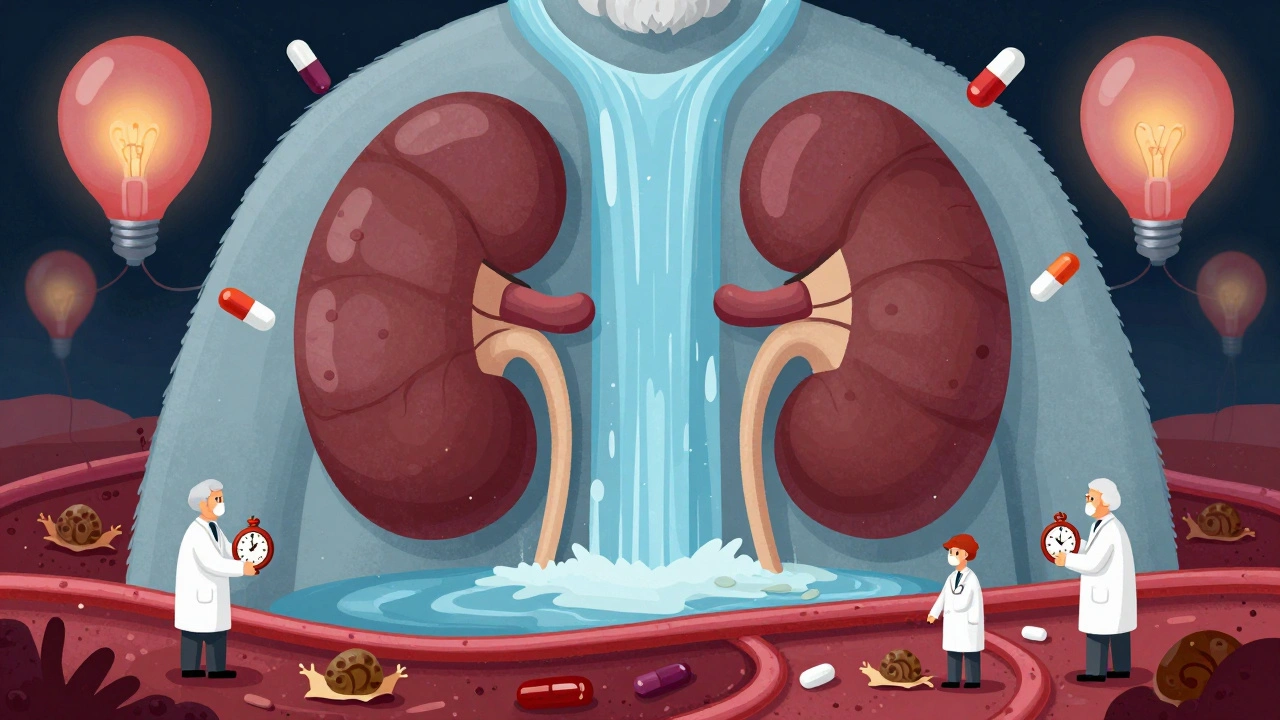
One of the biggest reasons? Your kidneys, the main organs that filter drugs out of your bloodstream. Also known as renal clearance, they start losing efficiency after age 40, and by 70, many people have lost nearly half their kidney function. That means drugs like blood pressure pills, antibiotics, or painkillers stay in your system longer. Too much buildup leads to dizziness, confusion, or even falls. Then there’s your liver, where most drugs are broken down before being eliminated. Also known as hepatic metabolism, it slows down too, especially when combined with other meds or chronic conditions like diabetes or heart disease. This is why someone on warfarin or benzodiazepines might suddenly feel overly sleepy or unsteady—not because they took too much, but because their body can’t clear it fast enough.
It’s not just about organs. Your body composition changes too. Less muscle, more fat. That means fat-soluble drugs like some antidepressants or sleeping pills get stored in fat tissue and release slowly, leading to longer-lasting effects. Meanwhile, water-soluble drugs like lithium or certain diuretics become more concentrated because you have less total body water. And don’t forget drug interactions. Older adults often take five, six, or more medications. A simple garlic supplement can thin your blood. A common antacid can block absorption of your heart medicine. These aren’t rare edge cases—they’re daily risks.
What makes this even trickier? Doctors don’t always adjust doses. Guidelines often still use the same numbers for 65-year-olds and 85-year-olds. But your body isn’t the same. That’s why knowing your own health changes matters. If you’ve noticed new side effects—memory lapses after starting a new pill, unexplained bruising, or feeling faint when standing up—it’s not just "getting older." It might be your meds.
Below, you’ll find real-world stories and science-backed advice from people who’ve lived through these changes. You’ll learn how to spot dangerous interactions, what questions to ask your pharmacist, and which meds are riskiest as you age. No fluff. No theory. Just what you need to take control before something goes wrong.
How Aging Changes Your Body’s Response to Medication and Dosing
Aging alters how your body absorbs, processes, and responds to medications. Learn why seniors need lower doses, which drugs are riskiest, and how to avoid dangerous side effects with practical steps and expert guidance.