Generic Drug Exclusivity: What It Means and How It Affects Your Meds
When a new brand-name drug hits the market, it doesn’t stay alone for long—but it doesn’t get company right away either. Generic drug exclusivity, a legal period during which the FDA blocks cheaper copies from entering the market. Also known as market exclusivity, it’s the reason your prescription might cost hundreds of dollars even when the formula is old. This isn’t about patents—it’s separate, and it’s often longer. The FDA gives this time to the company that proved the drug works, not just to recover R&D costs, but to encourage innovation. But here’s the catch: once it ends, dozens of generic versions can flood in, and prices can drop overnight.
That’s where generic medications, copies of brand-name drugs that contain the same active ingredient and work the same way. Also known as generic drugs, they become available. But not all drugs get the same exclusivity. Some get 3 years for new uses, 5 years for new chemical entities, and even 12 years for biologics. The FDA drug approval, the process that determines whether a drug is safe and effective before it can be sold. Also known as drug review process, it sets these rules. You might not see it, but this system controls whether your next refill costs $5 or $50. And if you’ve ever wondered why some generics appear years after the brand name, this is why.
It’s not just about money. Generic drug exclusivity affects who gets treated, how fast, and even how safe your meds are. Some people switch to generics and notice differences—not because the active ingredient changed, but because of the fillers, dyes, or coatings. That’s why posts here dig into excipients in generics, bioequivalence testing, and why some people react to one generic but not another. Others look at how exclusivity delays access to life-saving drugs, or how companies stretch exclusivity with tiny tweaks just to keep prices high.
What you’ll find below isn’t just theory. These are real stories: how a 30-day exclusivity extension kept a COPD drug expensive, how a biosimilar finally broke through after 12 years, why your pharmacy ran out of one generic but had another, and how a single FDA ruling changed what you pay for your thyroid med. This isn’t about legal jargon. It’s about your wallet, your health, and the quiet rules that decide what medicine you can afford tomorrow.
First Generic Approval: Why It Matters and What It Means for Your Prescription Costs
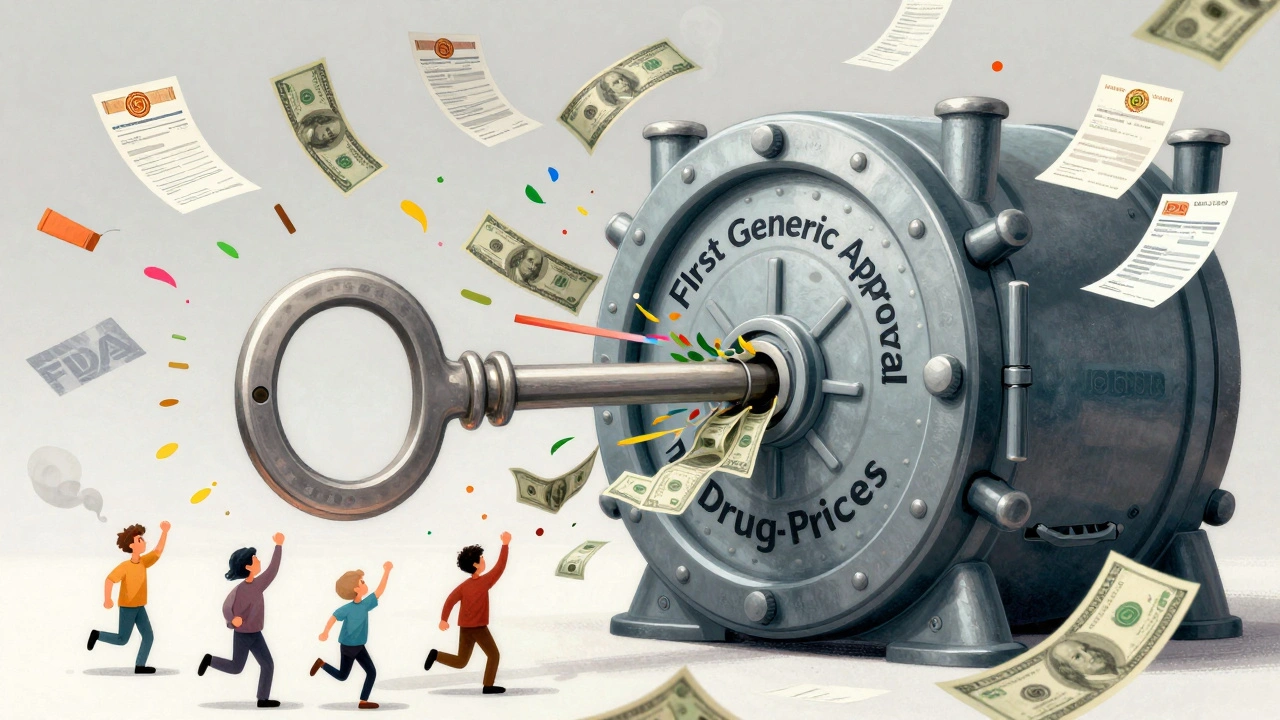
First generic approval is the key to lowering drug prices in the U.S. It gives the first company to launch a generic version of a brand-name drug 180 days of exclusive sales-leading to massive cost savings for patients and the healthcare system.