Kidney Disease Medication: What Works, What to Avoid, and How to Stay Safe
When your kidneys aren’t working right, kidney disease medication, drugs prescribed to slow damage, manage symptoms, and prevent complications in chronic kidney disease. Also known as renal medication, it’s not just about lowering blood pressure—it’s about protecting what’s left of your kidney function and avoiding dangerous buildups in your blood. Many people think kidney disease means you’ll need dialysis soon, but the right meds can delay that by years—if you take them correctly and know what they’re really doing.
One big piece of the puzzle is phosphate binder, medications that attach to phosphorus in food so your body can’t absorb it, preventing dangerous levels that harm bones and blood vessels. Also known as phosphorus binders, these aren’t optional—they’re essential if you’re in stage 3 or higher of chronic kidney disease. Renagel (sevelamer), a non-calcium phosphate binder used to control high phosphorus levels in patients on dialysis is one of the most common, but it’s not the only option. Others include calcium acetate, lanthanum, and ferric citrate. Each has different side effects, costs, and how they interact with other drugs you might be taking for heart issues or diabetes.
And let’s talk about dialysis, a treatment that filters waste and extra fluid from your blood when kidneys can’t do it anymore. Even if you’re on dialysis, you still need kidney disease medication. Blood pressure pills, anemia drugs, vitamin D supplements, and phosphate binders don’t stop just because you’re getting dialysis—they often become even more critical. Skipping a phosphate binder before a meal? That spike in phosphorus can wreck your heart over time. Forgetting your iron shot? You’ll feel exhausted and weak. These meds aren’t optional extras; they’re part of your daily survival routine.
You’ll also see a lot of overlap with heart meds. High blood pressure and kidney disease go hand-in-hand. Drugs like lisinopril, losartan, or amlodipine are often used not just to lower pressure, but to protect kidney filters from further damage. But some meds can hurt your kidneys more than help—like NSAIDs (ibuprofen, naproxen), certain antibiotics, or even some herbal supplements. If you’re on kidney disease medication, you need to know what to avoid as much as what to take.
There’s no magic pill that fixes kidney damage, but the right combo of meds, diet, and monitoring can keep you off dialysis longer, avoid hospital trips, and help you feel better every day. The posts below cover exactly that: real comparisons between phosphate binders, how Renagel stacks up against the alternatives, what to watch for with dialysis meds, and which drugs actually help without adding more risk. No guesswork. No marketing fluff. Just what works—and what doesn’t—based on real patient data and clinical guidelines.
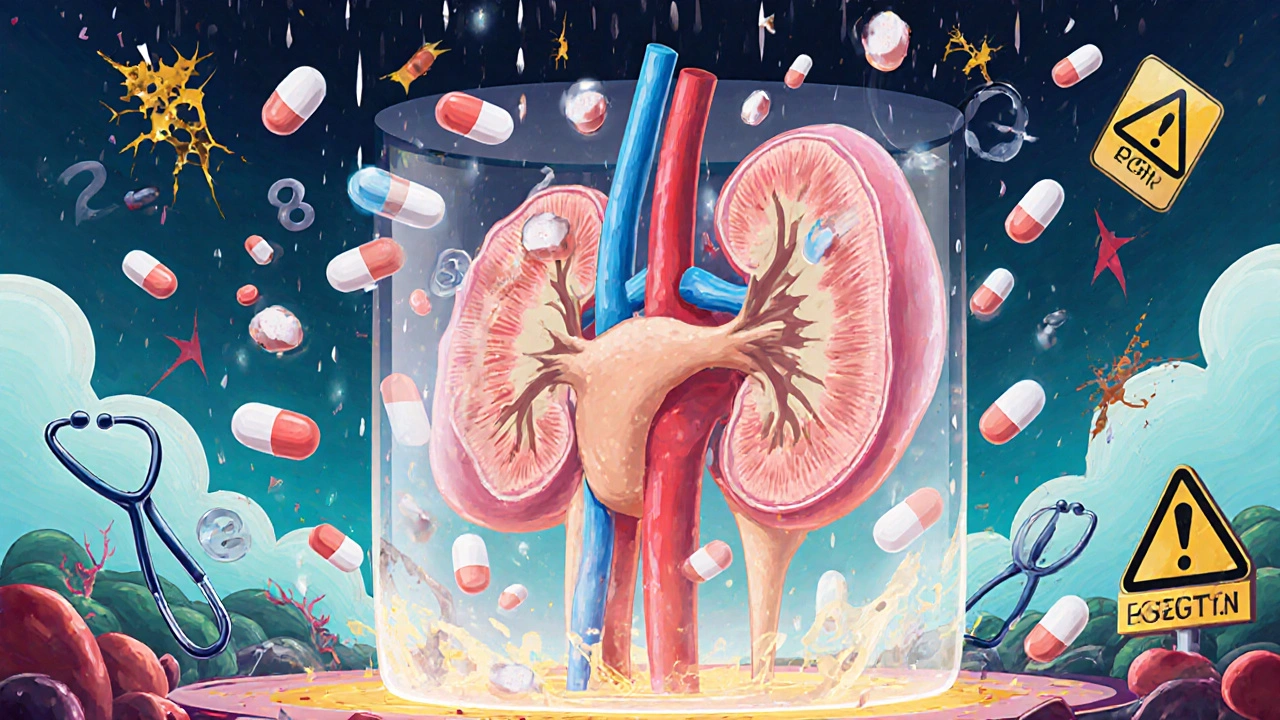
Medication Safety in Kidney Disease: How to Avoid Nephrotoxins and Get the Right Dose
Learn how to safely take medications with kidney disease-avoid nephrotoxins, adjust doses based on eGFR, and use kidney-friendly alternatives. Essential for CKD patients and caregivers.