Renal Dosing Guidelines: What You Need to Know About Adjusting Medications for Kidney Function
When your kidneys aren't filtering blood like they should, many medications can build up to dangerous levels. Renal dosing guidelines, standardized rules for adjusting drug doses based on kidney function. Also known as kidney-adjusted dosing, these guidelines exist because your kidneys help clear most drugs from your body. If they’re weakened, the same dose that’s safe for someone with healthy kidneys can cause toxicity, dizziness, confusion, or even organ damage. This isn’t just about older adults—people with diabetes, high blood pressure, or chronic kidney disease often need these adjustments, even if they feel fine.
Doctors don’t guess these doses. They use estimated glomerular filtration rate, a calculation based on age, sex, race, and blood creatinine levels that estimates how well kidneys filter waste. Also known as eGFR, it’s the most common tool used to decide if a drug dose needs to go down—or be avoided entirely. For example, drugs like metformin, gabapentin, and certain antibiotics have clear eGFR thresholds below which they shouldn’t be used or must be cut back. Some medications, like sevelamer (Renagel), are actually used to manage kidney disease by binding phosphorus in the gut, while others, like losartan or lisinopril, need dose changes because they’re cleared through the kidneys. Even over-the-counter painkillers like ibuprofen can become risky if your kidney function drops below 30 mL/min.
What’s often missed is that drug clearance, how quickly the body removes a medication. Also known as renal excretion, it varies widely between drugs. Some are mostly cleared by the liver, so kidney problems don’t matter much. Others, like morphine or insulin, have active metabolites that pile up when kidneys slow down. That’s why a simple label like "take with food" isn’t enough—you need to know if the drug’s entire safety profile changes with kidney function. Pharmacists are your best ally here. If you’re on multiple meds and have been diagnosed with reduced kidney function, ask: "Which of these need a dose change?" or "Is there a safer alternative?"
It’s not just about numbers on a lab report. People with chronic kidney disease often take more than five medications daily. One wrong dose can trigger a hospital visit. That’s why renal dosing guidelines aren’t just clinical recommendations—they’re life-saving checklists. The posts below cover real-world examples: how sevelamer works for dialysis patients, why gabapentin needs special attention, how blood pressure drugs like clonidine or chlorthalidone affect kidney health, and what to watch for when switching from brand to generic versions. You’ll find practical advice on reading labels, spotting risky combinations, and talking to your care team—so you don’t end up paying for a mistake with your health.
Medication Safety in Kidney Disease: How to Avoid Nephrotoxins and Get the Right Dose
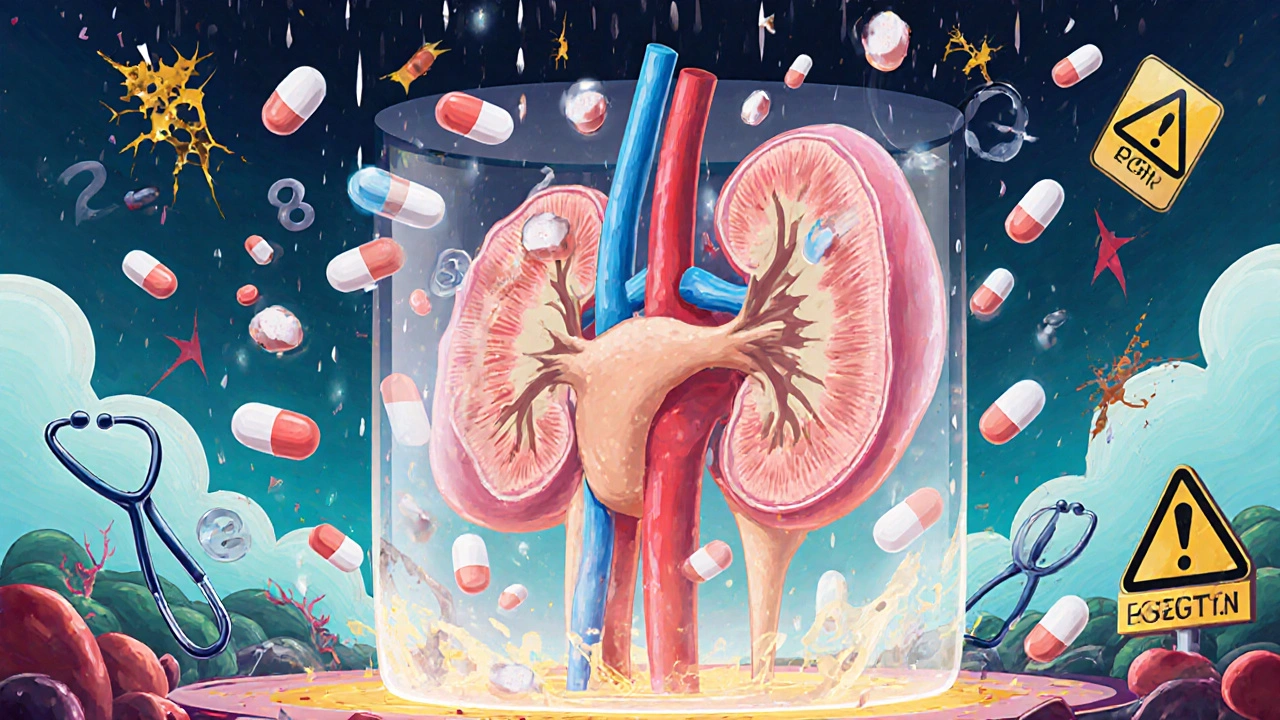
Learn how to safely take medications with kidney disease-avoid nephrotoxins, adjust doses based on eGFR, and use kidney-friendly alternatives. Essential for CKD patients and caregivers.