Generic Drug Savings: How to Save Money Without Sacrificing Quality
When you hear generic drug savings, the lower-cost versions of brand-name medications approved by the FDA as equally safe and effective. Also known as generic medications, they’re the smartest way most people cut prescription costs without giving up results. You’re not just saving a few bucks—you’re saving hundreds, sometimes thousands, a year. A pill that costs $150 as a brand name might be $5 as a generic. That’s not a myth. That’s the FDA’s standard.
But here’s what most people don’t know: not all generics are made the same. The active ingredient? Always identical. The fillers? Not always. excipients in generics, inactive ingredients like lactose, dyes, or preservatives that help form the pill can trigger reactions in sensitive people. One person might tolerate a generic just fine. Another might get stomach pain or a rash—not because the drug doesn’t work, but because of the filler. That’s why some patients stick with brand names, even when the price is higher. It’s not about effectiveness. It’s about tolerance.
And then there’s the big question: are generics always cheaper? Not if you’re buying them without checking. Some pharmacies charge more for generics than others. Insurance plans sometimes push certain brands over others. And if you’re on a high-deductible plan, the difference between $10 and $30 can be the difference between filling your script or skipping it. That’s why knowing your options matters. You might save more by switching to a different generic version than sticking with the first one your doctor suggests.
It’s not just about price. It’s about control. When you understand how generics work, you can ask the right questions at the pharmacy. You can spot when a switch is being made without your knowledge. You can push back if you notice side effects that weren’t there before. And you can make sure your savings don’t come at the cost of your health.
Below, you’ll find real stories and hard facts from people who’ve been there—people who saved money on blood pressure meds, avoided allergic reactions from dyes in pills, and learned how to talk to their pharmacist about cost without feeling embarrassed. You’ll see how biosimilars fit into the picture, how expired meds can sneak up on you, and why sometimes, the cheapest option isn’t the best one. This isn’t theory. It’s what happens when real people take charge of their prescriptions.
First Generic Approval: Why It Matters and What It Means for Your Prescription Costs
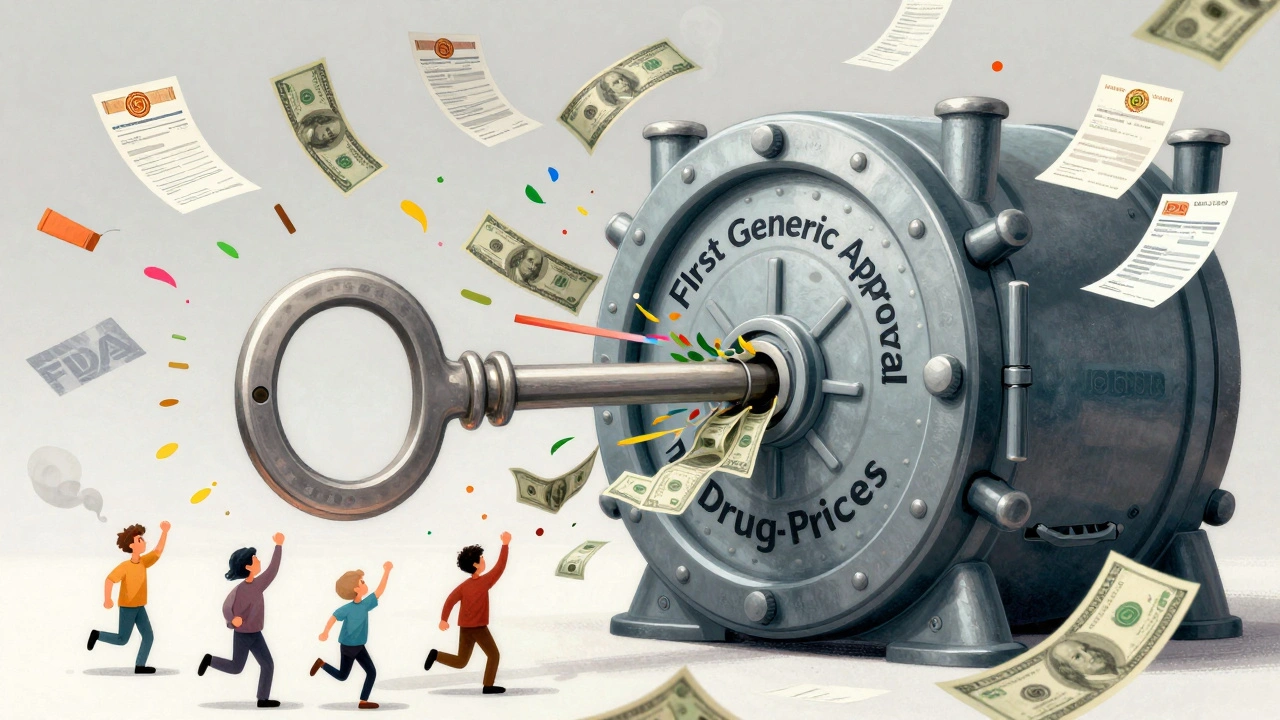
First generic approval is the key to lowering drug prices in the U.S. It gives the first company to launch a generic version of a brand-name drug 180 days of exclusive sales-leading to massive cost savings for patients and the healthcare system.